💬 WhatsApp Chat

Sustainable Fine Blanking: Energy Efficiency and Environmental Responsibility in Precision Metal Forming

Modern manufacturing faces mounting pressure to reduce environmental impact while maintaining productivity and quality. Fine blanking technology offers inherent sustainability advantages through superior material efficiency, energy recovery potential and process precision. This article examines the environmental profile of fine blanking operations and how manufacturers can optimize their carbon footprint through equipment selection, process parameters and operational practices.

Energy Analysis

Energy Consumption Comparison: Servo vs Hydraulic Presses

The choice between servo and hydraulic drive technology has profound implications for energy consumption in fine blanking operations. A typical hydraulic fine blanking press operating at 400 tons consumes ~45 to 65 kilowatt-hours per ton of finished parts produced, depending on material thickness, stroke rate and utilization level. The hydraulic system's main motor runs continuously during production, pumping oil through the circuit even when the ram is idle between strokes. Energy is lost through valve throttling, system back-pressure, heat dissipation in the oil cooler and parasitic losses in the hydraulic pump.

Servo-driven fine blanking presses demonstrate better energy performance, consuming 25 to 40 kilowatt-hours per ton of finished parts. The servo motor only draws significant power during the active working stroke. During ram return and dwell periods between strokes, energy consumption drops to near-zero levels. At an average industrial electricity rate of 0.12 US dollars per kilowatt-hour, this translates to annual energy cost savings of 1,920 to 2,400 dollars per press. Facilities operating three shifts or running high-speed applications above 25 strokes per minute see proportionally greater savings.

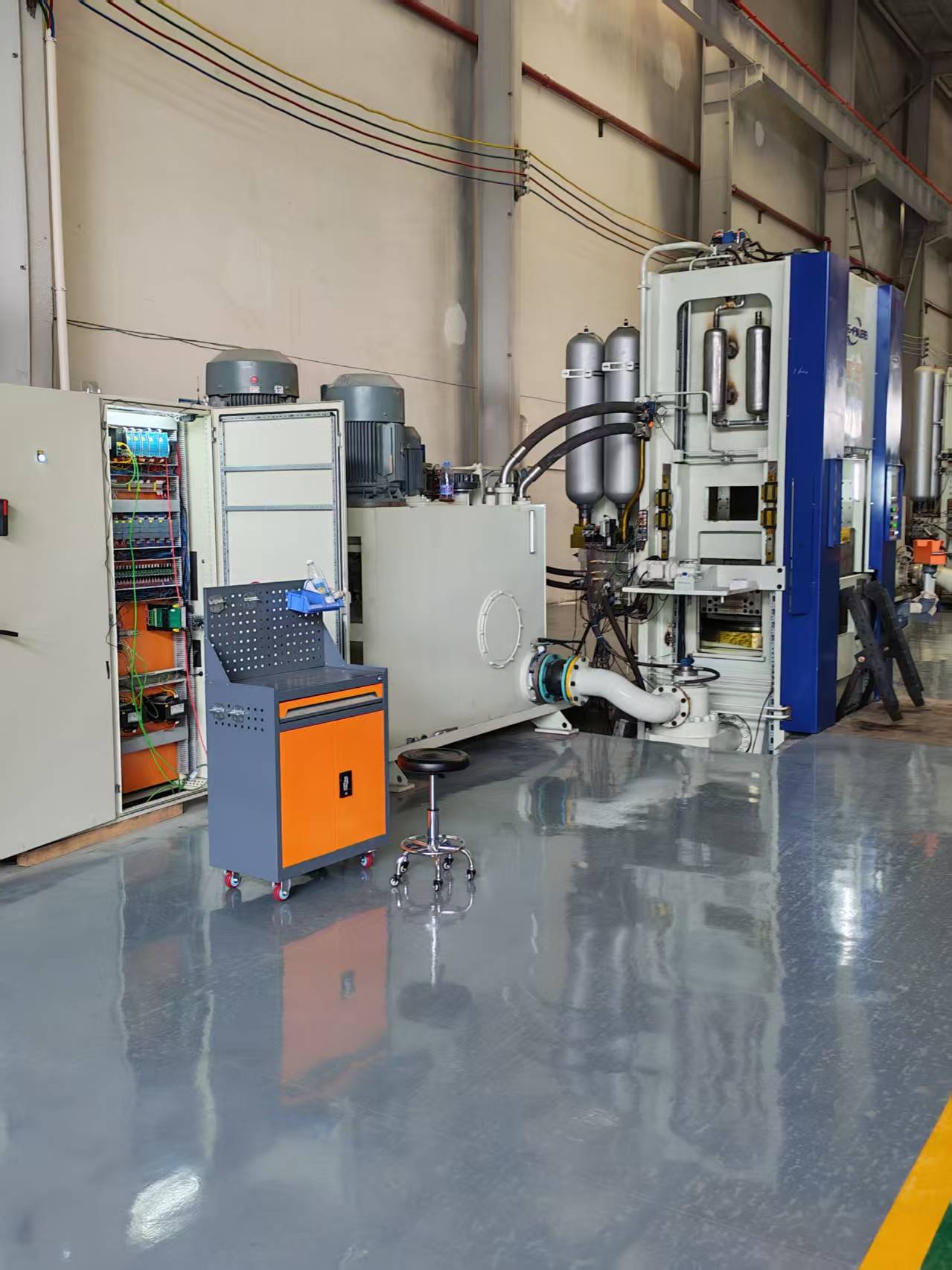
Wide view of fine blanking factory floor showing multiple presses and production layout
Material Utilization

Material Efficiency: Scrap Rates in Fine Blanking vs Conventional Stamping

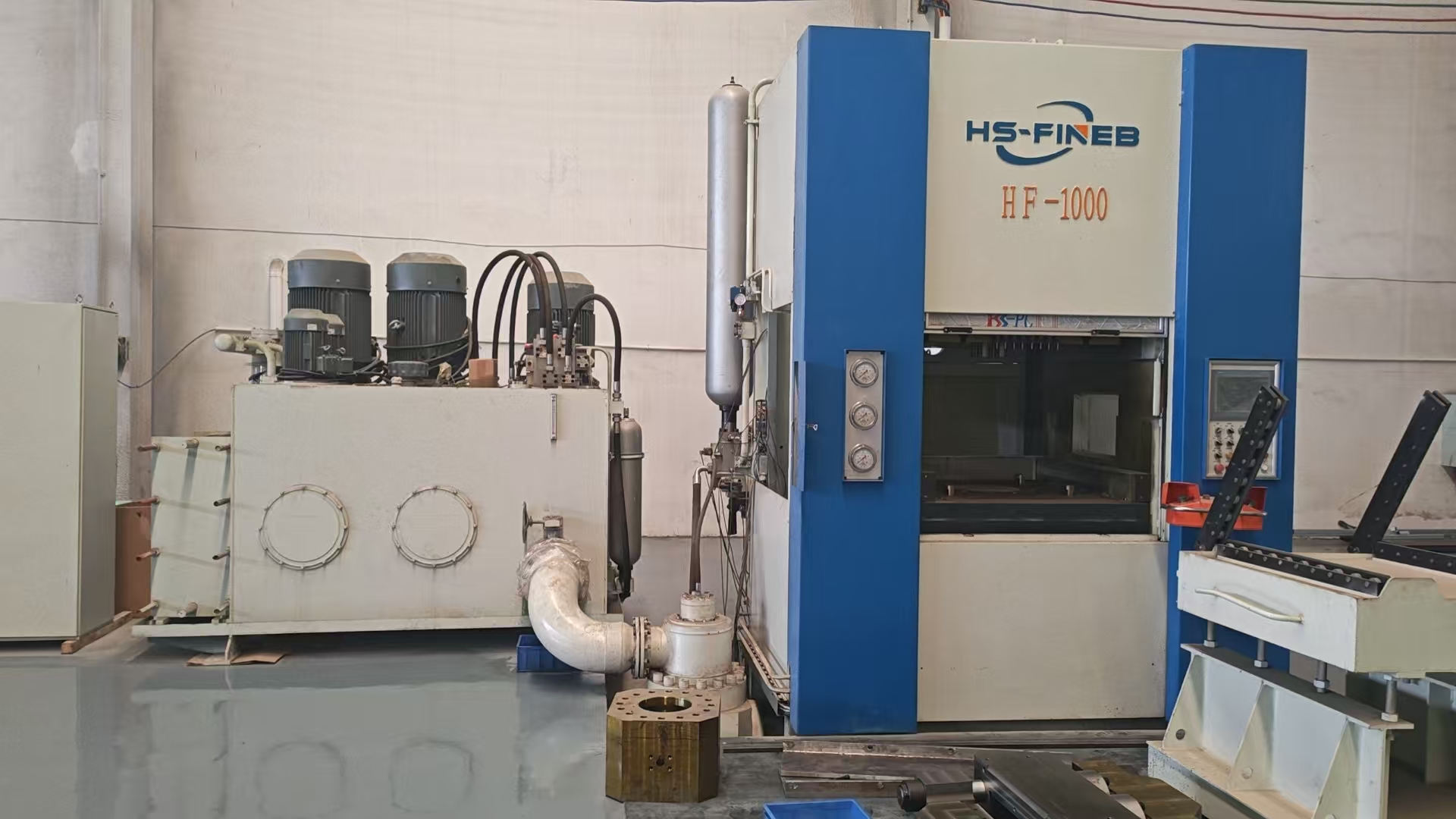
Fine blanking press line showing coil feeding and part extraction with minimal scrap generation

Material efficiency represents one of the most significant sustainability advantages of fine blanking technology over conventional stamping processes. In conventional stamping and blanking operations, typical scrap rates range from 25 to 35 percent of the input coil material. This high scrap generation results from the need for larger strip margins, wider web sections between parts and the irregular edge quality that necessitates additional trimming operations. The sheared edges produced by conventional stamping exhibit rollover, fracture and burr zones that require subsequent machining or grinding to achieve functional dimensions.

Fine blanking achieves scrap rates of only 8 to 15 percent through several mechanisms working in concert. The triple-action press architecture applying blanking force, V-ring impingement and counter-pressure simultaneously produces clean sheared edges with minimal fracture zone. This edge quality eliminates the need for secondary trimming or machining operations that would otherwise consume additional material. The precision of fine blanking allows parts to be nested more closely on the strip, reducing web width and inter-part spacing to the minimum necessary for die structural integrity.

Environmental Impact

Lubrication Systems and Environmental Responsibility

💧

Mineral Oil vs Biodegradable Lubricants

Traditional fine blanking operations rely heavily on mineral oil-based lubricants formulated with chlorine and sulfur extreme-pressure additives. These lubricants provide excellent film strength and anti-weld properties necessary for the high-contact-pressure blanking process. However, mineral oil lubricants present significant environmental challenges.

Lubricant Consumption and Recycling

Fine blanking lubricant consumption varies based on application parameters. A typical hydraulic press running automotive transmission components consumes 120 to 200 liters of lubricant per month. With centralized lubrication systems and recovery filtration, consumption can be reduced to 60 to 90 liters monthly.

Circular Economy

Waste Reduction and Steel Scrap Recycling

The scrap generated by fine blanking operations consists entirely of clean steel stampings with predictable geometry and minimal contamination. This scrap stream has higher recycling value compared to mixed or contaminated scrap from other manufacturing processes. Clean steel scrap from fine blanking commands a price premium of 15 to 25 percent over general mixed scrap because it can be remelted directly without extensive sorting or preprocessing.

A typical 400-ton fine blanking press generates 60 to 100 kilograms of steel scrap per hour. Over two shifts daily, this equals 1,200 to 2,000 kilograms. At current scrap steel prices of 350 to 420 dollars per ton, the scrap value ranges from 420 to 840 dollars daily. Over 250 production days, scrap revenue totals 105,000 to 210,000 dollars per press, partially offsetting raw material costs.

Closed-loop material partnerships between fine blanking shops and steel mills are increasingly common. In these arrangements, the fine blanking producer sells scrap directly back to the coil supplier at predetermined prices, with the steel mill guaranteeing minimum recycled content in the new coil.

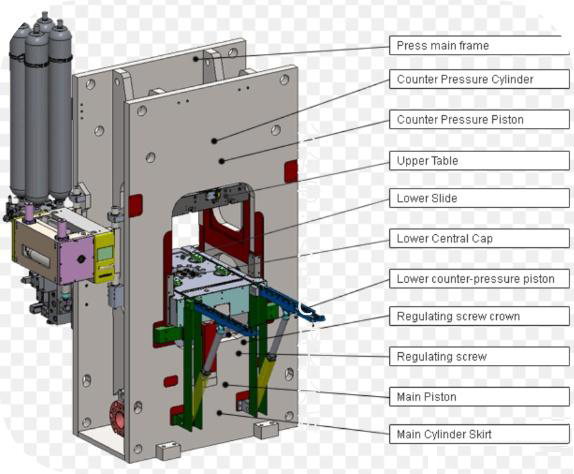
Fine blanking machine structural diagram showing scrap generation paths and material flow
Carbon Accounting

Carbon Footprint Calculation Methodology for Fine Blanking Operations

Quantifying the carbon footprint of fine blanking operations requires a systematic life-cycle assessment approach covering Scope 1, Scope 2 and selected Scope 3 emissions. The methodology follows ISO 14064 and the GHG Protocol Corporate Standard, adapted for metal forming manufacturing processes.

Scope 1 direct emissions from fine blanking are minimal. The process involves no on-site combustion except ancillary heating. Hydraulic press oil leaks represent a minor volatile organic compound source, estimated at 50 to 200 kilograms annually per press. These emissions fall below reporting thresholds for facilities under 25,000 tons CO2 equivalent annually.

Scope 2 indirect emissions from purchased electricity dominate the carbon footprint. The calculation requires three parameters: annual electricity consumption, grid emission factor, and production volume. A hydraulic 400-ton press consuming 55,000 kWh annually in a region with a 0.55 kg CO2/kWh grid factor generates 30,250 kg CO2 equivalent. Producing 800 tons of parts yields a specific footprint of 37.8 kg CO2 per ton of parts.

Switching to a servo press reducing consumption to 35,000 kWh drops the footprint to 24.1 kg per ton, a 36 percent reduction. Facilities purchasing 100 percent renewable electricity achieve near-zero Scope 2 emissions, though this requires verified renewable energy certificates or power purchase agreements.

Scope 3 upstream emissions from raw material production represent the largest component of total carbon footprint. Steel coil production accounts for 1.5 to 2.2 tons of CO2 per ton of steel. For an operation with 88 percent material utilization, embedded carbon in raw material is 1.7 to 2.5 tons CO2 per ton of finished parts. Improving utilization from 75 to 90 percent reduces upstream carbon by 17 percent.

Regulatory Compliance

EU Green Deal Compliance and Sustainability Certifications

🏆

ISO 14001 Environmental Management

ISO 14001 certification provides the foundational management system for environmental responsibility in fine blanking manufacturing. The standard requires documented environmental aspects and impacts, legal compliance evaluation, operational controls for significant environmental aspects and continual improvement programs. For fine blanking operations, the significant environmental aspects include electricity consumption, lubricant use and disposal, steel scrap management, noise emissions and waste water from part washing operations.

Implementation of ISO 14001 requires 6 to 12 months from gap analysis through certification audit. The process involves establishing targets such as reducing electricity by 10 percent annually, achieving 95 percent scrap recycling, and eliminating lubricant discharge. Third-party certification provides credibility for customer audits and regulatory inspections.

🌎

EU Green Deal and Carbon Border Adjustment

The European Union Green Deal and associated Carbon Border Adjustment Mechanism introduce significant compliance requirements for fine blanking operations supplying European markets. The CBAM requires importers of steel and aluminum products to report embedded carbon emissions and eventually purchase certificates for emissions exceeding the EU benchmark. Fine blanking parts exported to European automotive and electronics manufacturers fall within CBAM scope when manufactured outside the European Economic Area.

Corporate Responsibility

HS-FINEB Sustainability Initiatives and Commitments

HS-FINEB recognizes that sustainability in fine blanking extends beyond the manufacturing floor to encompass equipment design, supplier selection, customer support and end-of-life management. Our sustainability program addresses each stage of the press lifecycle from design through decommissioning.

Equipment design prioritizes energy efficiency through optimized hydraulic circuit architecture, variable-frequency pump drives on selected models and servo motor options for the full HF series range. New press designs incorporate regenerative hydraulic circuits that recover energy from the decelerating ram during the return stroke, storing it in accumulators for use in the next working stroke. This regeneration capability reduces energy consumption by an additional 8 to 12 percent beyond the baseline hydraulic efficiency.

Manufacturing processes at HS-FINEB facilities implement closed-loop coolant systems, waste oil regeneration and steel scrap recycling through established mill partnerships. Our assembly operations use biodegradable cleaning solvents and water-based rust preventatives replacing solvent-based alternatives. Packaging for international shipment uses returnable steel shipping frames and recycled wood crates rather than single-use disposable packaging.

Customer support for sustainability includes energy audit services evaluating existing press installations for efficiency improvements, retrofit packages upgrading older hydraulic presses with variable-frequency drives and regenerative circuits, and lubricant management system integration. The HS-FINEB refurbishment program extends press operational life by 15 to 20 years, avoiding the embedded carbon of manufacturing replacement equipment while upgrading energy efficiency to current standards.

Our 2030 sustainability targets include reducing the average energy consumption of new press deliveries by 25 percent compared to 2020 baseline, achieving 95 percent material recycling rate across all manufacturing operations, ensuring 100 percent of lubricants used in customer training and commissioning are biodegradable formulations and publishing product-specific environmental product declarations for the full HF series range following EN 15804 standard methodology.

Reduce Your Environmental Impact with Sustainable Fine Blanking

HS-FINEB engineers will evaluate your current operations and recommend energy-efficient press configurations, lubricant management systems and material optimization strategies that reduce both cost and carbon footprint. Contact us for a sustainability assessment tailored to your production requirements.

💬