Fine blanking press export to Mexico serving the automotive manufacturing hubs of Monterrey, Queretaro and Puebla with USMCA-aligned logistics, NOM certification guidance, Spanish-language support, and nearshoring-ready delivery.
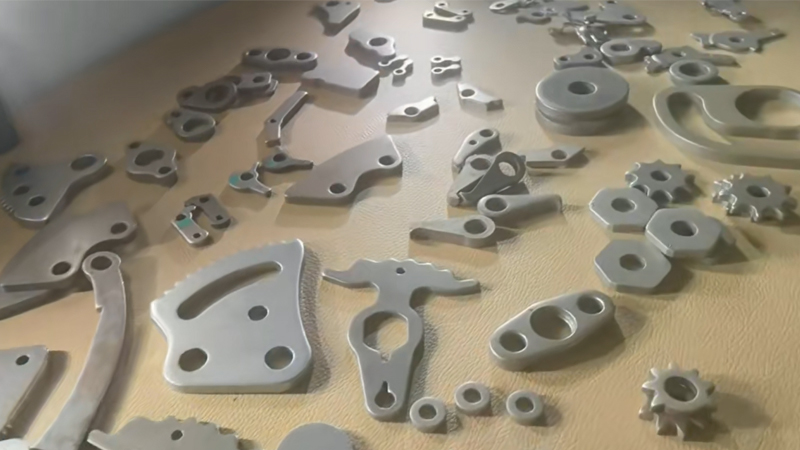
Mexico has emerged as North America's most dynamic automotive manufacturing hub. The industrial corridors of Monterrey (Nuevo Leon), Queretaro (Queretaro), and Puebla (Puebla) host assembly plants and tier-1 supplier networks serving both domestic consumption and US export markets under the USMCA framework. Fine blanking presses serve critical applications in this ecosystem: brake caliper pistons, seat recliner mechanisms, transmission gear blanks, seat track components, and electronic connector terminals — all parts where the 100% smooth-cut edge and IT7-IT9 dimensional tolerance of fine blanking replace secondary machining operations.
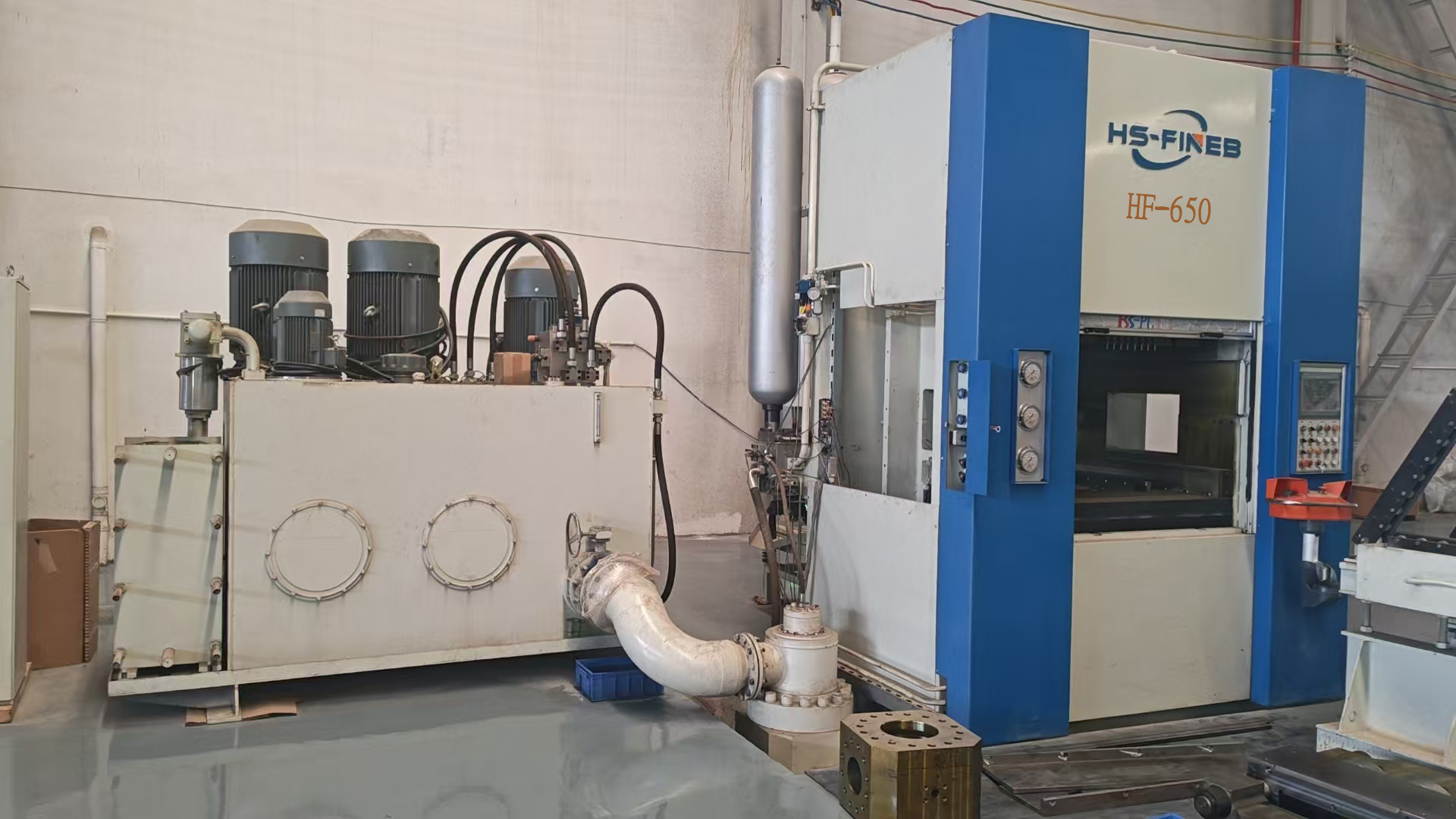
HS-FINEB supplies fine blanking presses to Mexican manufacturers positioned at two critical junctures: tier-1 suppliers adding fine blanking capability to in-source components previously purchased from outside, and tier-2 suppliers capturing work relocated from US and European stamping plants under the nearshoring trend. Our HF-series presses cover the tonnage range Mexican applications demand: 320-ton units for connector terminals and small seat components, 500-ton presses for brake pad backing plates and seat track sliders, 650-ton and 800-ton presses for transmission gear blanks and structural brackets.


The USMCA's regional value content (RVC) requirements push automotive manufacturers to source more components within the USMCA zone (US, Mexico, Canada). For Mexican tier-1 and tier-2 suppliers, this means producing parts previously imported from Asia or Europe. Fine blanking capability — historically concentrated in US, German, and Swiss stamping plants — is now being built domestically in Mexico to capture this redirected demand.
HS-FINEB serves this transition with a practical proposition: a new fine blanking press with triple-action hydraulic CNC control, delivering the same edge quality and dimensional tolerance as European-brand equipment, at 40-55% lower capital cost. The press is delivered with force parameters configured around the buyer's specific part geometry and material grade, and our field engineers travel to the Mexican facility for installation, commissioning, and operator training. Documentation is provided in English; Spanish-language operation and maintenance manuals can be prepared on request for an additional documentation fee.
The nearshoring trend from US companies relocating production to Mexico creates a specific opportunity for fine blanking: US OEMs moving stamping work south need their Mexican suppliers to meet the same fine blanking quality standards previously achieved in US plants. HS-FINEB presses deliver those standards — 100% smooth-cut shear edge, die-roll below 15% of material thickness, dimensional accuracy at IT7-IT9 tolerance grade — because the triple-force process physics are independent of press manufacturer.
Primary Pacific coast discharge port serving Guadalajara, Leon, and the Bajio industrial corridor (Queretaro, San Luis Potosi). Ocean transit from Shanghai: 22-28 days. Presses up to HF-650 ship in 40-foot flat rack containers; larger models ship as breakbulk cargo. Customs clearance at Manzanillo under the Mexican import regime for metalworking machinery (HS 8462.29) requires the commercial invoice, bill of lading, packing list, and certificate of origin.
Alternative Pacific port serving central Mexico and Mexico City metropolitan area. Transit time similar to Manzanillo. For Gulf coast destinations (Monterrey via Veracruz), Atlantic routing through the Panama Canal adds 7-10 days but may offer competitive freight rates depending on vessel availability. The buyer's nominated customs broker manages the pedimento (customs declaration) process.
Fine blanking presses imported to Mexico may require NOM (Norma Oficial Mexicana) certification for electrical safety, depending on the installation's classification. NOM-001-SCFI for electrical equipment and NOM-020-STPS for workplace safety signage are the most commonly applicable standards. Our CE-marked electrical systems — compliant with EN 60204-1 — provide the technical foundation for NOM registration, which the buyer's Mexican customs broker or certification body completes at the destination.

Mexican buyers receive field service support from our engineering team based in Huangshi, China. Our service model for Mexico is structured around three tiers:
Remote diagnostics: The CNC controller supports remote access via VPN, enabling our engineers to connect to the press for fault diagnosis, parameter adjustment, and process optimization. This resolves the majority of operational issues without travel. Communication is conducted in English, with our engineering team available during Beijing time business hours and responsive to urgent messages within 4-8 hours.
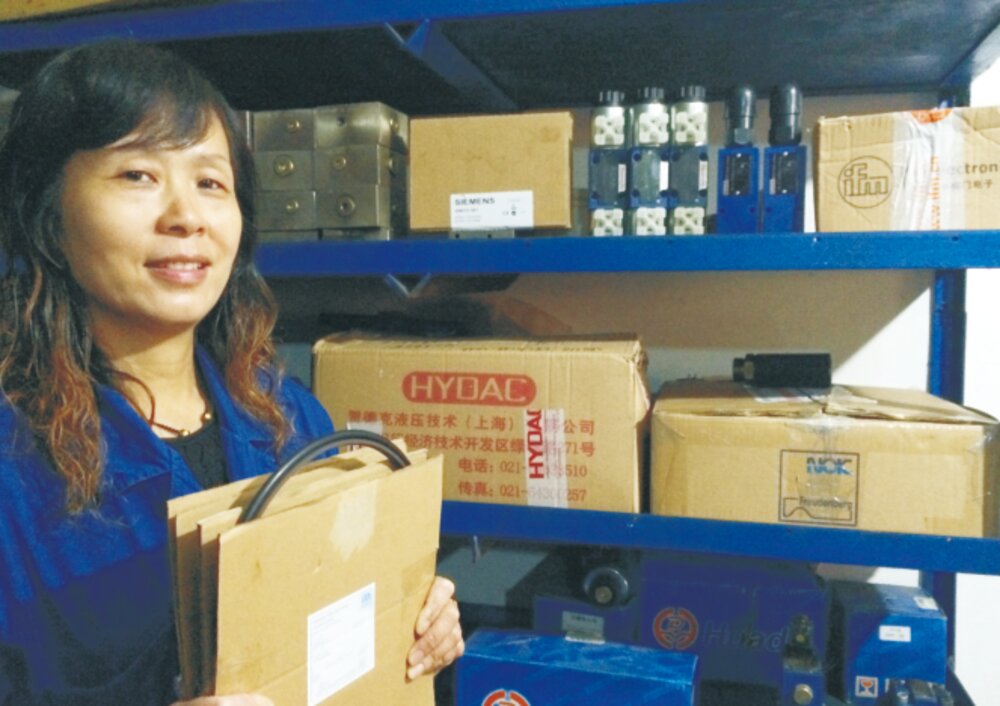
Spare parts logistics: Critical components — hydraulic seals, proportional valve cartridges, servo drive modules, encoder units — are stocked in Huangshi and shipped by air freight to Mexico City or Guadalajara international airports within 5-7 working days. For production-critical presses, we recommend a commissioning-time spare parts package covering items with lead times exceeding four weeks.
On-site field service: For commissioning, annual inspections, and fault resolution requiring physical intervention, our engineers travel to Mexican facilities. Response time from request to arrival is typically 7-10 working days, including visa processing for Chinese passports. Service visits are billed at a day rate plus travel expenses. For routine maintenance, we recommend the buyer establish a relationship with a local hydraulic press service provider for seal replacement, oil changes, and mechanical adjustments — tasks where fine blanking process knowledge is valuable but brand-specific expertise is not essential.
A new Feintool or Schuler fine blanking press in the same tonnage class costs 2-3 times the price of an HS-FINEB unit delivered to Mexico, before accounting for the additional premiums European brands apply for Latin American delivery and the longer lead times (12-18 months vs 6-8 months for HS-FINEB). The capital saving on the press alone can fund a complete production cell: press, coil feeding system, die, and deburring equipment.
Used fine blanking presses from European brands appear on the secondary market at prices competitive with new HS-FINEB units, but carry risks: unknown remaining service life, obsolete control systems requiring retrofit, and spare parts availability dependent on the original manufacturer. A new HS-FINEB press delivers full warranty, current-technology control systems, documented component provenance, and a 20+ year service commitment from the original manufacturer.
Monterrey is Mexico's heavy industry capital, hosting automotive assembly (KIA, Toyota), tier-1 suppliers producing transmission components, and foundries and forge shops. Fine blanking applications in this region focus on transmission gear blanks (6-12 mm thickness in 16MnCr5 and 20MnCr5 steel), brake caliper pistons, and structural brackets for commercial vehicles. HS-FINEB presses in the 650T-800T range serve these heavy-gauge applications. Monterrey's proximity to the US border (150 miles from Laredo, TX) enables efficient spare parts logistics via cross-border air freight to Monterrey International Airport.
The Bajio industrial corridor — Queretaro, San Luis Potosi, Leon, and Aguascalientes — hosts automotive assembly plants (BMW, Toyota, Audi, General Motors) and their tier-1 supplier networks. Fine blanking applications include seat mechanisms (recliner gears, track components), brake pad backing plates, and electronic connector terminals. HS-FINEB presses in the 320T-500T range serve this segment, producing parts at IT7-IT9 tolerance with 100% smooth-cut edges. Manzanillo port serves this region (600-800 km inland transport), with customs clearance at the port and inland transit via low-bed trailer.
The Puebla-Tlaxcala automotive corridor serves Volkswagen and Audi assembly operations and their Mexican and European tier-1 suppliers. Fine blanking applications include precision washers, seat track sliders, and small transmission components. The region's proximity to Veracruz port (Atlantic coast, 250 km) provides an alternative shipping route to Pacific ports, with transit via the Panama Canal from Shanghai (28-35 days). The Puebla cluster's established tooling and die-making tradition supports effective fine blanking die maintenance — our field engineers train local teams during commissioning to build in-house die servicing capability.
Contact Helen today for a detailed quotation, technical consultation, or factory tour arrangement. Our engineering team responds within 24 hours.