💬 WhatsApp Chat

Fine Blanking Press Lifespan: How Long Do Presses Last?

Expected service life of hydraulic and servo fine blanking presses, component replacement intervals, factors affecting longevity, and the refurbishment decision — with cost comparison of refurbishment versus new purchase.

Longevity Analysis

Expected Press Lifespan: 25 to 40 Years

A well-maintained fine blanking press is one of the longest-serving assets in a metalworking facility. The expected structural lifespan of a precision fine blanking press is 25 to 40 years — and in practice, many presses exceed this. Feintool machines manufactured in the 1980s remain in production today, over 35 years later, producing parts to original tolerances. This longevity is possible because the press frame, which accounts for 60–70% of the machine's capital cost, has effectively unlimited fatigue life when operated within rated load.

The frame is cast or welded steel, designed for infinite life at rated tonnage. What fails over time are the consumable and wear components — hydraulic seals, valves, pumps, guide bushings, pressure transducers, and control electronics. These components have defined service lives measured in years, not decades. Replacing them periodically restores the press to near-original performance at a fraction of new-machine cost. This is the fundamental economics behind press refurbishment: the expensive structure lasts decades, while the components that wear are relatively inexpensive to replace.

For a comparison of hydraulic versus servo press technologies and their respective maintenance profiles, see our servo vs hydraulic comparison.

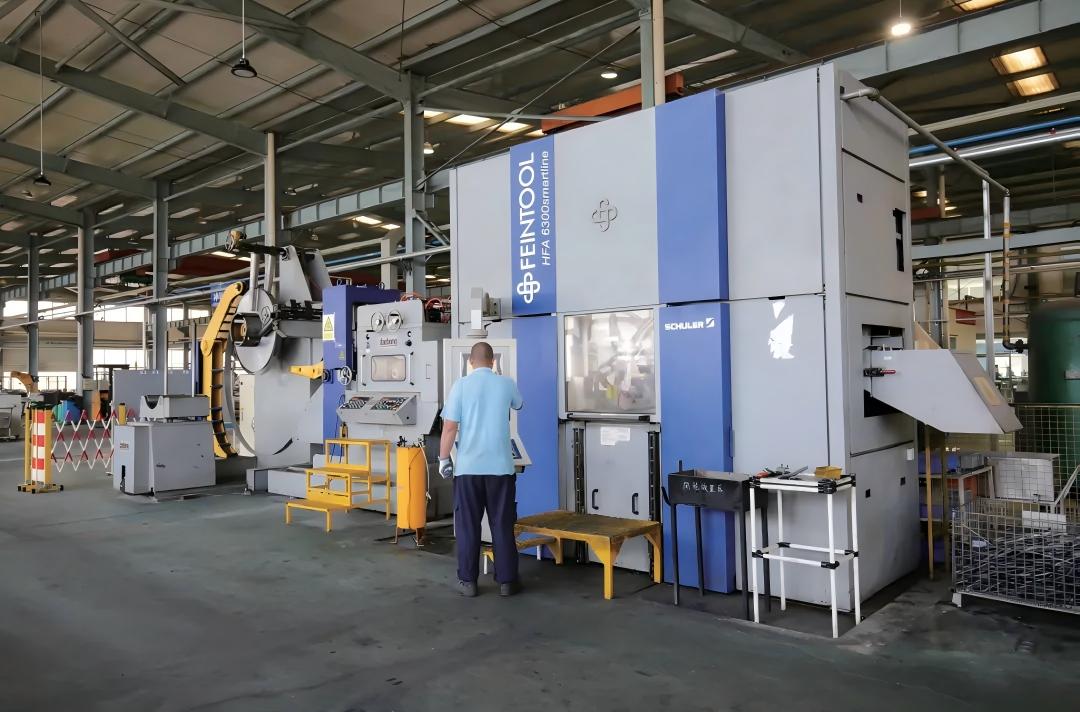
Feintool fine blanking press undergoing refurbishment and repair service
Component Lifecycle

Fine Blanking Press Component Replacement Intervals

The table below summarizes expected service life for key components in hydraulic fine blanking presses. Actual intervals vary with usage intensity, material processed, and maintenance quality. Servo presses have different component sets (motor, gearbox, ball screw) with their own lifecycle profiles.

Component Expected Lifespan Replacement Cost Range Failure Indicator
Press frame (cast/welded steel)30+ yearsN/A (not replaced)Crack inspection; effectively unlimited at rated load
Hydraulic seals & O-rings2–5 years$500–$3,000Visible oil leakage; pressure decay test
Proportional valves5–10 years$2,000–$8,000Response time drift; force ripple
Hydraulic pumps10–15 years$5,000–$25,000Flow loss; noise increase; case drain flow
Main ram cylinder15–25 years$8,000–$40,000Internal leakage; slow ram advance
Guide pillars & bushings10–20 years$2,000–$10,000Ram play; concentricity drift
Pressure transducers5–8 years$300–$1,500Calibration drift; force readout error
PLC / control electronics10–15 years$5,000–$30,000Obsolete parts; intermittent faults
Servo motor & drive12–18 years$10,000–$50,000Encoder error; torque ripple; insulation degradation

Total component replacement over a 30-year period typically costs $50,000–$150,000 — equivalent to 15–40% of the original press purchase price. This is the economic basis for refurbishment: replacing all wear components restores the press to near-new condition at less than half the cost of a new machine.

Longevity Factors

Factors Affecting Press Lifespan

Usage Pattern and Intensity

Presses running three shifts, seven days a week accumulate 6,000 operating hours per year versus 2,000 for a single-shift operation. The hydraulic system runs hotter, seals age faster, and pump wear accelerates proportionally. A three-shift press may require component replacement at 15-year intervals where a single-shift press reaches 25 years on the same components. However, presses that sit idle for extended periods face a different threat: seal hardening from inactivity and condensation corrosion inside hydraulic cylinders.

Material Processed

The material being blanked directly affects frame and component stress. Blanking high-strength steel (>600 MPa) at rated tonnage generates higher shock loads on the frame and guide system than mild steel at the same tonnage — the punch breakthrough creates a sudden load release that transmits through the frame. Stainless steels and hardened materials accelerate guide bushing wear due to higher blanking forces and reduced lubricity. Processing stainless steel at maximum tonnage reduces component life by 20–30% compared to mild carbon steel.

🛡

Maintenance Quality

Maintenance quality is the single largest variable in press lifespan. A press with rigorous preventive maintenance — scheduled oil changes, filter replacement, seal inspection, and valve calibration — will outlast a poorly maintained press by 10–15 years. The critical factor is not the absolute cost of maintenance but its consistency: missing two consecutive oil changes accelerates pump wear irreversibly. For detailed maintenance procedures, refer to our troubleshooting guide and die maintenance checklist.

🌥

Environmental Conditions

Environmental factors affect component life significantly. Temperature extremes accelerate seal degradation: operating above 60°C hydraulic oil temperature halves seal life compared to the design point of 45°C. Humidity above 70% causes condensation inside hydraulic tanks, leading to water contamination that degrades oil and corrodes internal cylinder walls. Facilities with abrasive dust (grinding shops, foundries) experience faster guide bushing and seal wear from particulate ingress. Climate-controlled facilities with 20–25°C ambient temperature and filtered air extend component life by 20–30%.

Critical Factor

Hydraulic Fluid Management

Hydraulic fluid is the lifeblood of a fine blanking press. Poor fluid management is the leading cause of premature pump failure, valve erosion, and cylinder scoring — the three most expensive component failures on a hydraulic press.

Oil change interval: Every 4,000–6,000 operating hours (approximately 12–18 months for a two-shift operation). Use ISO VG 68 hydraulic oil with anti-wear (AW) additives for presses up to 800 tons; ISO VG 100 for presses above 800 tons operating in high-ambient-temperature environments.

Filter replacement: Replace the return-line filter element every 2,000 hours and the pressure-line filter every 4,000 hours. A clogged filter bypasses contaminated oil directly to pumps and valves, causing abrasive wear. Monitor filter differential pressure — replace when it exceeds 3 bar above baseline.

Oil analysis: Send oil samples to a laboratory quarterly for particle count (ISO 4406 cleanliness code), water content (target <200 ppm), and viscosity check. Oil with a particle count above 21/18/15 should be polished or replaced immediately. Water content above 500 ppm requires a vacuum dehydrator.

Proper fluid management alone can extend pump life from 8 years to 15 years and valve life from 5 years to 10 years — a $15,000–$30,000 saving in component replacement cost per cycle. Learn more in our lubrication system guide.

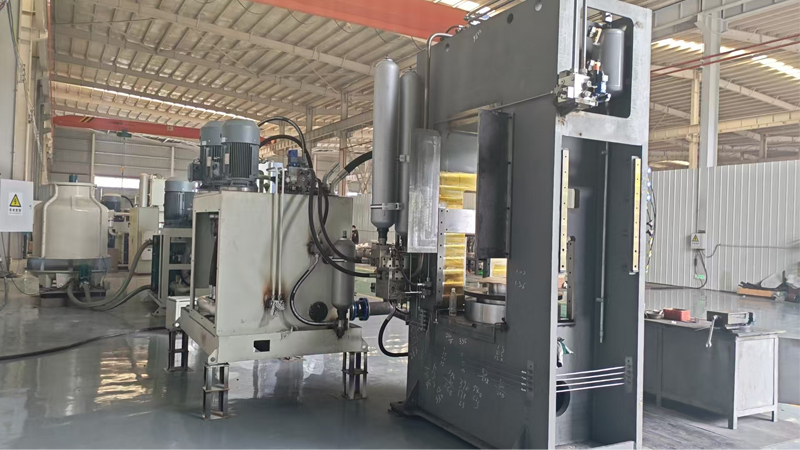
Fine blanking press refurbishment showing hydraulic cylinder and pump system maintenance
Decision Framework

Refurbishment vs Replacement: When to Choose

The decision to refurbish or replace a fine blanking press depends on four criteria. Evaluate each before committing capital:

📊

Frame Integrity

If the frame is structurally sound — no cracks, no measurable distortion, guide bore concentricity within specification — refurbishment is economically justified. A cracked or distorted frame is a write-off; no amount of component replacement will restore precision. Conduct ultrasonic crack detection on critical frame sections and measure guide bore concentricity with a precision dial indicator before deciding.

💰

Cost Ratio

Refurbishment typically costs 30–50% of a new press. If refurbishment cost exceeds 60% of new-machine price, replacement becomes the better investment because a new press offers full warranty, modern controls, and 25+ years of service life ahead. Calculate the ratio including downtime cost: refurbishment takes 4–8 weeks on-site; new press delivery takes 4–6 months plus installation.

💻

Control System Obsolescence

PLC and HMI components become obsolete 12–15 years after manufacture. When spare parts are no longer available from the OEM, a control system retrofit is mandatory — either as part of refurbishment or as a standalone upgrade. HS-FINEB offers control retrofits with modern PLC platforms that include real-time force monitoring, remote diagnostics, and Industry 4.0 connectivity.

🎯

Production Requirements

If current production demands exceed the press's capability — higher tonnage, faster stroke rate, or tighter tolerance than the original specification — replacement may be necessary. However, many apparent capability gaps are addressable through refurbishment: replacing worn guide bushings restores positioning accuracy, and a control upgrade enables programmable motion profiles that improve cycle time. Evaluate whether the gap is in the machine or in the tooling.

Cost Comparison

Refurbishment vs New Purchase: Economic Analysis

Factor Full Refurbishment New Press Purchase
Capital cost$100,000–$250,000$350,000–$800,000
Downtime4–8 weeks (on-site)4–6 months (delivery + install)
Remaining service life15–25 years25–40 years
Performance levelNear-original (with new components)Full OEM specification
Warranty12 months (HS-FINEB)24 months (OEM)
Control systemRetrofitted (modern PLC)Current-generation OEM
Cost per remaining year$5,000–$12,500/yr$8,750–$20,000/yr

On a cost-per-remaining-year basis, refurbishment is consistently more economical when the frame is structurally sound. The key risk is overestimating remaining frame life — always begin the refurbishment decision with a thorough structural inspection.

Our Service

HS-FINEB Press Refurbishment Service

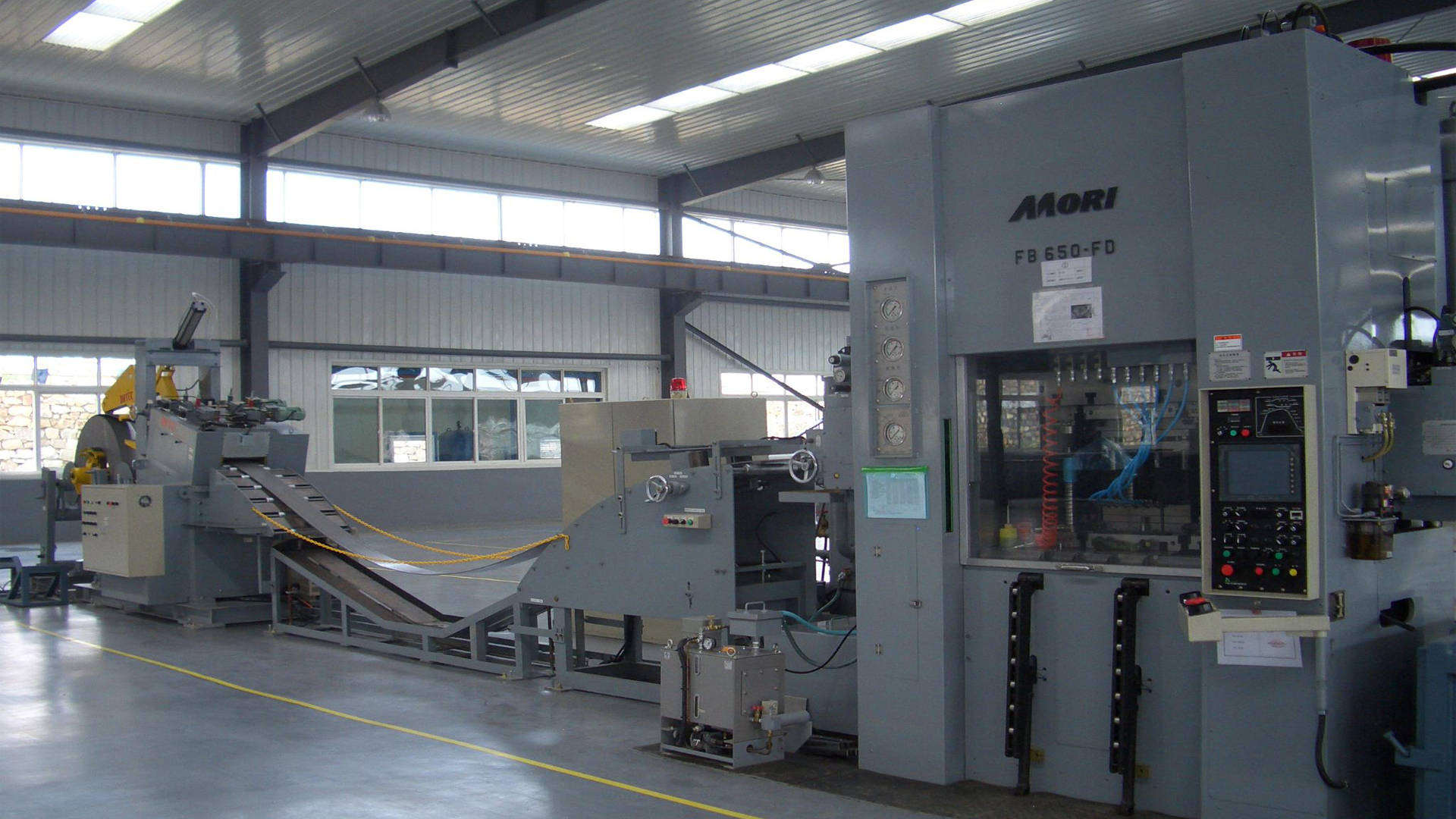
Mori fine blanking press repair and refurbishment in progress at HS-FINEB facility

HS-FINEB has been refurbishing fine blanking presses for over 15 years, with particular expertise in Feintool, Mori, and Schuler machines. Our refurbishment process follows a 5-stage protocol:

1. Inspection: Complete structural assessment including ultrasonic crack detection, guide bore measurement, cylinder bore inspection, and hydraulic system pressure testing. We document every finding in a detailed inspection report with photographs.

2. Disassembly: The press is stripped to the frame. All hydraulic components, guide systems, electrical systems, and control panels are removed. The bare frame is cleaned and crack-tested.

3. Component replacement: All wear components — seals, valves, pumps, guide bushings, pressure transducers, PLC, and HMI — are replaced with new or remanufactured components. The main ram cylinder is honed and re-sleeved if required.

4. Reassembly and calibration: The press is reassembled with new components. Guide system geometry is realigned to original specification. Hydraulic system is flushed, filled with fresh oil, and pressure-tested. Force transducers are calibrated against reference standards.

5. Acceptance testing: The refurbished press undergoes a full acceptance test including force accuracy verification (target ±1% of setpoint across 10–100% range), ram parallelism (within 0.02 mm/m), and a production run of sample parts to confirm dimensional capability. We provide a 12-month warranty on all refurbished components. See our Feintool refurbishment case study for a detailed project example, or browse our available used and refurbished machines.

Evaluating Your Press Lifespan?

HS-FINEB engineers can assess your fine blanking press condition, recommend refurbishment or replacement, and provide a detailed cost comparison. Contact us for an on-site inspection or a remote assessment based on your machine history.

💬