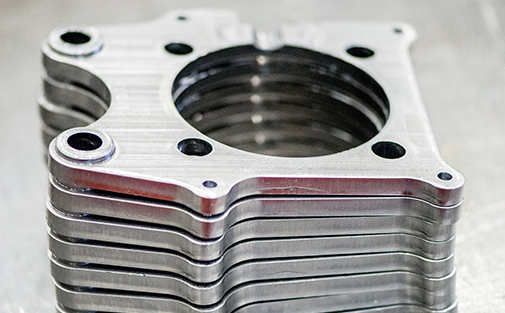
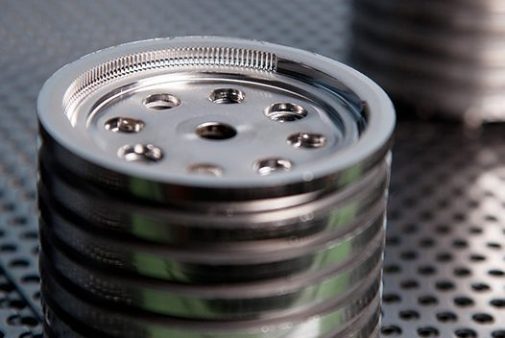
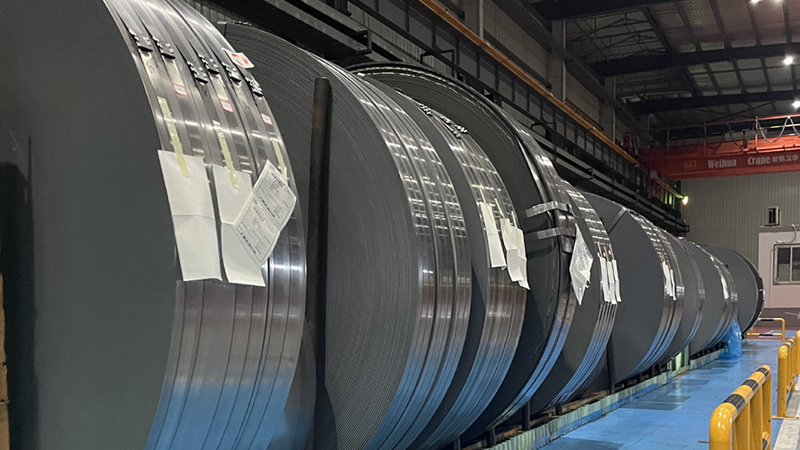
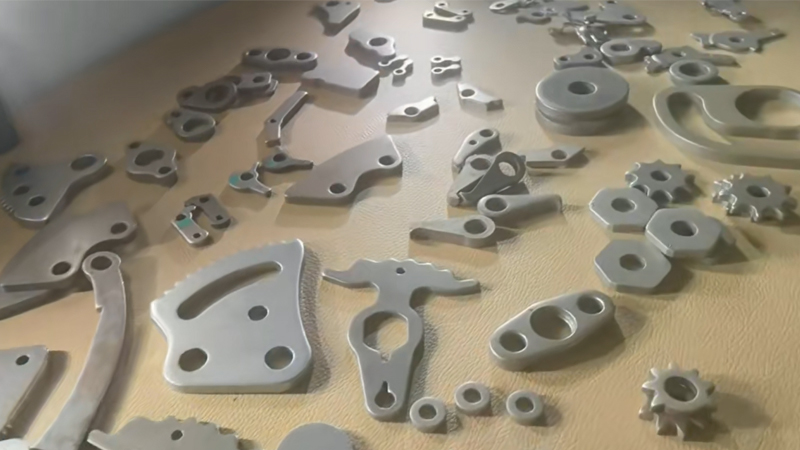
The humanoid robot market is scaling from prototype to mass production — and the precision gear components inside every joint must follow. Fine blanking delivers the grain flow, surface quality, and cost structure that high-volume robot manufacturing demands.
Every humanoid robot contains 28–54 joints. Each joint houses a harmonic drive or planetary gearbox, and every gearbox runs on precision gears. For the first decade of humanoid robotics, these gears were machined — hobbed, shaped, or ground one at a time. That was acceptable when annual production numbered in the hundreds. It is not acceptable when Tesla, Figure, and Unitree are planning annual volumes in the hundreds of thousands.
The shift from machined to fine-blanked robot gears is not a marginal cost optimization. It is a fundamental change in how the metallurgy of the gear tooth is formed. When a hob cuts a gear tooth, it severs the material's grain structure — the continuous grain flow that gives forged metal its fatigue resistance is interrupted at every tooth surface. When a fine blanking die shears a gear tooth, the grain flow follows the tooth profile, flowing continuously from root to tip. This is not a cosmetic difference. It is a 20–30% improvement in bending fatigue life — the exact failure mode that limits robot joint cycle life.
For a robot joint rated at 10 million cycles, that fatigue improvement is the difference between a joint that survives its design life and one that fails prematurely. Combined with the 100% shear surface that eliminates the micro-cracks machining leaves on tooth flanks, fine blanking produces gears that are quieter, longer-lasting, and significantly cheaper at production scale.
The flexspline (柔轮) is the heart of a harmonic drive — the thin-walled cup gear that deforms elastically to engage the circular spline. It is also the most difficult component to manufacture.
The flexspline is a thin-walled cup with external gear teeth at its open end. Wall thickness at the tooth section measures just 0.5–0.8 mm. The cup deforms elastically by 10–20% of its diameter during each rotation of the wave generator, engaging and disengaging teeth continuously. This cyclic deformation demands the highest metallurgical integrity — any surface defect or grain disruption at the tooth root initiates fatigue crack propagation.
Flexsplines are typically manufactured from 40CrNiMoA or 42CrMo4 alloy steel, case-hardened to 55–60 HRC at the tooth surface while maintaining a tough, ductile core. The case depth targets 0.3–0.6 mm. This differential hardness profile — hard surface for wear resistance, tough core for fatigue resistance — is what makes the grain flow integrity so critical. Machining interrupts the grain flow at the tooth surface; fine blanking preserves it.
The 0.5–0.8 mm wall thickness at the tooth section is below the threshold where single-sided V-ring impingement can prevent lateral material flow. Fine blanking flexsplines requires V-rings on both the punch plate and the die plate (double-ring configuration) to clamp the thin-walled material firmly during shearing. Die clearance must be held to 0.5% of material thickness — as little as 0.0025 mm for 0.5 mm stock.
Beyond harmonic drives, every robot joint contains spur or helical gears in the actuator gearbox. These are precision gears in the truest sense — module 0.5–1.5, AGMA quality class Q10–11, running at 3,000–6,000 RPM with designed cycle life exceeding 10 million rotations. In a humanoid robot with 40+ joints, a single tooth failure can disable the entire machine.
The critical requirement is tooth flank surface quality. Conventionally stamped gears have 30–70% shear surface on the tooth flanks, with the remainder as rough fracture zone. The fracture surface creates micro-protrusions that cause uneven contact, generating noise at high RPM and accelerating wear through localized Hertzian stress concentration. Over 10 million cycles, these imperfections compound: the gear gets louder, the backlash increases, and eventually the joint positioning accuracy degrades.
Fine blanked gears deliver 100% shear surface on every tooth flank. The shear zone is work-hardened during the blanking process, creating a surface hardness 15–25% higher than the base material. This hardened, mirror-finish flank (Ra < 0.4 μm) resists wear, maintains quiet operation throughout the joint's design life, and eliminates the break-in period that machined gears require.
For materials, joint actuator gears typically use 20MnCr5 or 18CrNi8 case-hardening steel. These low-carbon alloy steels are chosen for their combination of core toughness and surface hardenability — after carburizing at 900–930 °C and quenching, the tooth surface reaches 58–62 HRC while the core remains at 30–38 HRC. Fine blanking these materials requires V-ring force calibrated to 30–40% of blanking force, with counter-pressure at 15–20% to maintain flatness on the thin web sections common in actuator gear designs.

Exact material grades, hardness targets, and die parameters for the two primary robot gear applications.
| Parameter | Harmonic Flexspline | Joint Actuator Gear |
|---|---|---|
| Material Grade | 40CrNiMoA / 42CrMo4 | 20MnCr5 / 18CrNi8 |
| Module Range | 0.3–0.8 | 0.5–1.5 |
| AGMA Quality | Q11–Q12 | Q10–Q11 |
| Wall Thickness at Tooth | 0.5–0.8 mm | 1.5–4.0 mm |
| Case Hardness (HRC) | 55–60 | 58–62 |
| Core Hardness (HRC) | 28–35 | 30–38 |
| Case Depth | 0.3–0.6 mm | 0.4–0.8 mm |
| V-Ring Configuration | Double-sided | Single or double |
| V-Ring Force (% of blanking) | 40–50% | 30–40% |
| Counter-Pressure (% of blanking) | 20–25% | 15–20% |
| Die Clearance | 0.5% of t (0.0025–0.004 mm) | 0.5–1.0% of t (0.008–0.04 mm) |
| Fatigue Life Improvement vs Machining | +20–30% | +15–25% |
| Design Cycle Life | 10M+ cycles | 10M+ cycles |
| Recommended Press | HF-200 (200T) | HF-200 to HF-320 |
The grain flow argument is the core metallurgical reason fine blanking is superior to machining for robot gears. When steel is rolled into sheet, the grains elongate in the rolling direction, creating a continuous fibrous structure. This grain flow gives rolled steel its directional strength — the material is stronger along the grain flow lines than across them.
When a hob or milling cutter machines a gear tooth, it cuts across the grain flow, exposing the grain endings at the tooth surface. These exposed grain endings become initiation sites for fatigue cracks, particularly at the tooth root where bending stress is highest. The fracture surface left by machining also contains micro-tears and tool marks that further concentrate stress.
Fine blanking shears the tooth profile parallel to the grain flow. The material is displaced, not removed — the grain flow follows the tooth contour, flowing continuously from root to tip without interruption. The shear zone is work-hardened during blanking, creating a dense, compressively-stressed surface layer that resists crack initiation. This combination of intact grain flow and work-hardened surface is why fine-blanked gears demonstrate 20–30% longer fatigue life than machined gears of identical geometry and material.
For a robot joint that must survive 10 million duty cycles, this is not a marginal improvement. It is the difference between a component that meets its design life and one that falls short — with field replacement costs that can exceed the gear's manufacturing cost by 50×.
When humanoid robot production scales to 100,000+ units per year, the per-part cost difference between fine blanking and machining becomes decisive.
| Cost Factor | Fine Blanking | Hobbing + Grinding |
|---|---|---|
| Cycle Time per Gear | 1–3 seconds | 30–120 seconds |
| Tooling Cost (die/hob) | $8,000–$25,000 | $3,000–$8,000 |
| Tool Life (parts per regrind) | 300K–600K | 5,000–15,000 |
| Secondary Operations | Case-hardening only | Deburring + case-hardening + grinding |
| Cost per Part (50K volume) | $0.80–$2.50 | $3.00–$8.00 |
| Cost per Part (500K volume) | $0.50–$1.50 | $2.50–$6.00 |
| Fatigue Life vs Machined | +20–30% | Baseline |
| Surface Quality (Ra) | <0.4 µm (shear zone) | 0.8–1.6 µm (ground) |
Send us your gear drawings and material specifications. We will evaluate fine blanking feasibility, recommend the optimal press and die configuration, and provide a per-part cost estimate at your target production volume.