Fine blanking press export to ASEAN manufacturing nations with ASEAN-China FTA tariff advantages, shipping to Singapore, Saigon and Laem Chabang, tropical-climate hydraulic system adaptation, and local service partnership networks.
Southeast Asia's manufacturing base is expanding across automotive, electronics, and industrial components. Thailand maintains its position as the Detroit of Asia with major vehicle assembly plants and a deep tier-1 supplier network. Vietnam is attracting electronics and automotive component manufacturing at accelerating rates. Indonesia, Malaysia, and the Philippines each host growing industrial sectors requiring precision stamped components. Fine blanking presses serve these markets in brake components, seat mechanisms, transmission gears, electronic connector terminals, and motor laminations for both conventional and electric vehicle applications.
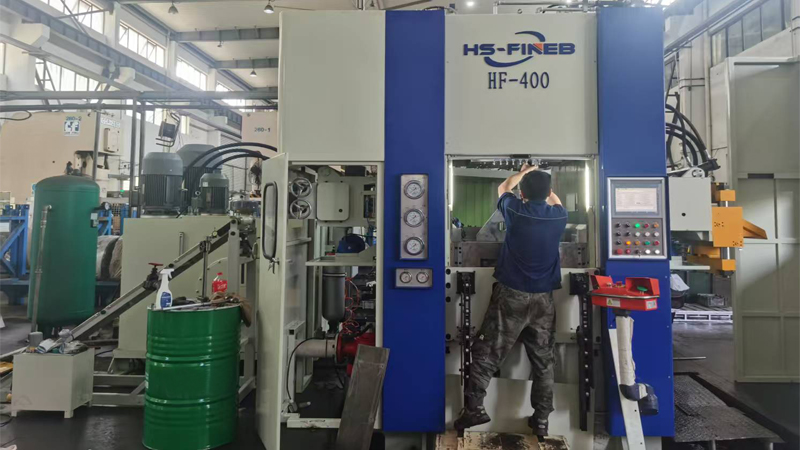
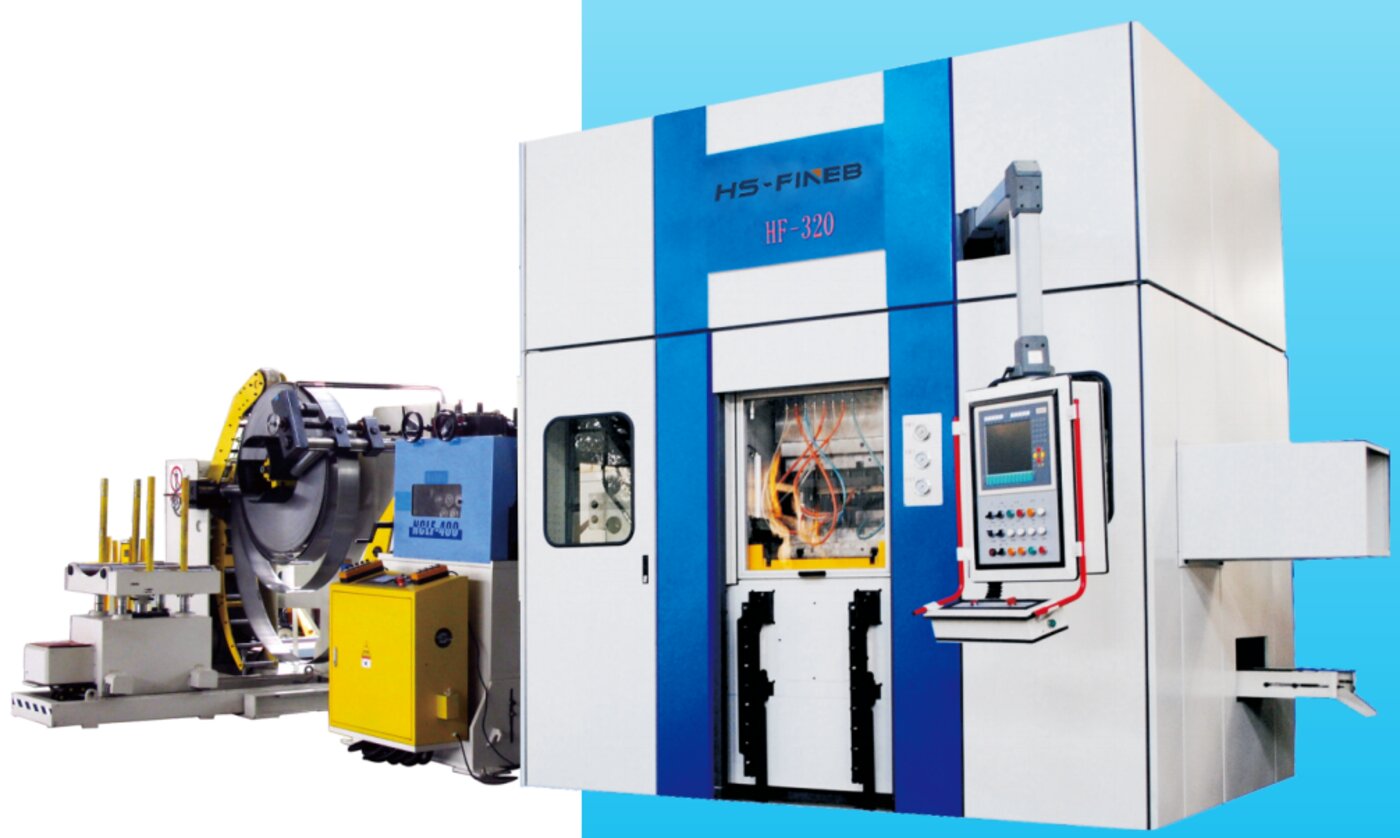
HS-FINEB supplies fine blanking presses to Southeast Asian manufacturers through a regional logistics network optimized for ASEAN-China trade. Our HF-series presses deliver the triple-action hydraulic CNC architecture — independently controlled V-ring impingement force, counter-pressure, and blanking force — that produces 100% smooth-cut shear edges, die-roll below 15% of material thickness, and dimensional accuracy at IT7-IT9 tolerance grade. For ASEAN buyers, the ASEAN-China Free Trade Area (ACFTA) agreement provides tariff advantages that significantly reduce landed cost compared to sourcing from European or Japanese suppliers.


Under the ASEAN-China Free Trade Area (ACFTA) framework, fine blanking presses classified under HS 8462.29 qualify for preferential tariff treatment when accompanied by a Form E certificate of origin. The applied tariff rate under ACFTA is typically 0-5%, compared to the most-favored-nation (MFN) rate of 5-10% applied to imports from non-FTA partners. This tariff differential, combined with lower freight costs due to shorter shipping distances, makes HS-FINEB presses significantly more cost-competitive in Southeast Asia than European or Japanese alternatives.
HS-FINEB prepares Form E documentation as part of the standard export documentation package for ASEAN destinations. The buyer's customs broker submits the Form E at the destination port to claim the preferential rate. We recommend buyers confirm the current ACFTA tariff schedule for their specific HS code and country at the time of order, as tariff schedules are periodically updated through protocol amendments.
For countries with additional bilateral agreements (China-Thailand FTA, China-Malaysia FTA frameworks within ACFTA), the tariff treatment may be further advantageous. Vietnam, as an ACFTA member, also benefits from RCEP (Regional Comprehensive Economic Partnership) provisions that may provide additional tariff pathways depending on the specific product classification.
Major transshipment hub serving the entire region. Ocean transit from Shanghai: 7-10 days. Singapore serves as the entry point for presses destined for Malaysia (Johor Bahru, Penang industrial corridors) and as a transshipment point for Indonesian destinations. Presses up to HF-650 ship in standard 40-foot containers; larger units use flat rack or breakbulk options. Singapore's efficient customs clearance and heavy-lift handling capabilities make it the preferred port for complex shipments.
Primary port for Vietnam, serving the southern industrial zones of Binh Duong, Dong Nai, and Long An. Transit from Shanghai: 7-10 days. Vietnam's rapid growth in electronics and automotive component manufacturing has created strong demand for fine blanking capability among tier-1 suppliers serving Samsung, LG, and growing vehicle assembly operations. Cai Mep deep-water port handles larger vessels for breakbulk press shipments.
Thailand's principal deep-sea port, serving the Eastern Economic Corridor (EEC) — Rayong, Chonburi, Chachoengsao — where Thailand's automotive manufacturing is concentrated. Transit from Shanghai: 10-14 days. Laem Chabang handles both containerized and breakbulk cargo, with established heavy-lift logistics for industrial machinery. Bangkok's Klang Toey port is an alternative for inland waterway-accessible destinations.

Southeast Asia's tropical climate — ambient temperatures of 30-38 degrees C year-round with relative humidity of 70-95% — imposes specific engineering considerations on fine blanking press hydraulic systems:
Hydraulic oil temperature management: Fine blanking presses generate significant heat during operation, particularly in the V-ring and counter-pressure circuits where proportional valves modulate continuously. In tropical ambient conditions, the standard oil cooler sizing (sized for 20-25 degrees C ambient) is insufficient. HS-FINEB specifies oversized air-blast oil coolers for ASEAN deliveries, increasing cooling capacity by approximately 30-40% to maintain oil temperature within the 35-50 degrees C operating window. Water-cooled heat exchangers are available as an option for facilities with chilled water supply.
Condensation management: High humidity causes condensation inside hydraulic tanks during temperature cycles, introducing water contamination to the hydraulic oil. Our press tanks for tropical environments include desiccant breathers on the tank vent, and we recommend buyers install an offline oil purification unit to remove accumulated water on a scheduled basis. Water content above 0.1% in hydraulic oil causes accelerated seal degradation and valve corrosion.
Electrical cabinet climate control: Control cabinets are specified with IP54 rating minimum, upgraded to IP66 for exposed locations. Cabinet air conditioners (rather than passive ventilation) are standard for ASEAN deliveries to maintain internal temperature below 40 degrees C and humidity below 60%, protecting PLCs, servo drives, and encoder electronics from thermal stress and condensation.
Japanese fine blanking press manufacturers (Asahi-Seiki, Nagano Seiko) and Korean press builders offer quality equipment but at price points 1.5-2 times the HS-FINEB equivalent, with lead times of 10-14 months compared to our 6-8 months. For Southeast Asian buyers operating in cost-sensitive automotive tier-2 and tier-3 positions, this price differential is decisive. The ACFTA tariff advantage further widens the gap: Japanese presses enter ASEAN under the ASEAN-Japan FTA (similar tariff treatment) but at a higher base price, while Korean presses enter under ASEAN-Korea FTA at comparable tariffs but again at higher base prices.
Geographic proximity is a genuine advantage: Shanghai to Singapore is 7-10 days by sea, compared to 14-21 days from European ports. For urgent spare parts, air freight from Shanghai to any ASEAN destination arrives within 3-5 working days. Our field engineers reach ASEAN facilities within 5-7 working days including visa processing — faster than travel from Europe and comparable to travel from Japan or Korea. For routine service, we recommend buyers establish a relationship with a local hydraulic press maintenance provider, with our engineers supporting remotely and visiting for major interventions.
Thailand's Eastern Economic Corridor (Rayong, Chonburi, Chachoengsao) hosts vehicle assembly plants for Toyota, Honda, Isuzu, Ford, Mazda, and their tier-1 suppliers. Fine blanking applications focus on brake pad backing plates, seat recliner mechanisms, transmission gear blanks, and clutch plate components. HS-FINEB presses in the 400T-800T range serve Thai tier-1 suppliers producing these components domestically under ACFTA tariff advantages. Laem Chabang port (10-14 days transit from Shanghai) provides efficient logistics, and Thailand's established industrial maintenance sector supports local service partnerships.
Vietnam's rapid manufacturing growth encompasses electronics (Samsung, LG, Foxconn in Bac Ninh and Bac Giang) and emerging automotive (VinFast in Hai Phong). Fine blanking applications include electronic connector terminals in phosphor bronze and beryllium copper, motor laminations for consumer electronics motors, and emerging EV component applications. HS-FINEB presses in the 200T-400T range serve this segment, with shipping via Ho Chi Minh City (7-10 days from Shanghai). Vietnam's position as an ACFTA and RCEP member provides dual tariff advantage pathways for fine blanking press imports.
Indonesia's automotive manufacturing base (Cikarang, Karawang in West Java, serving Toyota, Daihatsu, Honda, and Suzuki) generates demand for fine blanked seat components, brake parts, and transmission gears. Malaysia's automotive and electronics sectors in Penang and Selangor require fine blanking for connector terminals and precision stamped components. Both countries access HS-FINEB presses via Singapore transshipment (7-10 days from Shanghai) or direct port calls, with ACFTA preferential tariff treatment. Indonesia's tropical climate (30-35 degrees C ambient, 75-90% humidity) is addressed by our tropical-specification hydraulic cooling and electrical cabinet climate control packages.
Contact Helen today for a detailed quotation, technical consultation, or factory tour arrangement. Our engineering team responds within 24 hours.