A seat recliner is a gear box in miniature — involute teeth, locking pawls, cam surfaces and return springs, all fine-blanked and assembled into a mechanism rated for 30,000+ adjustment cycles.
A modern automotive seat recliner is not a simple stamping. It is a precision mechanism comprising an involute gear segment, a locking pawl with rack teeth, a non-circular cam plate, and a return spring anchor — all fine-blanked to sub-0.02mm tolerances and riveted together into an assembly that must withstand 30,000+ adjustment cycles without tooth wear exceeding 0.02mm. Every component in the assembly must be produced with the same 100% shear edge quality and dimensional consistency, because the mechanism's function depends on the precise engagement and disengagement of gear teeth under spring load.
Fine blanking is the only stamping process that can produce this level of precision in a single-stroke operation. The involute gear segment requires tooth-to-tooth accuracy of 0.015mm — a tolerance that conventional stamping cannot achieve because the tear-through zone on each tooth flank creates unpredictable dimensional variation. The locking pawl's rack teeth must engage the gear segment at a precise 2-3mm pitch with 0.02mm positional tolerance, or the mechanism will ratchet improperly and fail cycle testing. The cam plate's non-circular profile must be accurate to within 0.03mm of the designed curve, or the release action will bind.
Fine blanking delivers all of this in a 4-station progressive die that produces the complete component set from a single coil feed. No secondary machining of tooth profiles, no gear hobbing, no cam milling. The parts come off the press ready for riveting assembly. For more on seat mechanism applications or the fine blanking technology that makes this possible, visit our overview pages.
Involute gear teeth over approximately 120° arc. Module 1.5-2.5, 3-4mm thick. The partial gear rotates against the locking pawl to adjust seat back angle. Tooth-to-tooth accuracy: 0.015mm. Material: 16MnCr5 or S420MC.
Rack teeth at 2-3mm pitch that engage the gear segment. Hardened tip for wear resistance. Positional tolerance: 0.02mm. The pawl is spring-loaded and releases when the cam plate rotates. Material: 16MnCr5, case-hardened to 55-60 HRC.
Non-circular profile that converts rotational input from the recliner handle into linear displacement of the locking pawl. Produced by wire-EDM punch in a compound die. Profile accuracy: 0.03mm. Material: S420MC or S500MC.
Mounting plate for the return spring that holds the locking pawl engaged. Features a precision pierce hole for the spring anchor pin and a formed tab for spring attachment. Material: C45 or S420MC, 2-3mm thick.
The gear segment is the heart of the recliner mechanism. Unlike a full 360° gear, the recliner gear segment covers approximately 120° of arc — sufficient to provide the full range of seat back adjustment from upright to reclined. This partial-arc geometry is actually more challenging to produce than a full gear, because the die must blank the involute profile at the arc endpoints where the teeth begin and end, creating a transition zone that is prone to die-roll if the V-ring geometry is not optimized.
The involute profile is designed to module 1.5-2.5 depending on the seat load requirement. A typical passenger seat recliner uses module 2.0 with 20 teeth over 120° (equivalent to 60 teeth on a full gear), 3.5mm thick, in 16MnCr5 case-hardening steel. The tooth-to-tooth accuracy of 0.015mm is verified by optical gear inspection equipment that maps the full involute profile and compares it to the CAD nominal.
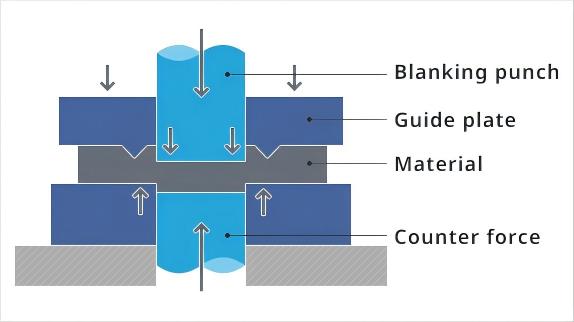
The gear segment is fine-blanked with a V-ring on the stinger plate surrounding the tooth profile. The V-ring impingement depth is 1.0-1.2mm (30-35% of 3.5mm thickness), and the counter-pressure is set to 25% of blanking force. This configuration produces die-roll below 0.15mm (less than 5% of material thickness) on every tooth flank. See our die design page for V-ring dimensioning details for partial-arc gears.

| Parameter | Specification |
|---|---|
| Rack tooth pitch | 2.0-3.0mm (matches gear module) |
| Tip hardness | 55-60 HRC (case-hardened 16MnCr5) |
| Positional tolerance (tooth-to-tooth) | 0.02mm max |
| Edge quality (tooth flank) | 100% shear surface, Ra <1.6µm |
| Die-roll at tooth tip | <0.10mm (3% of 3mm thickness) |
| Pawl pivot hole tolerance | H7 (0.015mm at 6-8mm diameter) |
The locking pawl's rack teeth engage the gear segment under spring load. When the cam plate rotates, it lifts the pawl, disengaging the teeth and allowing the seat back to pivot. The 0.02mm positional tolerance ensures that every tooth engages cleanly without ratcheting or skipping — a failure mode that would cause the seat to slip under occupant load.

The cam plate converts the recliner handle's rotation into linear displacement of the locking pawl. Its non-circular profile provides the correct pawl lift at each handle position. This profile requires a punch with a precisely ground non-circular edge, cut from solid carbide (K20) on a 5-axis wire-EDM machine to 0.03mm profile accuracy.
The punch is mounted in a compound die that also pierces the cam pivot hole and mounting rivet holes, ensuring the cam profile is positioned relative to the pivot axis with 0.02mm concentricity. Because cam plate and gear segment are produced in the same progressive die, the geometric relationship between cam profile and gear tooth positions is maintained without intermediate fixturing.
Thermomechanically rolled HSLA steel, 420 MPa yield. Used for cam plates and spring anchors where high strength is needed without heat treatment. Fine blanking hardness: 180 HB max. Excellent shear edge quality.
Higher-strength HSLA variant, 500 MPa yield. For heavy-duty seat recliners in commercial vehicles. Requires higher blanking force but provides superior fatigue performance under cyclic loading. Fine blanking hardness: 200 HB max.
Boron steel for press-hardened recliner components. Blank in the soft condition (180 HB), then hot-form and quench in-die to 1500 MPa tensile strength. Used for lightweight seat structures requiring ultra-high strength.
Case hardening steel for gear segments and locking pawls. Fine blanked in annealed condition (160 HB max), then carburized and quenched to 58-62 HRC surface hardness for tooth wear resistance. The standard for automotive seat recliner gears.
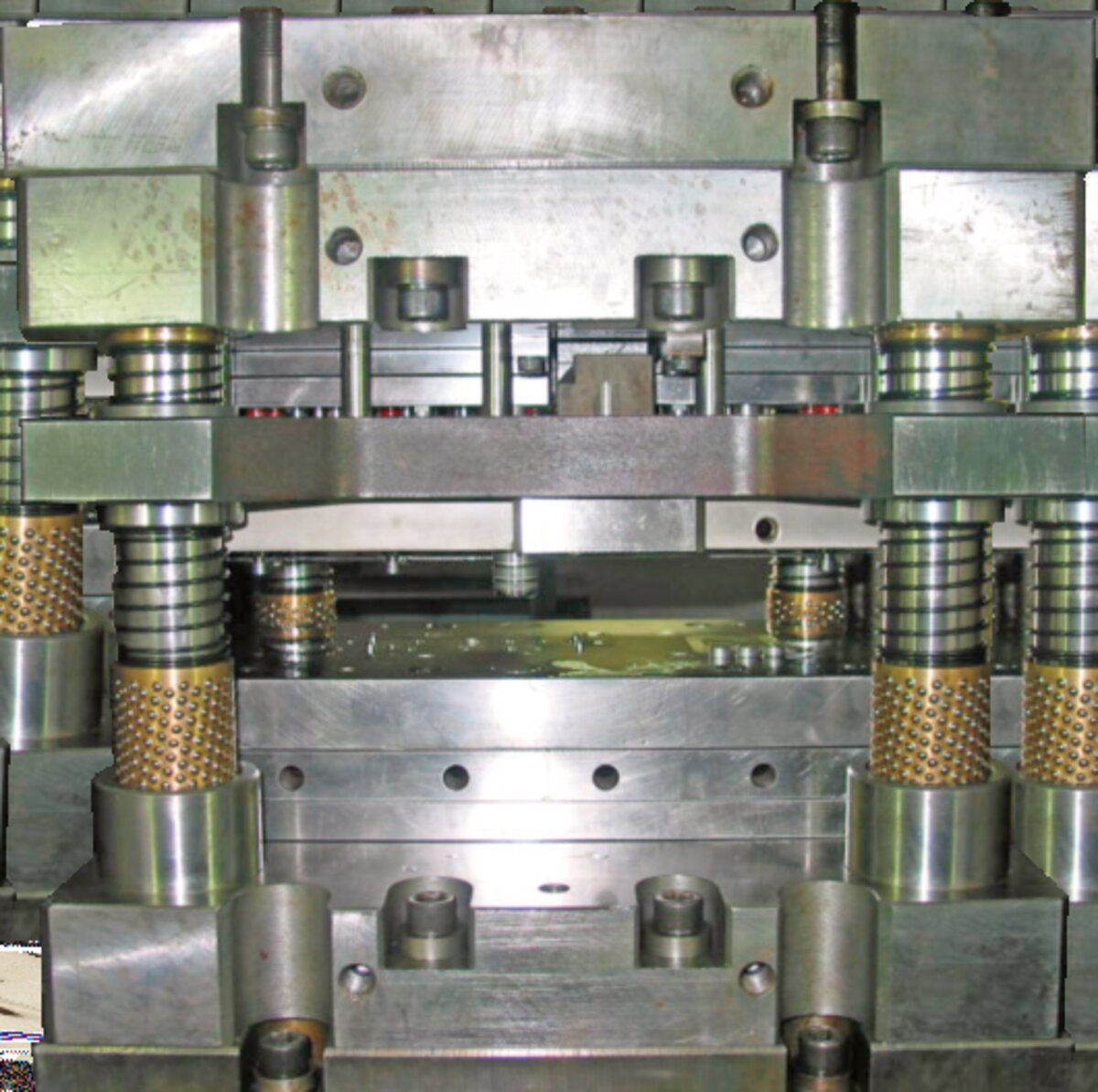
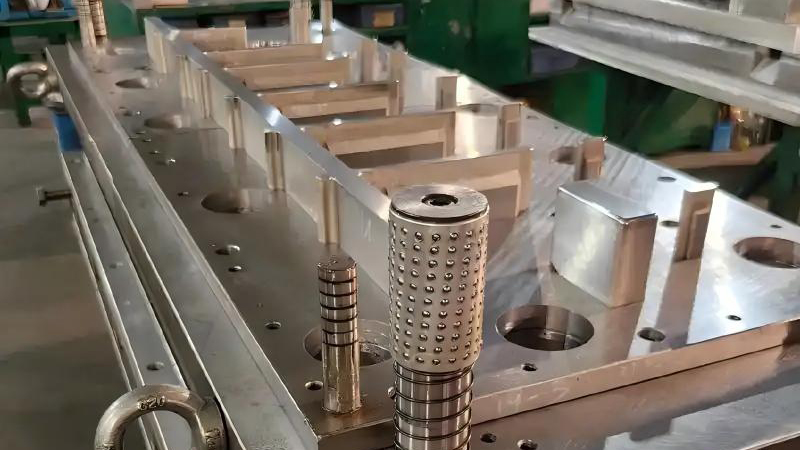
The seat recliner component set is produced in a 4-station progressive die that combines piercing, forming, gear blanking and cam profile cutting in a single strip feed. Each station performs one operation; the part is not cut free until the final station.
Pilot holes and pivot holes pierced. Two pilot holes establish strip position; cam pivot hole and pawl pivot hole pierced to H8 tolerance for subsequent assembly.
Outer profile partially blanked (leaving carrier tabs). Spring anchor tab formed (bend, not cut). Counterbores and chamfers formed where required for rivet heads.
V-ring impingement and blanking of the involute gear teeth (or rack teeth for the pawl). 100% shear surface on all tooth flanks. Counter-pressure applied to minimize die-roll at tooth tips.
Wire-EDM carbide punch cuts the non-circular cam profile and severs the part from the carrier strip. Part ejected with 100% shear edges on all profiles, ready for assembly.
At 25-35 SPM, the progressive die produces a complete component every 1.7-2.4 seconds. A single die set can produce gear segments, pawls, and cam plates by changing the strip layout — or dedicated dies can be built for each component for higher-volume production. See our production line page for full line configuration.
Seat recliner assemblies must pass rigorous cycle life testing: 30,000 full adjustment cycles under simulated occupant load (75kg equivalent torque). After testing, tooth wear must not exceed 0.02mm.
Fine-blanked recliner components routinely pass with tooth wear measured at 0.01-0.015mm after 30,000 cycles. The 100% shear surface distributes load evenly across the tooth face, preventing localized stress concentration that accelerates wear on stamped teeth.
For premium platforms, extended testing to 50,000-60,000 cycles shows 0.02-0.03mm wear — still within functional limits. The carbide die design and V-ring optimization are primary factors in this wear performance.

| Component | Material & Thickness | Force Range (T) |
|---|---|---|
| Gear segment (module 1.5) | 16MnCr5, 3mm | 200-280 |
| Gear segment (module 2.0) | 16MnCr5, 3.5mm | 280-380 |
| Gear segment (module 2.5) | 16MnCr5, 4mm | 380-500 |
| Locking pawl | 16MnCr5, 3mm | 180-250 |
| Cam plate | S420MC, 3mm | 150-220 |
| Progressive die (all components) | Various, 3-4mm | 320-650 |
Force values include blanking + V-ring (35%) + counter-pressure (25%). For progressive dies producing multiple components, the force is the sum of all stations' peak forces.
The most significant advantage of fine blanking for seat recliner production is that components come off the press ready for riveting assembly without secondary machining. Gear segment, locking pawl, and cam plate all have pivot holes pierced to H8 tolerance during blanking — no drilling, no reaming, no boring. Rivet holes are pierced and formed in the same stroke. Tooth profiles and cam profiles are at final dimensional accuracy.
The assembly line receives parts that can be immediately riveted, tested, and packaged. There is no intermediate CNC cell, no deburring station between blanking and assembly (deburring is inline on the press exit conveyor), and no inspection bottleneck. For seat manufacturers, this reduces the supply chain to one vendor versus the traditional multi-vendor route: gear segment from powder metallurgy, cam plate from CNC milling, pawl from stamping, plus finishing at each step. Learn more about our production line capabilities.

| Cost Factor | Fine Blanking (1 process) | Powder Metallurgy + Stamping (2 processes) |
|---|---|---|
| Number of processes | 1 (fine blanking + riveting) | 2 (PM gear + stamping + assembly) |
| Piece cost at 50K/year | Baseline | +30-40% |
| Tooling investment | Higher (progressive die) | Lower (PM mold + stamping die) |
| Material utilization | 65-70% (coil stock) | 95% (PM) + 60% (stamping) |
| Tooth quality (AGMA) | Q8-9 (100% shear) | Q7-8 (PM gear, good but porous) |
| Lead time (first article) | 8-12 weeks (die build) | 6-8 weeks (PM tool + stamping die) |
| Cycle life (tested) | 30,000+ cycles, <0.02mm wear | 25,000+ cycles, <0.03mm wear |
At volumes above 50,000 seat sets annually, fine blanking delivers 30-40% lower piece cost with superior tooth quality and a single-process supply chain.

After fine blanking, recliner components undergo two post-processing steps before assembly:
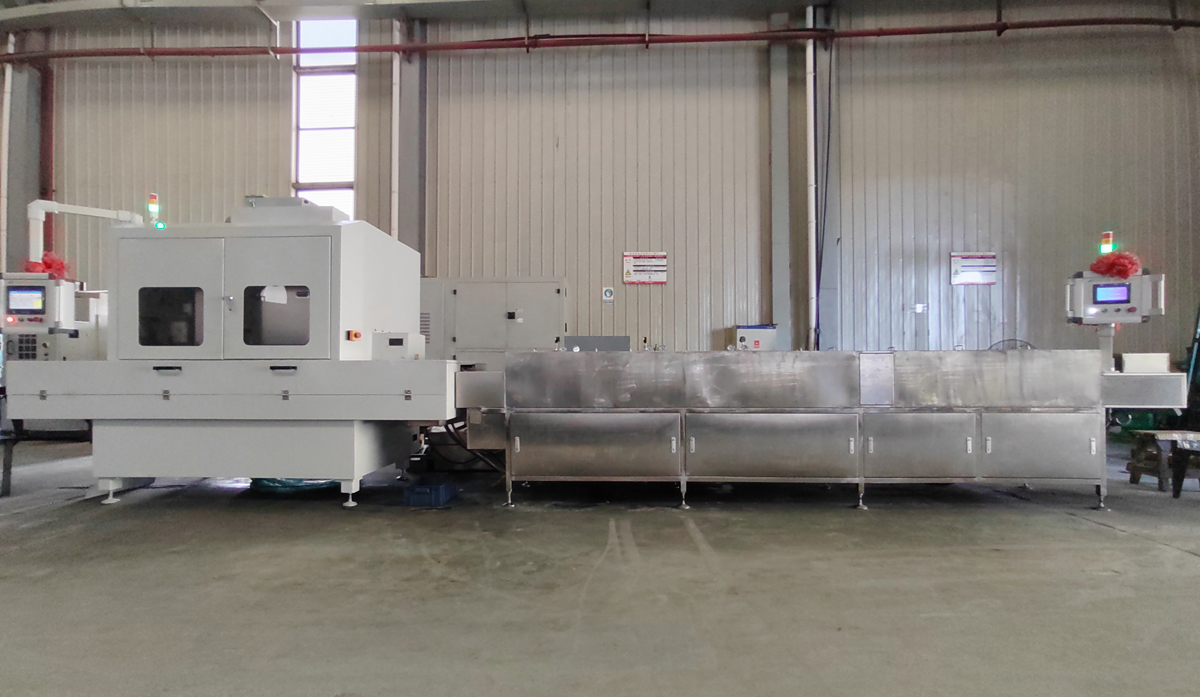
Deburring: The fine blanking burr (0.02-0.03mm) is removed by vibratory deburring in a ceramic media tumbler (10-20 minutes), performed inline on the press exit conveyor. Parts are then ultrasonically cleaned to remove lubricant and media residue.
Case hardening: Gear segments and locking pawls in 16MnCr5 are carburized at 920°C for 2-4 hours (shorter cycle due to 0.3-0.6mm case depth), oil-quenched, and tempered at 180°C to 58-62 HRC. Cam plates and spring anchors in S420MC require no heat treatment. See our deburring and polishing guide for equipment details.
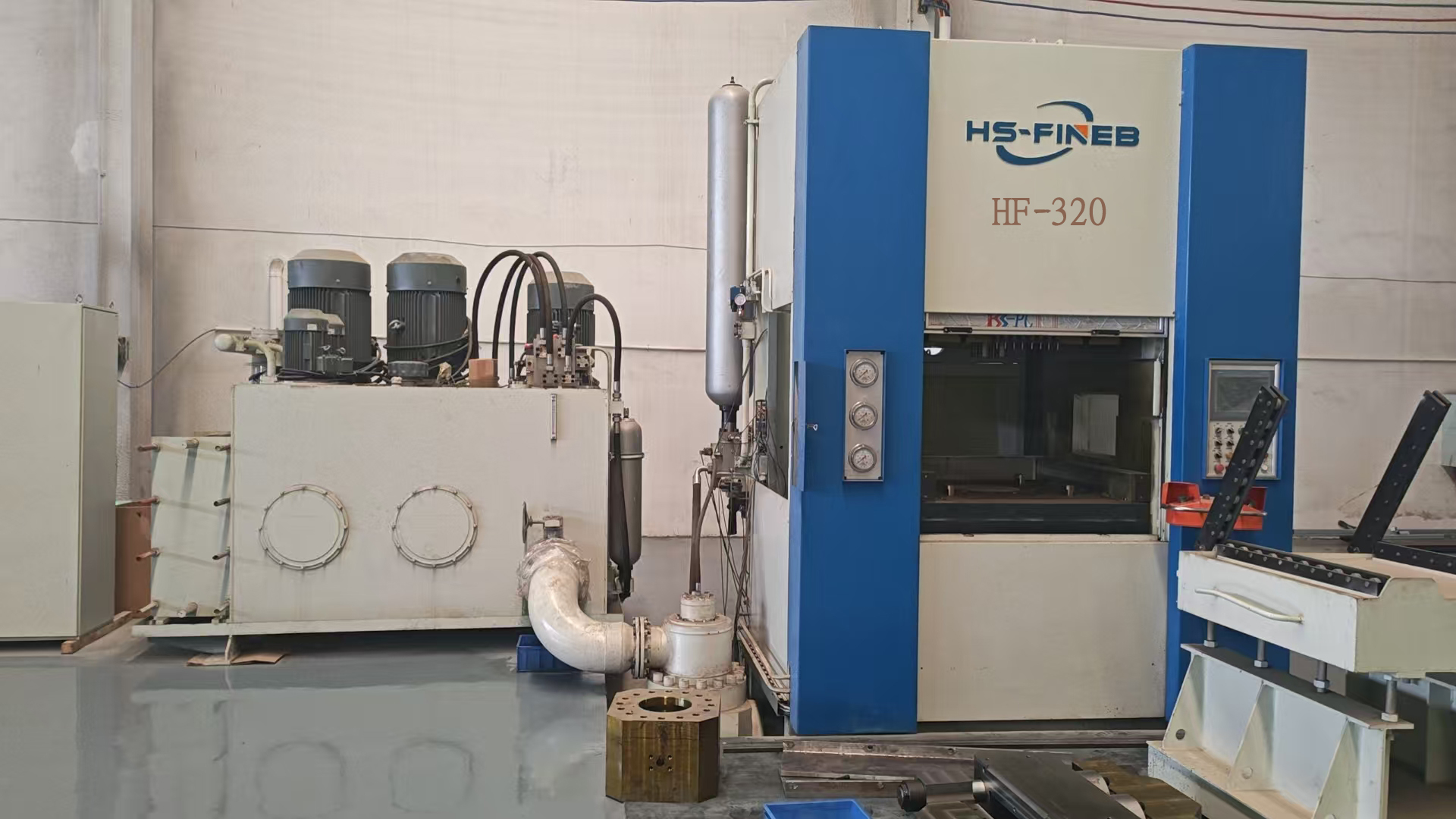
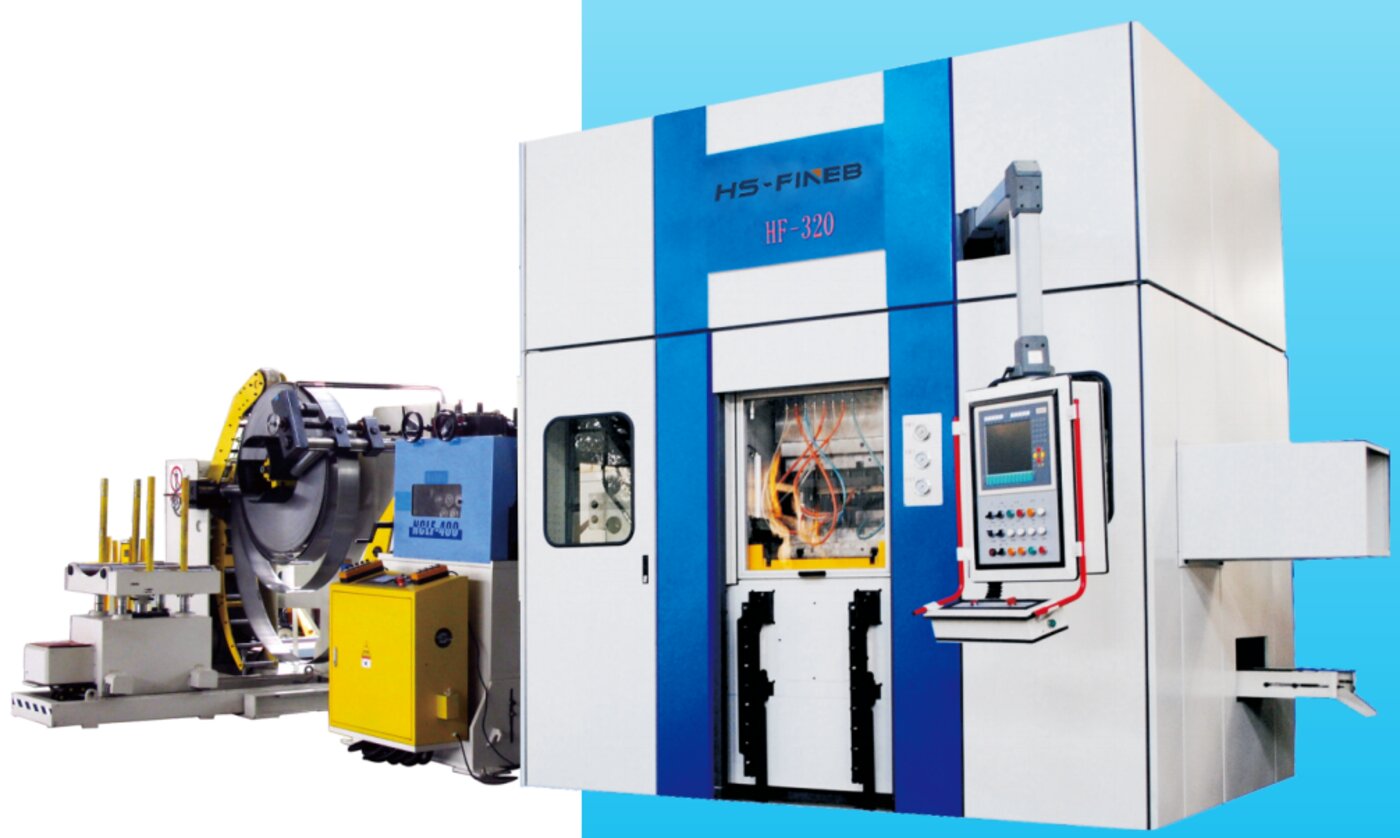
For module 1.5-2.0 gear segments and locking pawls in 3-3.5mm material. The 320T force handles the progressive die for full recliner component sets at moderate volumes. Ideal for passenger vehicle seat production.
View HF-320
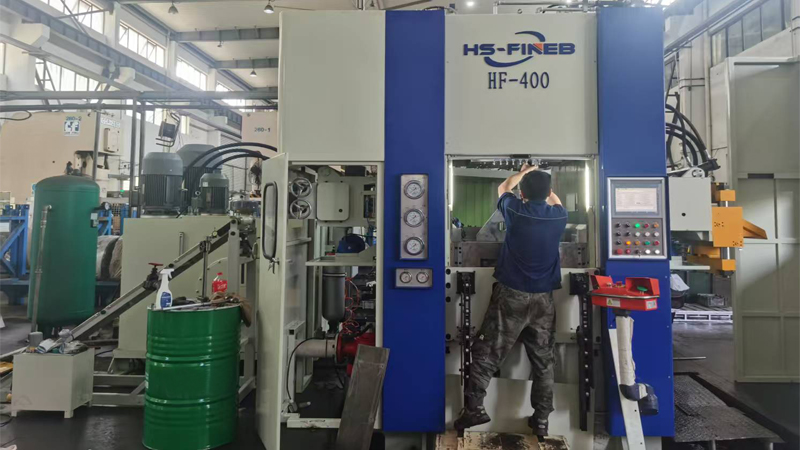
For module 2.0-2.5 gear segments in 3.5-4mm material. The 400T capacity accommodates thicker plates and larger gear modules while maintaining counter-pressure for minimal die-roll on tooth flanks.
View HF-400
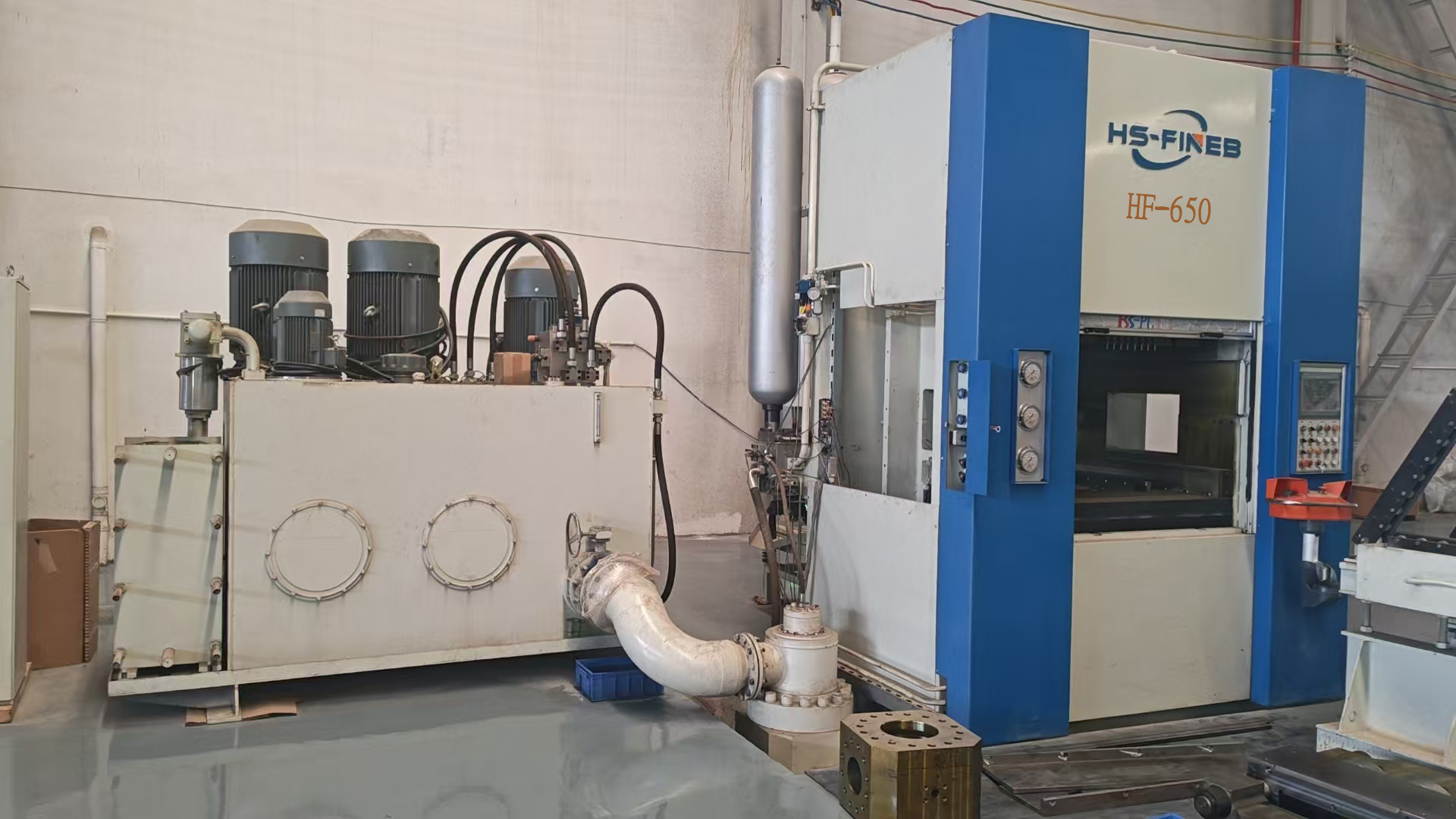
For heavy-duty commercial vehicle seat recliners with module 2.5+ gears and thick progressive dies. The 650T force provides the reserve capacity needed for multi-station dies producing all recliner components in one strip.
View HF-650Send your recliner assembly drawing, gear module specification, material grade and target volume. Our engineers will assess fine blanking feasibility, design the progressive die layout, optimize V-ring geometry for your gear segment profile, and recommend the right HF-series press for your seat recliner production line.