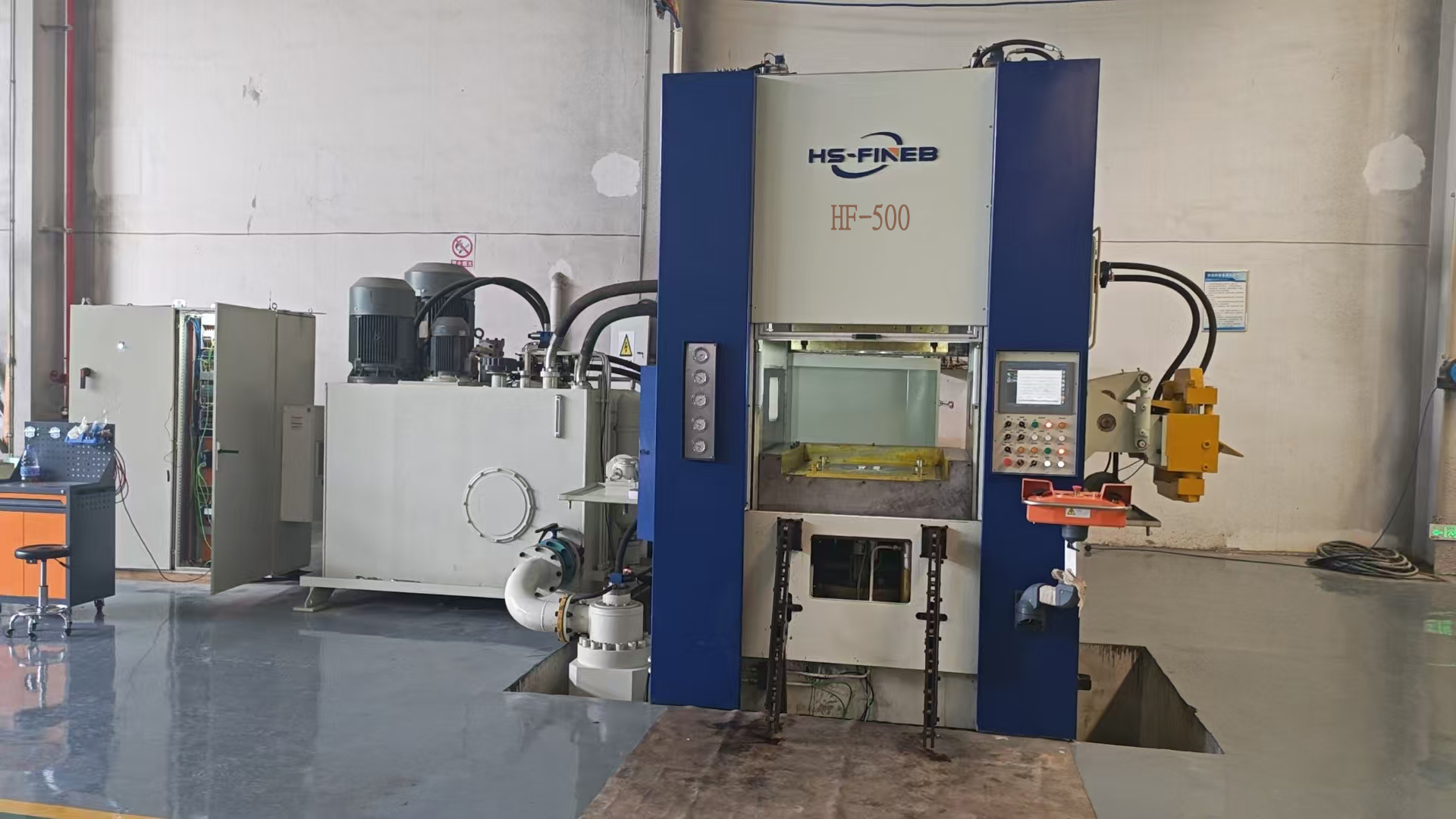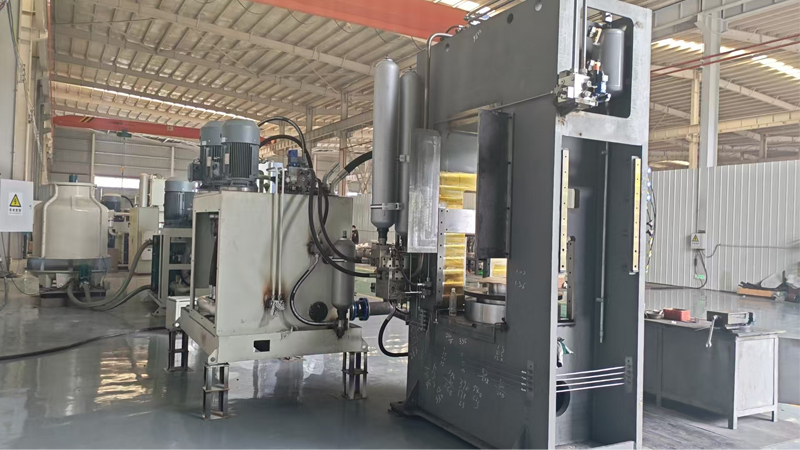
The complete fine blanking press import workflow from technical specification through factory acceptance testing, export documentation, shipping logistics, Incoterms selection, customs clearance, and final commissioning on site.
Importing a fine blanking press from China involves a structured sequence of technical, commercial, and logistical steps spanning approximately 6-10 months from initial inquiry to commissioned production. Each step has specific documentation requirements, decision points, and potential pitfalls. This guide walks through the complete workflow, explaining what happens at each stage, what documentation is generated, and what the buyer must do to keep the project on track.
HS-FINEB manages the export side of this process — manufacturing, FAT, packing, documentation, and vessel loading — while the buyer manages the import side: customs clearance, inland transport, installation site preparation, and commissioning acceptance. Clear division of responsibility and complete documentation handoff at each transfer point are the keys to a smooth import. The Incoterms agreed in the contract define where our responsibility ends and the buyer's begins.

The process begins with the buyer providing part drawings, material specifications, expected production volume, and any site constraints (floor space, ceiling height, crane capacity). Our engineers analyze these inputs to determine the required tonnage, bed size, stroke, die clearance height, and auxiliary equipment scope. This produces a detailed technical specification document — not a marketing brochure — listing every parameter with measured or calculated values. The buyer confirms or modifies this specification before pricing is finalized. This step typically takes 1-2 weeks and is critical: errors or ambiguities in specification propagate through manufacturing and commissioning, potentially requiring costly field modifications.
Once the technical specification is confirmed, HS-FINEB issues a Proforma Invoice (PI) listing the agreed equipment, unit price, total amount, Incoterms, delivery terms, payment schedule, and warranty terms. The sales contract formalizes the PI terms, adds force majeure provisions, dispute resolution mechanisms, and specification reference. The contract is signed by both parties — typically in English with a bilingual version available if required. The payment schedule typically follows a 30-30-30-10 structure: 30% advance (triggering manufacturing start), 30% after FAT (triggering packing), 30% after shipment (against bill of lading), and 10% after commissioning. Variations are negotiable.

3. Manufacturing (4-6 months): The press is built against the confirmed specification at our Huangshi facility. Frame welding, stress-relief, precision machining, hydraulic system integration, and assembly proceed on a documented schedule. The buyer or a third-party inspection agency may visit at agreed milestones — typically after frame machining and during hydraulic system integration. We provide progress photo reports at agreed intervals.
4. Factory Acceptance Test (FAT) (1-2 weeks): Before packing, the completed press undergoes full-tonnage testing at our facility. The FAT protocol — agreed during contract negotiation — typically includes: full-rated-tonnage hydraulic pressurization (verifying the press delivers rated force without leakage or abnormal deflection), ram parallelism measurement across the full die area at multiple stroke positions (verifying guiding system integrity), hydraulic system pressure stability testing for each circuit (ring gear, counter-pressure, main ram), and blanking trials on the buyer's specified material if samples are provided. FAT is witnessed by the buyer's representative or a third-party inspection agency (SGS, TUV, Intertek). The FAT report documents measured values for every parameter, signed by both parties. FAT acceptance triggers the second payment milestone.
Export packing: After FAT, the press is prepared for ocean transport. Hydraulic circuits are drained of oil and pressurized with nitrogen. The machine is bolted to ISPM-15-treated export timber skids, wrapped in VCI (volatile corrosion inhibitor) film, and secured within a timber crate rated for the machine's gross weight. Loose items (spare parts, tools, documentation) are packed in separate marked cases. The packing list itemizes every case with gross weight, net weight, and dimensions.
The documentation package that accompanies every shipment includes: Commercial Invoice (in English, stating HS code, country of origin, Incoterms, and payment terms); Packing List (itemized by case, with weights and dimensions); Bill of Lading (issued by the shipping line, serves as title document for the goods); Certificate of Origin (issued by CCPIT or entry-exit inspection bureau, required for FTA preferential tariff claims — Form E for ASEAN, Form A for GSP); and where required, inspection certificate (SGS/TUV FAT report). For electrical equipment, the CE conformity declaration and technical file are included.
Presses up to approximately 650 tons and 28 tons gross weight ship in 40-foot flat rack containers (FCL). The press is secured to the flat rack with steel wire rope and turnbuckles, then lashed into the container cell on the vessel. Larger presses (HF-800 through HF-1200, weighing 45-98 tons) ship as breakbulk cargo — loaded directly onto the vessel's deck or into a hold, secured with steel wire rope lashing to vessel deck pads. Breakbulk shipping requires a heavy-lift quay crane at both loading and discharge ports. Container shipping is faster, cheaper, and more flexible; breakbulk is the only option for large presses but requires more port-side coordination. The buyer's freight forwarder manages the destination port discharge and customs entry.

The choice of Incoterms defines the division of cost, risk, and responsibility between seller and buyer. For fine blanking press imports, the four most relevant terms are:
FOB (Free On Board): HS-FINEB delivers the press on board the vessel at the named Chinese port (Shanghai or Ningbo). Risk and cost transfer to the buyer once the press crosses the ship's rail. The buyer arranges and pays for ocean freight, insurance, destination port charges, customs clearance, duties, and inland transport. FOB gives the buyer maximum control over freight and the ability to use their preferred logistics provider. Best for buyers with established freight forwarding relationships.
CIF (Cost, Insurance, Freight): HS-FINEB arranges and pays for ocean freight and minimum insurance to the named destination port. Risk transfers at the vessel rail at the loading port (same as FOB), but the seller manages freight booking. CIF is convenient for buyers who prefer the seller to handle freight arrangements. The insurance under CIF is typically minimum coverage (Institute Cargo Clauses C); buyers requiring all-risk coverage should arrange additional insurance.
DAP (Delivered At Place): HS-FINEB delivers the press to the named destination (the buyer's facility), with the buyer responsible for import customs clearance and duties. DAP shifts inland transport and destination port handling to the seller but leaves customs and duty management with the buyer — appropriate when the buyer has customs expertise but not heavy-lift inland transport capability.
DDP (Delivered Duty Paid): HS-FINEB delivers the press to the buyer's facility with all duties and taxes paid. Maximum convenience for the buyer but requires the seller to have import registration in the destination country. For fine blanking presses, DDP is less common because the duty structure and import documentation requirements vary by country and the buyer often has better local customs expertise. We quote DDP on request after evaluating the destination country's import requirements.
At the destination port, the buyer's customs broker files the import entry using the documentation package provided by HS-FINEB. Duties and taxes are assessed based on the HS classification (typically 8462.29 for hydraulic metalworking presses), the customs value (based on the commercial invoice value under the transaction value method), and the applicable tariff rate (including any FTA preferential rates). After customs release, inland transport to the factory requires a low-bed trailer for large presses and route survey for bridges, overhead clearance, and turning radius. The buyer arranges crane access at the facility for offloading.
HS-FINEB field engineers travel to the buyer's facility for installation and commissioning — typically 5-10 working days depending on press size. The press is positioned on the prepared foundation, leveled, and bolted down. Hydraulic oil is filled and circuits bled. Electrical connections are made to the buyer's prepared supply. The Site Acceptance Test (SAT) repeats the FAT protocol at the buyer's facility: full-tonnage pressurization, ram parallelism verification, and blanking trials on the buyer's specified material. SAT acceptance triggers the final payment milestone and the warranty period. Operator training — covering die setting, force parameter programming, routine maintenance, and safety procedures — is conducted during the commissioning period.
The most common cause of commissioning delays is site not ready when the press arrives. Foundation not cured, electrical supply not connected, crane not available, hydraulic oil not on site. Each day of delay costs production time and may incur field engineer per-diem charges. Prepare the site to the specification we provide — and confirm readiness before scheduling shipment.
Importers sometimes calculate only the basic customs duty, forgetting IGST, social welfare surcharge, Section 301 tariffs, or VAT. Request a total landed cost estimate from your customs broker before placing the order, including all duty layers, port charges, and inland transport.
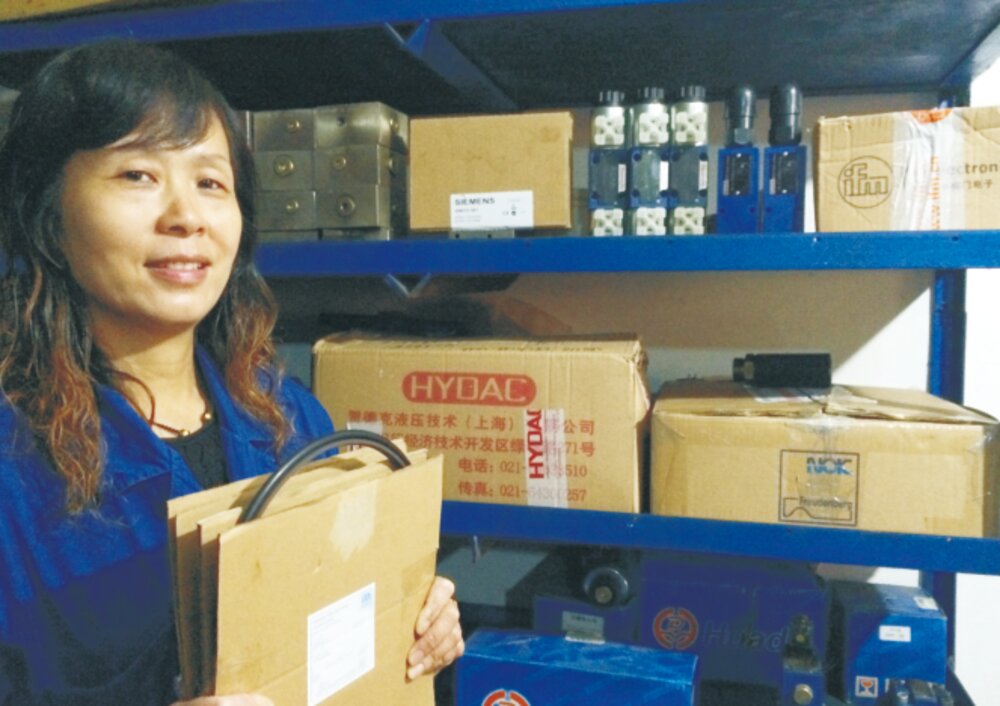
A press commissioned without a critical spare parts package is one part failure away from extended downtime. During commissioning, work with our engineers to define the critical list and order the starter package. Items with 4-8 week lead times from European component manufacturers must be stocked on site.
Contact Helen today for a detailed quotation, technical consultation, or factory tour arrangement. Our engineering team responds within 24 hours.