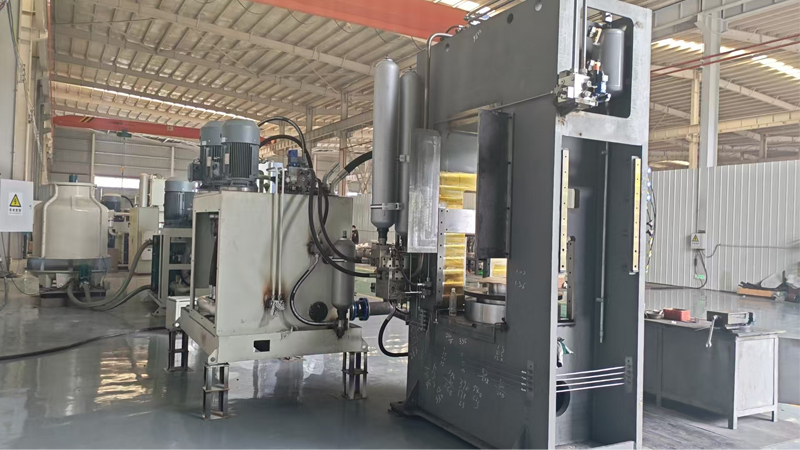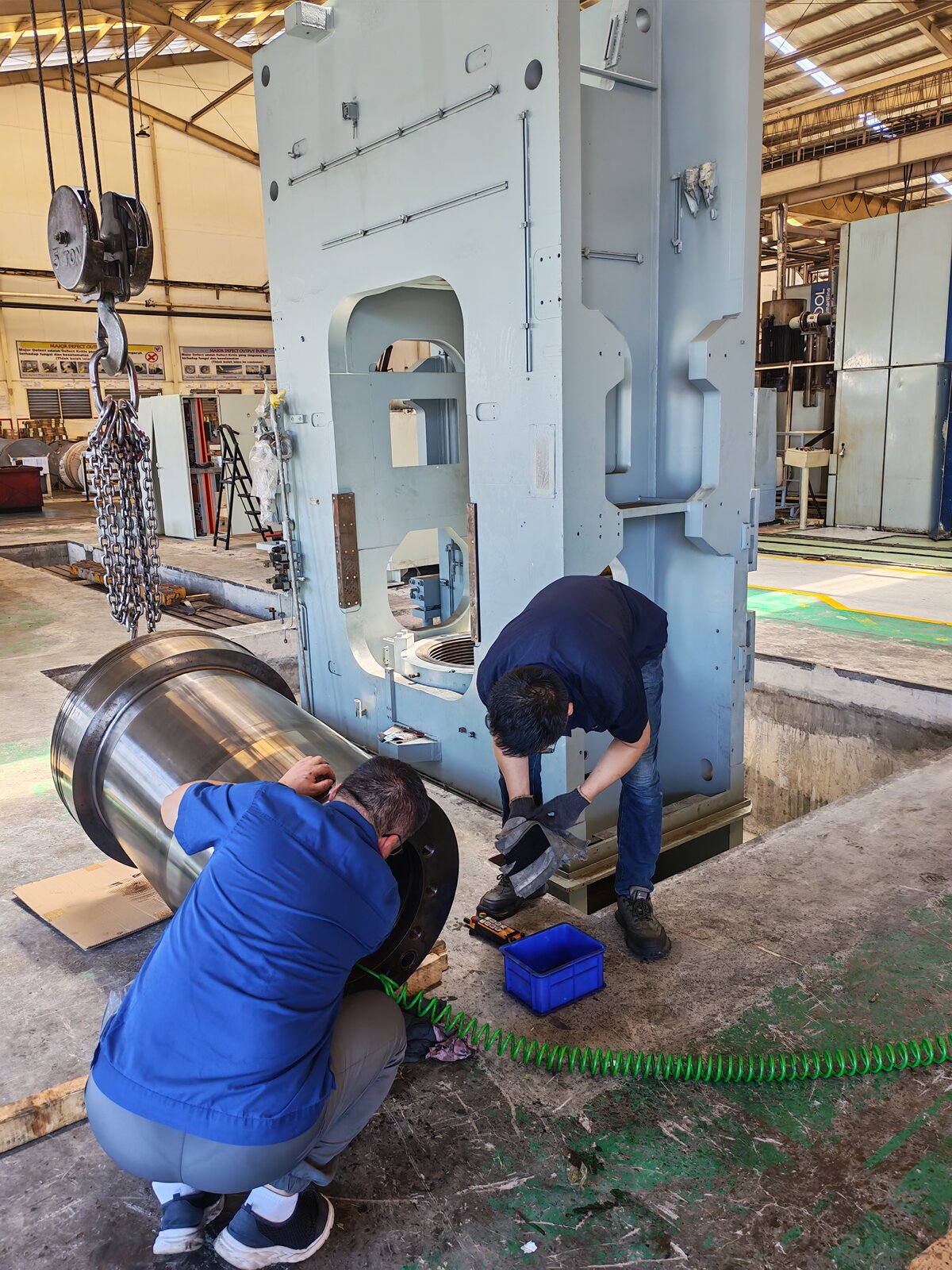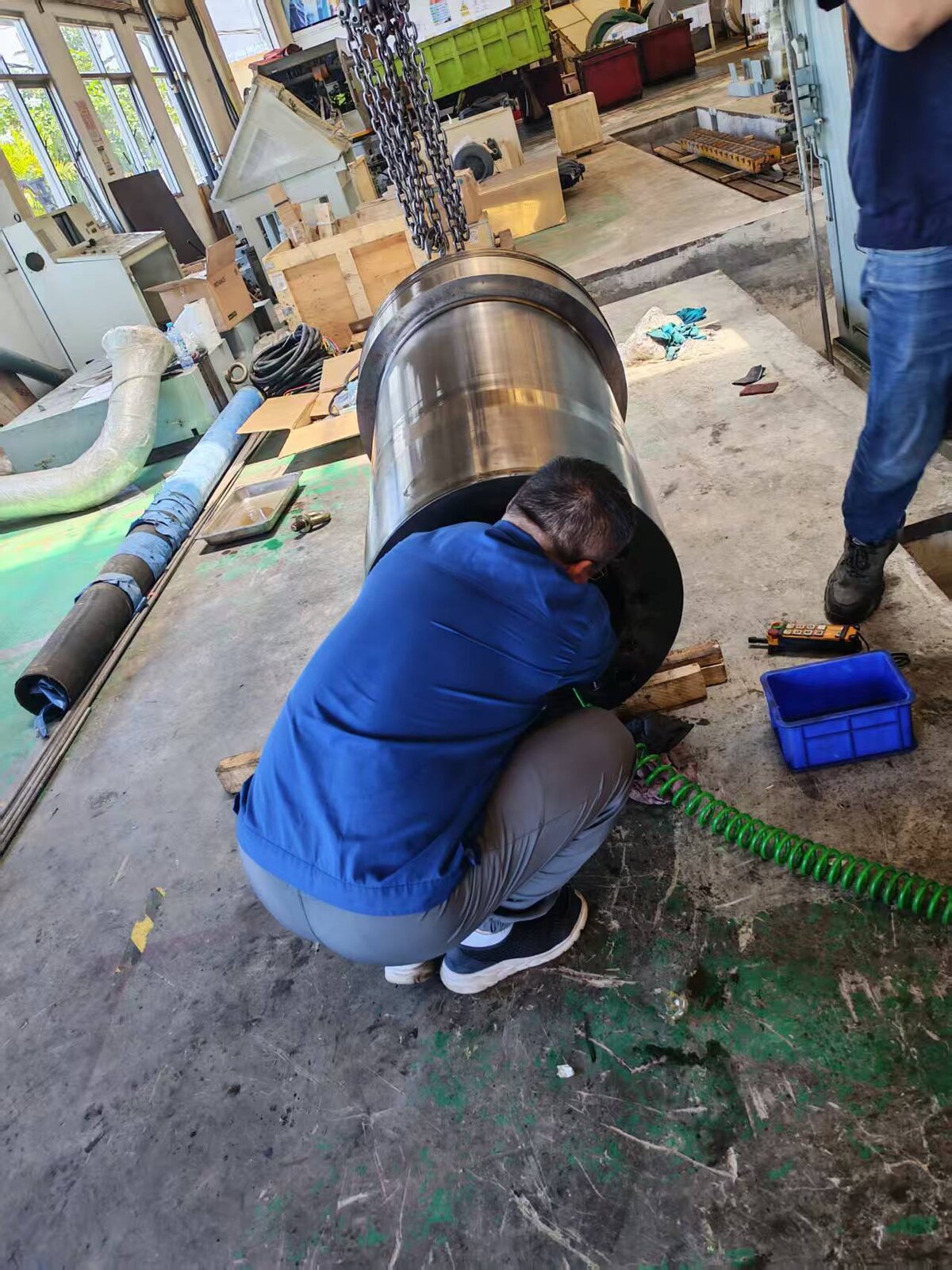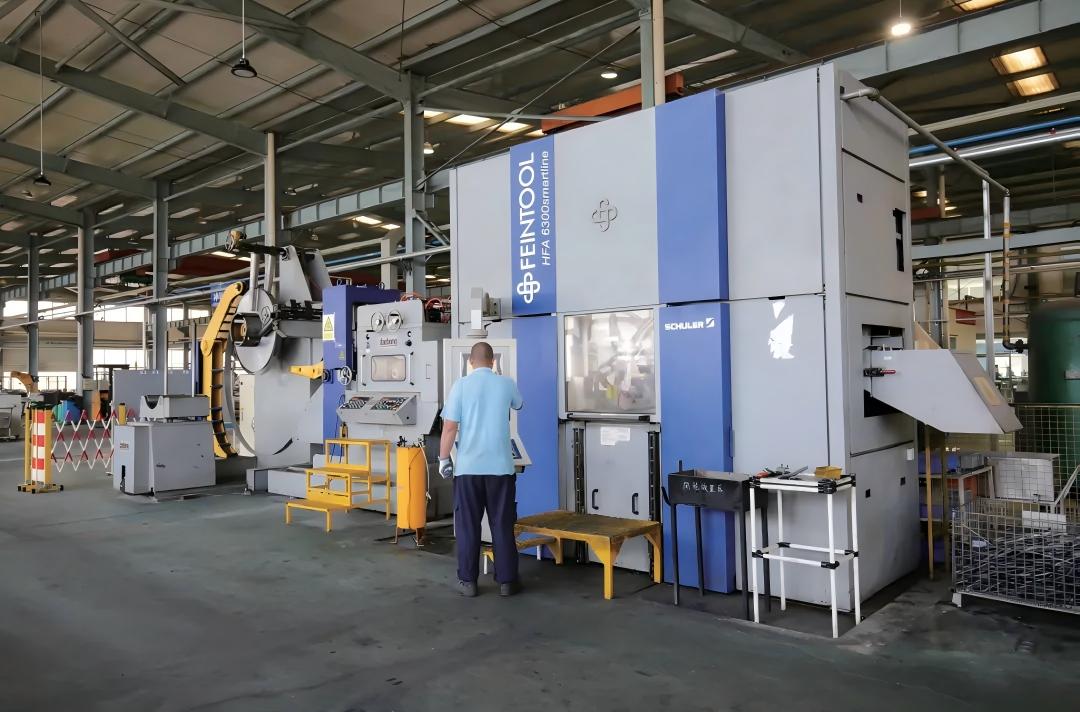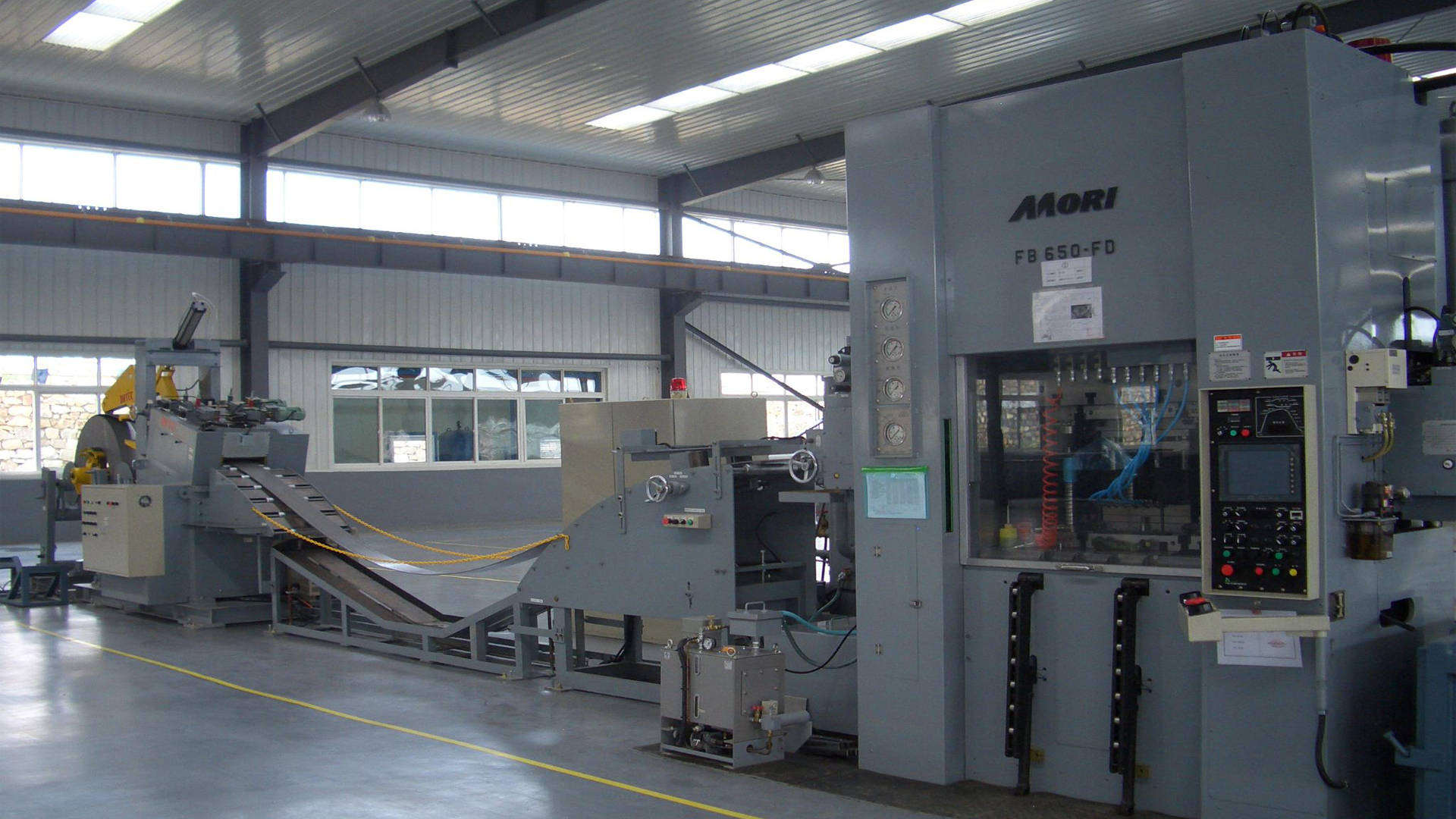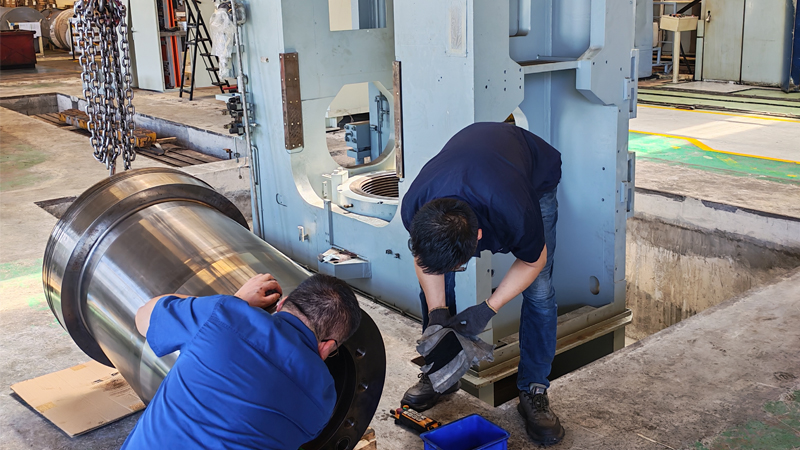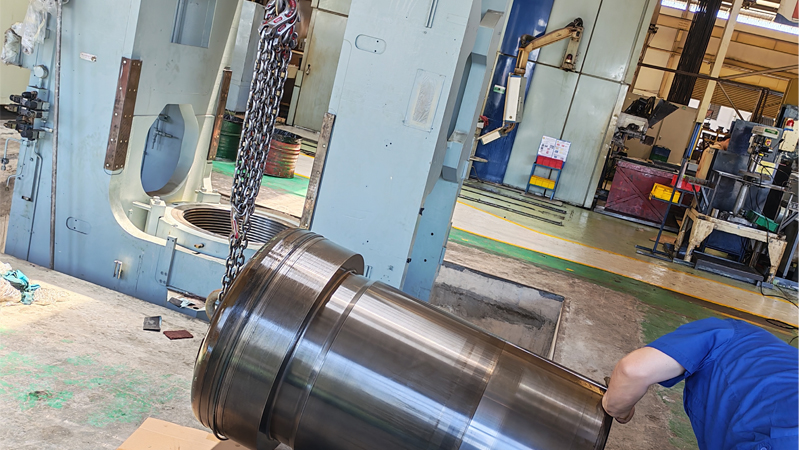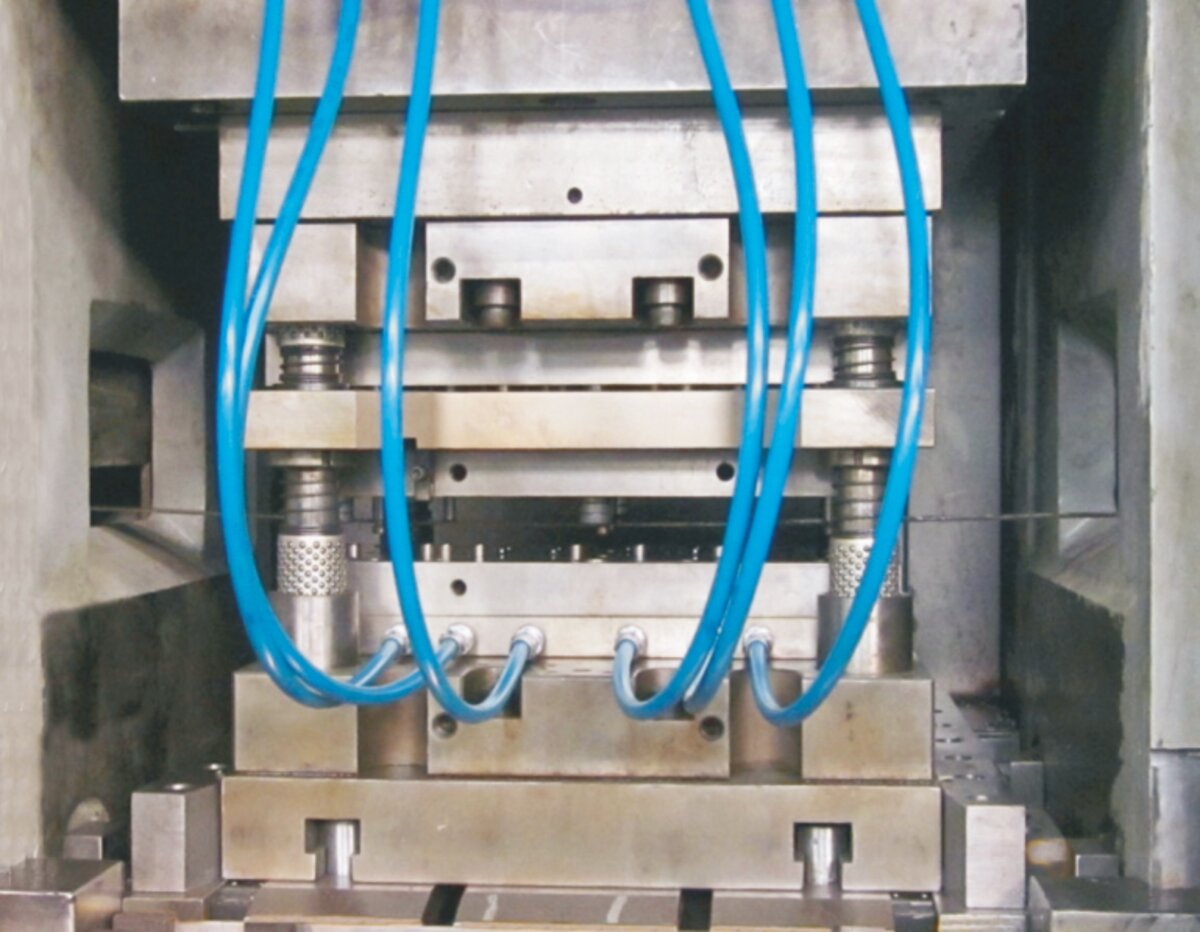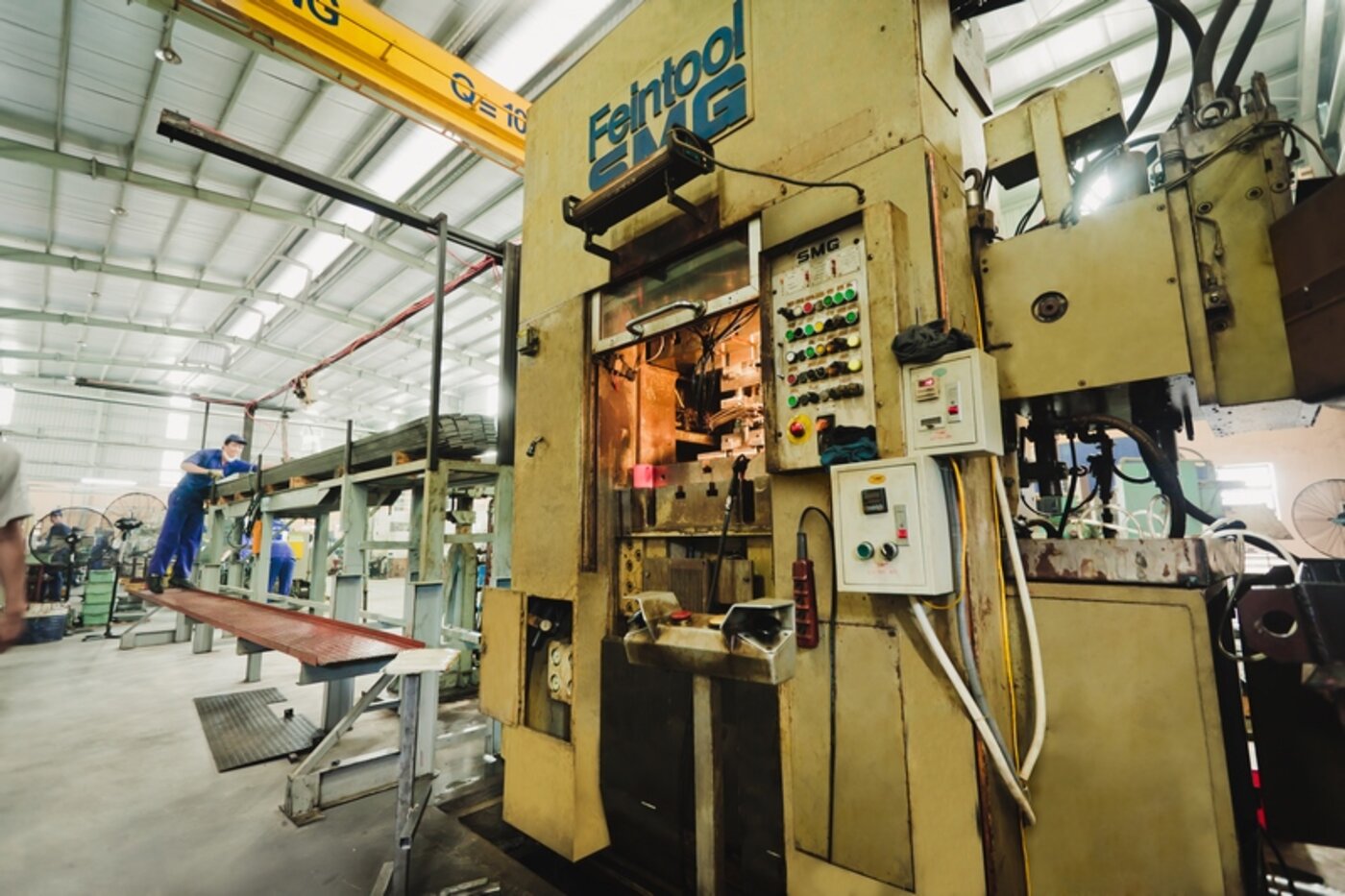
A 15-year-old Feintool XTF or Mori press still has 70-85% of its original capability — the frame, guiding columns, and hydraulic architecture are sound. What fails is predictable: hydraulic pump wear after 12-15 years, PLC obsolescence, seal degradation. OEM replacement costs $800K-$2M. Our refurbishment restores that capability at 30-45% of replacement cost.

Feintool press repair and refurbishment service
As an independent service provider, we offer on-site refurbishment and repair for Feintool, Mori, Schuler, Hydrel, Osterwalder, Asahi-Seiki, and Nagano Seiko presses. Our engineers have 10-20+ years of field experience with each platform's hydraulic architecture, control system generations, and failure patterns — the knowledge that determines whether a repair takes 3 days or 3 weeks.
Series expertise: XTF (mechanical-hydraulic), MJP (compact), and GKP (older generation). Common failure patterns: hydraulic pump wear after 12-15 years of continuous operation, V-ring cylinder seal degradation causing 10-15% force drop, and GKP relay-based control obsolescence. Typical turnaround: 4-8 weeks depending on scope. 12-month warranty on rebuilt hydraulic systems.
Series expertise: Mori Seiki and Mori Iron (Ingyu) platforms. Common failure patterns: guiding column galling after 15+ years of high-tonnage operation, hydraulic pump efficiency loss, and CNC control hardware reaching end of support. Frame and guideway inspection — including ultrasonic crack detection — precedes every rebuild scope.
When a hydraulic leak in the V-ring cylinder causes a 15% force drop and edge quality degradation — visible as increased die-roll height and tear zone on the sheared edge — our targeted repair isolates the fault, replaces failed seals, re-hones the cylinder bore, and verifies force restoration with a load cell test. Fixed-scope quotation before work begins.
When a 1995-vintage relay control system fails and OEM replacement parts are discontinued, our retrofit replaces the entire control architecture with a modern PLC (Siemens/Beckhoff) and touchscreen HMI — while retaining serviceable mechanical structure, hydraulic valves, and safety circuits. The press gains recipe storage, real-time force monitoring, and alarm diagnostics the original relay logic could never provide.
Our remote diagnosis service connects to your press control system to read PLC alarm codes, hydraulic pressure curves at each stroke phase (fast approach, shear, V-ring engagement, counter-pressure, ejection), and servo encoder position data in real time. This allows our engineers to assess faults before dispatching a field team — resolving 60-70% of reported faults without an on-site visit.
What is included: Remote PLC/HMI connection, alarm log analysis with timestamp correlation, hydraulic pressure curve review against baseline, servo feed accuracy diagnosis with pitch deviation mapping, and a written condition report with recommended action and estimated cost. Response within 4 hours during business hours (GMT+8).
Compatibility: Available for HS-FINEB presses and major brand machines with PLC-based controls (Siemens, Mitsubishi, Fanuc). For legacy relay-based controls on older Feintool GKP or Mori Iron presses, we provide phone-based troubleshooting with photo and video support, supplemented by on-site assessment when needed.


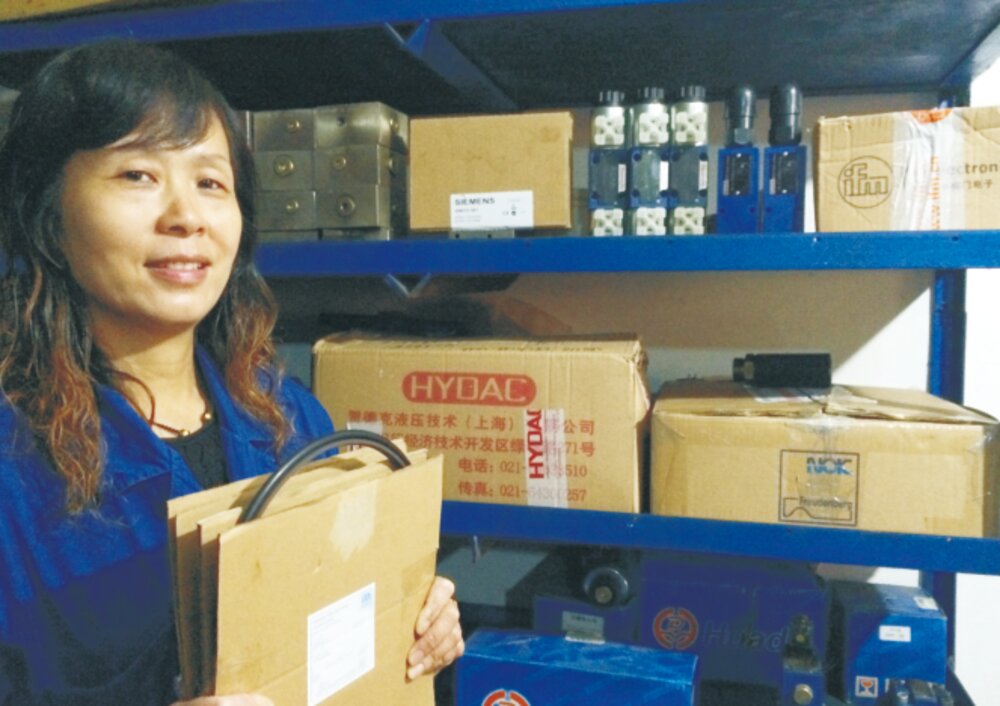
We maintain a comprehensive spare parts inventory for HS-FINEB and major brand presses, including Bosch Rexroth hydraulic pumps, proportional valves, NOK and Trelleborg seal kits, self-manufactured guiding columns and bushings, PLC modules, HMI panels, SICK and Lenze encoders, and servo drives. Critical seals and wear parts are stocked for same-week dispatch — because a press down for a $200 seal costs $20,000 per day in lost production.
Lead times: Stocked parts ship within 3-5 business days. Custom-manufactured mechanical parts (guiding columns, bushings, die cushions) typically 2-4 weeks, with material certification (EN 10204 3.1) provided on request. All hydraulic components are traceable to named suppliers — no generic substitutions on critical-path parts.
Bosch Rexroth pumps, proportional and directional valves, hydraulic cylinders, and NOK/Trelleborg seal kits — all traceable to named suppliers with material certification.
Self-manufactured guiding columns, bushings, ram components, die cushions, and wear plates — machined, hardened, and ground to specification in our facility.
PLC modules (Siemens/Beckhoff), HMI panels, SICK encoders, proximity sensors, and Lenze servo drives for control system maintenance and retrofit.
Guide the buyer through foundation drawings, anchor bolt layout, anti-vibration pad specification, and utility connections — hydraulic power unit cooling water, electrical supply, and compressed air.
Our engineers install and level the press to within 0.02 mm/1,000 mm, connect triple-action hydraulics (punch, V-ring, counter-pressure), electrical, and servo feeding systems.
Systematic parameter tuning — V-ring pressure, counter-pressure ratio, stroke rate, feed pitch — followed by die trial, pressure curve optimization, and part quality verification against drawing tolerances.
Operator training covering die setup, pressure parameter adjustment, daily maintenance procedures, safety protocols, and troubleshooting. Includes documentation of part-program recipes and maintenance schedules.
Tooling protection sensors detect misfeeds, slug ejection failures, and material thickness variations before they cause $20,000-$80,000 die damage events. Our retrofit kits install on both HS-FINEB and legacy presses, integrating with the press control to trigger immediate stroke interruption within milliseconds when an anomaly is detected.
Protection modes: Misfeed detection via optical sensor at the die entry — catches a strip that stops short or overshoots by more than 0.05 mm. Slug pulling detection via capacitive sensor in the die cavity — identifies when a punched slug adheres to the punch face instead of ejecting through the die. Overload monitoring via load cell in the ram — detects force spikes from double-feeding, misplaced slugs, or material thickness variation, triggering stroke reversal before the die bottoms out. Sensor types: Optical, proximity, capacitive, and load-cell based options depending on die configuration and part geometry.

The decision between repair, refurbishment, and replacement depends on the press's mechanical baseline. If the frame and guiding columns are sound — verified by ultrasonic inspection and parallelism measurement — a Feintool XTF or GKP can be fully refurbished with new hydraulics and CNC control, delivering 70-85% of new-machine capability at 30-45% of replacement cost. If the frame has stress cracks or the guiding system is beyond regrinding tolerance, replacement becomes the only viable option. Our engineers assess this before recommending any scope.
Request Feintool service →For Mori Seiki and Mori Iron presses, the critical assessment is the guiding column surface condition. Light galling can be reconditioned by grinding and re-bushing. Deep scoring from prolonged insufficient lubrication requires column replacement — a 4-6 week manufacturing lead time that we handle in-house. We assess cylinder bore condition, hydraulic pump efficiency, and CNC hardware status before recommending repair, retrofit, or full refurbishment.
Request Mori service →
Our engineer inspects the press on-site or via remote video, measuring ram parallelism, guiding clearance, hydraulic pressure curves, and alarm history. The condition report recommends scope and priority.
You receive an itemized quotation covering parts (with supplier names), labor, estimated downtime, and warranty terms — no open-ended billing or discovery charges.
Work is carried out on-site for hydraulic, control, and guiding repairs. Major frame welding and column regrinding are performed at our Huangshi facility when logistics allow, with the press reinstalled and re-leveled on return.
Load test at 100% rated tonnage, precision measurement (ram parallelism, tonnage accuracy, stroke repeatability), and a production trial with your die and material confirm the press meets the agreed specification before sign-off.
A targeted repair addresses a localized fault — a leaking V-ring cylinder, a failed PLC module, a worn servo feeder — with fixed scope and downtime. A retrofit replaces an obsolete subsystem (relay controls, 1990s PLC, mechanical feeder) while retaining the serviceable frame, guiding, and hydraulic architecture. A full refurbishment is justified when condition measurements show guiding wear beyond regrinding tolerance, multiple hydraulic components at end of life, and control hardware that can no longer be sourced — typically after 12-15 years of continuous operation.
Email your press brand, model, year, current symptoms, and production requirements. Our service team will respond within one business day with an assessment plan and estimated intervention scope.