From Chinese industrial heritage to global fine blanking specialist — nearly 40 years building presses, dies and production cells in Huangshi, Hubei.
HS-FINEB is a specialist manufacturer of fine blanking machines and precision stamping auxiliary equipment, headquartered in Huangshi City, Hubei Province — a region with deep roots in China's heavy-industry and steel-making tradition. Our 30,000+ m² facility and 126+ employees are guided by one operating principle: every design decision is made against the tolerances fine blanking dies require, not general-purpose stamping.
Unlike general stamping-press builders who add fine blanking as a side product line, fine blanking is the only press technology we build. Frame stiffness, guiding geometry, hydraulic response, platen flatness — every parameter is specified against the triple-force architecture that distinguishes fine blanking from conventional stamping: V-ring impingement, counter-pressure and blanking force acting simultaneously to produce clean, burr-free sheared edges in a single stroke.
Our engineering team works hand-in-hand with our tooling department, so presses and dies are developed as one system. When a customer sends a part drawing, our engineers configure the press parameters — ring gear force, counter-pressure, blanking speed — around the specific material grade, thickness and tolerance callout on that drawing. That is why customers come to us not just for a machine, but for a working process: a validated combination of press, die and material handling that produces a qualified part from the first article onward.
Beyond new-machine manufacturing, our field service division supports the wider installed base of fine blanking presses worldwide — including Feintool, Mori, Schuler, Hydrel, Osterwalder, Asahi-Seiki and Nagano Seiko — with rebuilds, retrofits and on-site repair. Fine blanking process fundamentals are shared across serious manufacturers, even when specific hydraulic architecture and control systems differ by brand.

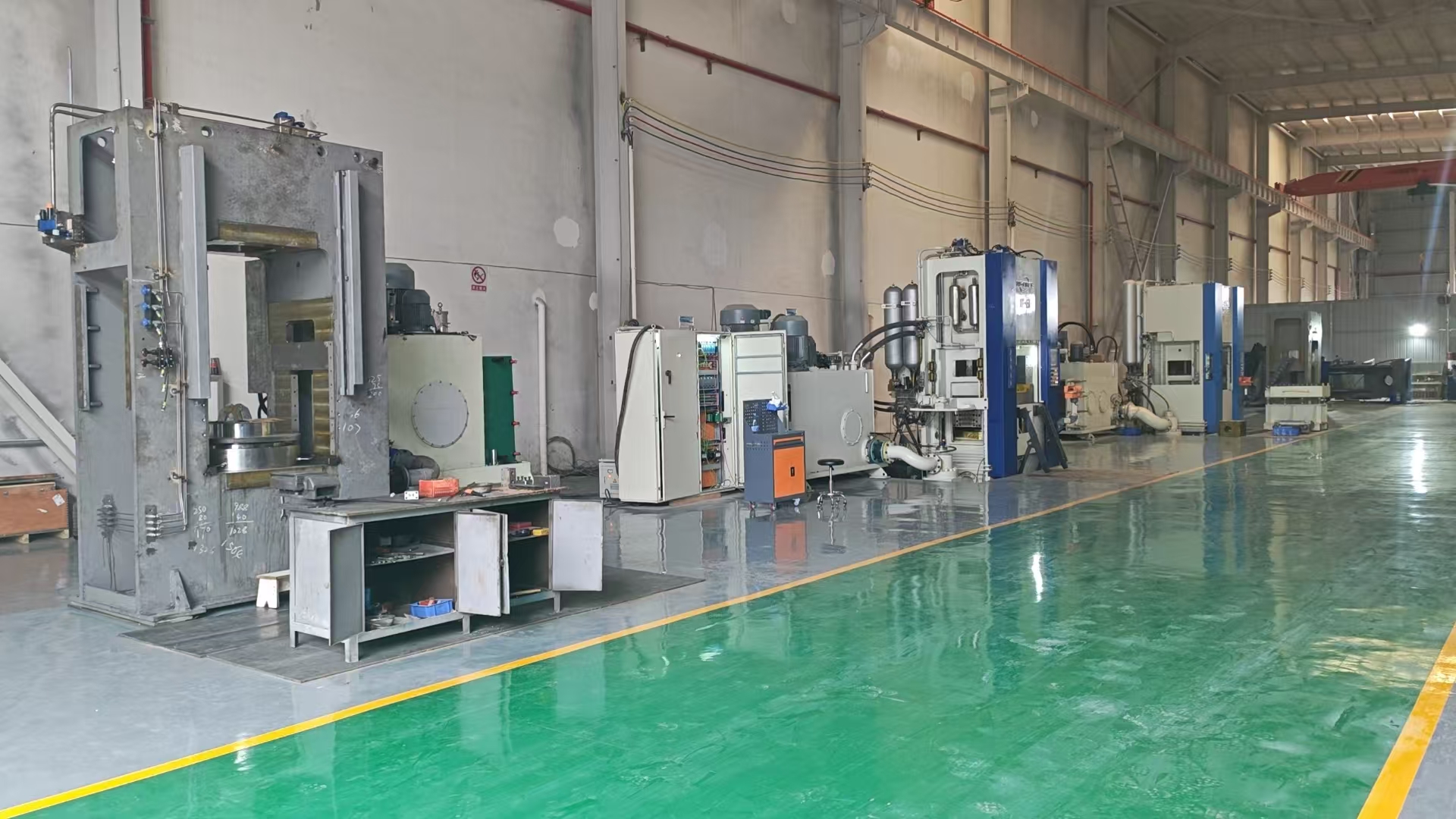
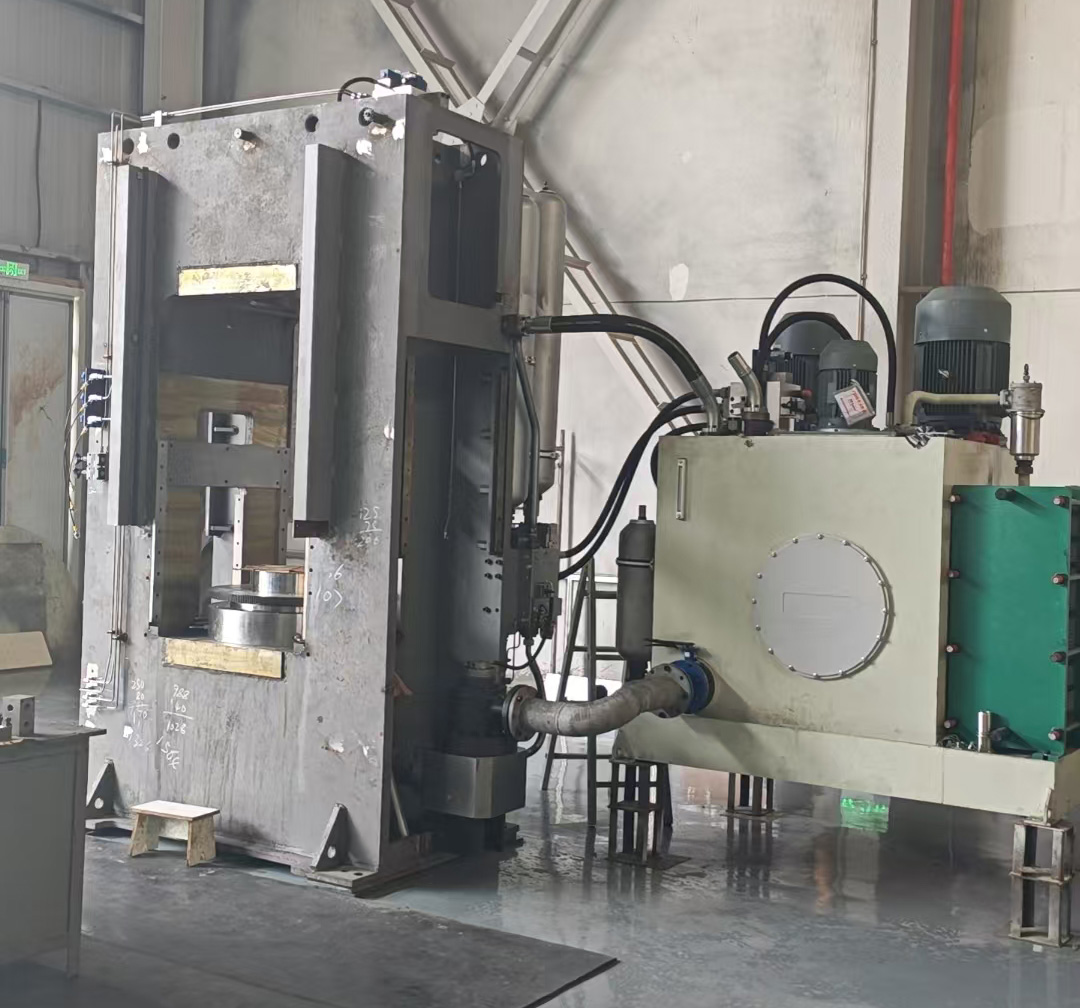
HS-FINEB operates a 30,000+ square meter manufacturing complex in Huangshi, Hubei Province — strategically located in China's industrial heartland with direct access to steel supply chains, CNC component manufacturers and hydraulic system suppliers. The facility is purpose-built for fine blanking press production: from frame welding and stress-relief through precision machining, hydraulic system integration and final assembly with full-tonnage acceptance testing.
Our facility houses CNC machining centers for frame and platen finishing, large-format surface grinding machines for platen flatness to fine blanking tolerances, hydraulic test benches for independent circuit verification, and clean assembly areas where guiding assemblies are hand-scraped and fitted. Each press is built on a dedicated assembly bay with overhead crane capacity matched to the machine weight — from 12-ton HF-200 units to the 98-ton HF-1200 flagship. The production floor is organized into four integrated lines: frame fabrication and stress-relief, precision machining, hydraulic system integration, and final assembly with testing. Every unit undergoes full-tonnage hydraulic testing before shipment — not just pressure verification, but actual blanking trials on customer-specified material when the application demands it.

Every welded frame is stress-relieved to eliminate residual stresses, then precision-machined to final tolerances. Guiding assemblies are hand-scraped and fitted to hold ram parallelism within microns over the full stroke — the precision that directly determines part flatness and die life.
Our die design office sits beside the press engineering team — machine and die are validated together on the same floor, not guessed at separately. When you receive your press, the die and force parameters are already configured around your part.
Hydraulic pumps, servo drives, seals and controls come from named, traceable suppliers — disclosed in every quotation. You know exactly which components are in your machine before you commit.
Spare parts, remote diagnostics and field engineers remain available for the full working life of the press — typically 20+ years. We also service Feintool, Mori and other brands in the field, so our engineers understand fine blanking machinery beyond our own.

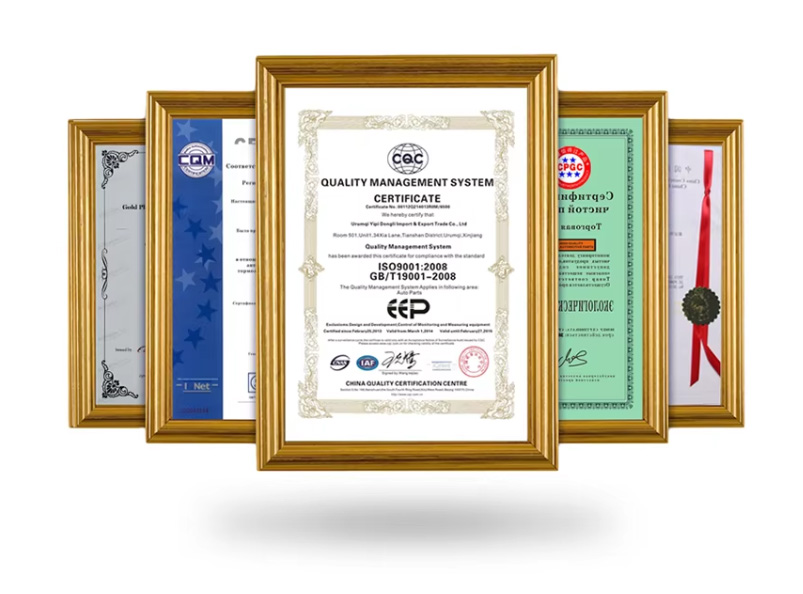
Our quality management system is certified to ISO 9001:2015, covering design, manufacturing, service and continuous improvement. What this means for the buyer: every press is built under a documented process — frame welding procedures, machining tolerances, hydraulic assembly protocols and acceptance test criteria are all controlled and traceable. Every unit undergoes documented tonnage verification, ram parallelism testing across the full die area, and hydraulic system validation before delivery — with traceable records for every measured parameter, not a pass/fail stamp.
All HF-series fine blanking presses carry CE marking, meeting European safety and performance standards. Frame structures are validated by finite element analysis (FEA) for rigidity, stability and long service life under cyclic loading. Every welded frame assembly receives stress-relief treatment to eliminate residual welding stresses that would cause geometry drift over years of service — a step that separates presses built for fine blanking from general-purpose stamping machines.
Reliable fieldbus communication for coordinated multi-axis control and real-time process monitoring — the controller manages V-ring force, counter-pressure and blanking speed as a synchronized force profile, not independent setpoints.
Centi-millimetre positioning accuracy for consistent strip feed and pitch control — critical in progressive-die applications where pitch error accumulates across stations.
Absolute encoder feedback for repeatable ram positioning — the slide returns to the same position within microns on every stroke, maintaining die clearance and edge quality over long production runs.
Energy-efficient hydraulic control with accumulator-assisted rapid approach and proportional pressure regulation — the accumulator stores energy during the return stroke and releases it during blanking, reducing main motor size and energy consumption while maintaining stable force delivery.

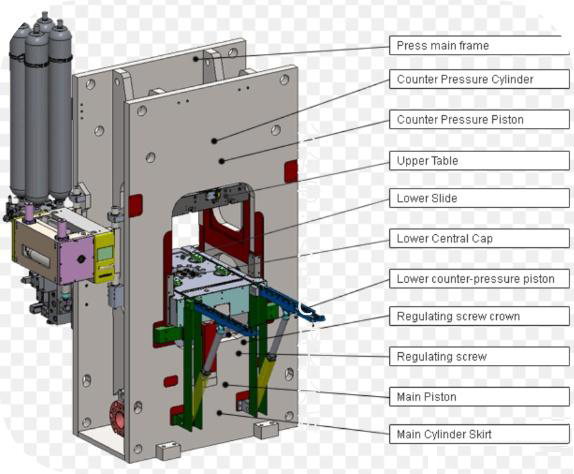
The HF-series fine blanking press is built around three independently controlled hydraulic force systems: blanking force (main ram), V-ring impingement force (ring gear), and counter-pressure force (ejector). This triple-force architecture is what distinguishes fine blanking from conventional stamping — the V-ring indents the material around the cutting line before shearing begins, holding it flat and constrained during the cut. The counter-pressure opposes the blanking force from below, preventing the material from bulging or tearing. The result is a sheared edge with 100% smooth-cut surface, die-roll below 15% of material thickness, and dimensional accuracy at IT7-8 tolerance grade.
Our frame design uses a whole-welded structure that is stress-relieved after welding and then precision-machined to final tolerances. Guiding assemblies are hand-scraped and fitted to maintain ram parallelism within microns over the full stroke length — a level of precision that directly determines part flatness and die life. On a press where the ram deflects, the die gap varies across the part, producing uneven die-roll and edge quality that changes from part to part.
The hydraulic system integrates accumulator-assisted rapid approach, proportional pressure regulation for controlled blanking speed, and independent circuits for each force system — enabling full programmability of force profiles through the CNC controller. The operator can set V-ring force to engage before the punch contacts the material, hold counter-pressure constant through the shear, and trigger ejection at a programmable point in the return stroke — all without mechanical adjustment.

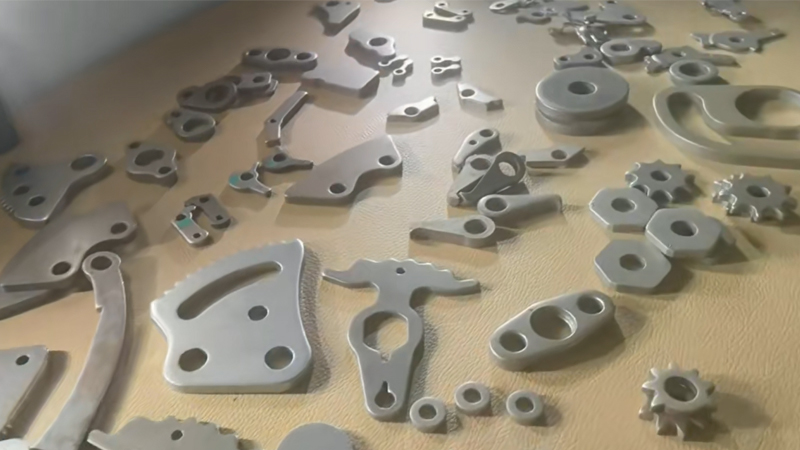
HS-FINEB presses produce precision components across automotive, electronics, medical, aerospace and industrial markets — from transmission gears in 16MnCr5 and clutch plates in C45 to motor laminations in electrical steel, connector terminals in phosphor bronze, and surgical instrument parts in 316L stainless. The fine blanking process achieves edge quality that eliminates secondary machining in most applications, with 100% shear edge and dimensional accuracy at IT7-8 tolerance grade.
Our customers process materials ranging from low-carbon steel and HSLA grades to stainless, spring steel, copper, brass and aluminum — at thicknesses from 1 mm to 25 mm depending on the press model. Each production line is configured as a complete cell: coil feeding, fine blanking press, die and deburring — supplied and validated as one integrated system, not assembled from separate vendors.
We welcome in-person plant visits and can arrange live video factory tours for overseas buyers — see the welding, machining, assembly and testing stages of a fine blanking press in production.