💬 WhatsApp Chat

Case Studies

Real Parts, Real Numbers — How Fine Blanking Transformed These Production Lines

Production Proof

From Drawing to Delivery: Five Real Installations

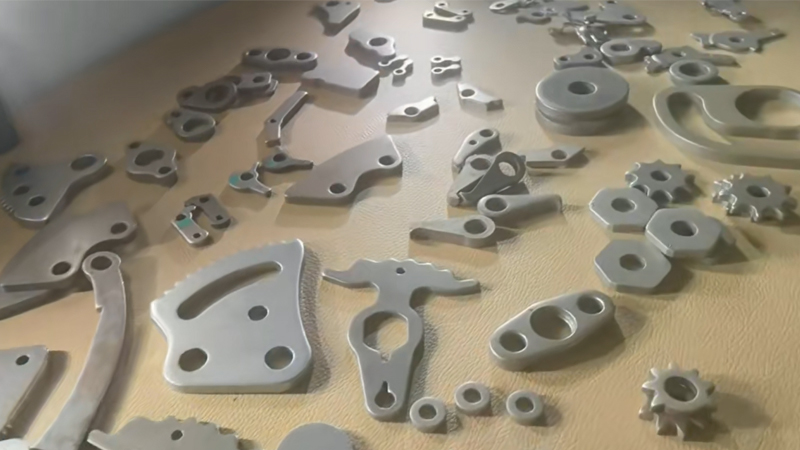
These case studies represent typical HS-FINEB installations across automotive components, electronic hardware, and press refurbishment projects. Each one started with a part drawing and a production problem — and ended with measurable results: cycle time reductions, die life data, cost savings, and throughput improvements. No theoretical projections, no vendor marketing. Only numbers from presses running in production today, with the die life and SPM data to prove it.

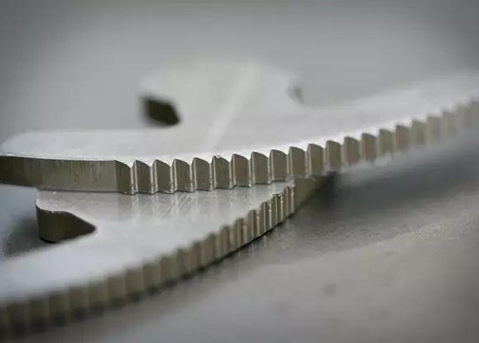
Fine-blanked automotive seat recliner gear with 100% shear edge on tooth profile, produced on HF-320 press
Case Study 1

Automotive Seat Recliner Gear

MachineHF-320 (320T Triple-Action Hydraulic)
Material16MnCr5 case-hardening steel, 5mm thick
IndustryAutomotive Tier-1 Supplier

Challenge: A Tier-1 automotive supplier needed seat recliner gears with 0.05mm flatness and 100% shear on gear teeth, running at 60 SPM to meet daily volume targets. Conventional stamping produced fracture zones on the tooth flanks that required secondary gear shaving, adding cost and cycle time to every part produced. The supplier was losing margin to a multi-operation process that fine blanking could consolidate into a single stroke.

Solution: We deployed the HF-320 triple-action hydraulic press with 1600kN V-ring force and a custom V-ring profile contoured to the gear tooth section. The V-ring engages the material before the punch descends, creating compressive lateral stress that forces a clean shear fracture across the full 5mm thickness. This eliminates the die-roll and fracture zone that conventional stamping leaves on gear teeth, producing a ready-to-use tooth profile in one hit.

Results:

Production Speed45 SPM sustained (sufficient for volume targets)
Die Life280,000 hits before first regrind (D2 tool steel)
Cost Reduction70% vs broaching + gear cutting
Secondary OpsGear shaving eliminated entirely
Case Study 2

Lock Cylinder Housing

MachineHF-200 (200T Triple-Action Hydraulic)
MaterialC45 steel, 4mm thick
IndustryLock & Security Hardware

Challenge: A lock hardware manufacturer was producing C45 steel lock cylinder housings through three separate machining operations: blank, drill, and mill. Cycle time was 45 seconds per part with significant material waste from bar stock and substantial labor cost. They needed to consolidate to a single-stroke process without compromising the precision of pin hole positioning, which is critical for lock cylinder function.

Solution: We designed a progressive fine blanking die with three stations — blank, pierce, and form — running on the HF-200 (200T) press. The V-ring was applied to the external profile only, where shear edge quality was critical for the pin tumbler interface. Internal hole features were produced in the pierce station with carbide inserts for sustained precision across long production runs. The form station created the counterbore and chamfer features that previously required a separate milling operation.

Results:

Cycle Time45s reduced to 1.2s per part (37x improvement)
Cost Reduction97% reduction on machining operations
Die Life350,000 hits before regrind needed
Secondary OpsAll machining eliminated, part complete off press
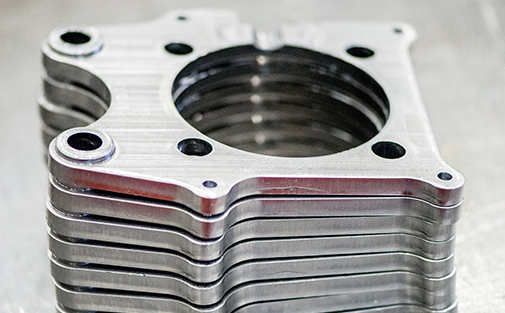
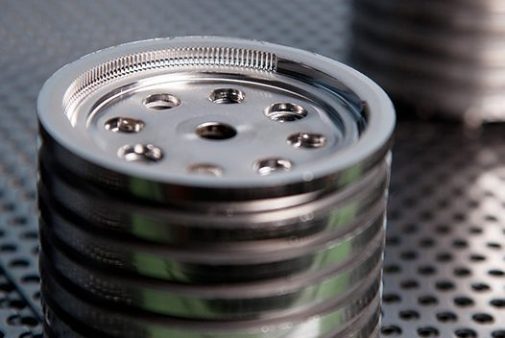
Fine-blanked lock cylinder housing in C45 steel produced on HF-200 press with progressive die
Fine-blanked brake backing plate in S500MC HSLA steel with crack-free shear edge, produced on HF-400 press
Case Study 3

Brake Backing Plate

MachineHF-400 (400T Triple-Action Hydraulic)
MaterialS500MC HSLA steel, 6mm thick
IndustryAutomotive Brake Systems

Challenge: A brake system manufacturer was conventional stamping S500MC HSLA brake backing plates at 6mm thickness. The process produced edge cracks along the shear zone, requiring a machining operation to remove the fractured edge and achieve the dimensional specification for brake pad seating. This added cost, reduced throughput, and created a bottleneck in the production line that limited overall capacity.

Solution: The HF-400 (400T) press was specified with 1000kN counter-pressure force, maintained throughout the shearing stroke. This counter-pressure keeps the HSLA material under compressive stress during shearing, which prevents the crack propagation that high-strength steels are prone to under conventional stamping conditions. The V-ring geometry was optimized for the 6mm thickness range, with a larger ring distance from the cutting edge to accommodate the material's higher shear resistance.

Results:

Edge Quality100% shear edge, zero cracking
Throughput80% increase (machining bottleneck removed)
Die Life220,000 hits (PM steel, 0.2mm regrind interval)
Secondary OpsMachining operation completely eliminated
Case Study 4

Electronics Connector Terminal

MachineHF-200 (200T Triple-Action Hydraulic)
MaterialC5191 phosphor bronze, 0.8mm thick
IndustryElectronics & Connectors

Challenge: An electronics manufacturer needed phosphor bronze connector terminals with burr height below 0.02mm for automated pick-and-place assembly. The application demanded 80 SPM to match the downstream assembly line speed. Conventional stamping could not maintain the burr tolerance at that speed, causing frequent jamming in the pick-and-place equipment and unacceptable downtime on the assembly line.

Solution: We specified the HF-200 press with carbide die inserts and 0.004mm cutting clearance — ten times tighter than conventional stamping clearance. An integrated deburring brush was built into the die, lightly brushing the sheared edge immediately after blanking. The fine blanking V-ring system held the 0.8mm material flat during shearing, preventing the burr formation that occurs when thin material lifts under conventional cutting forces.

Results:

Burr Height0.015mm (within 0.02mm tolerance)
Production Speed80 SPM sustained
Die Life800,000 hits (carbide inserts)
Assembly JamsZero jams attributed to burr interference
Fine-blanked electronics connector terminals in phosphor bronze with sub-0.02mm burr height
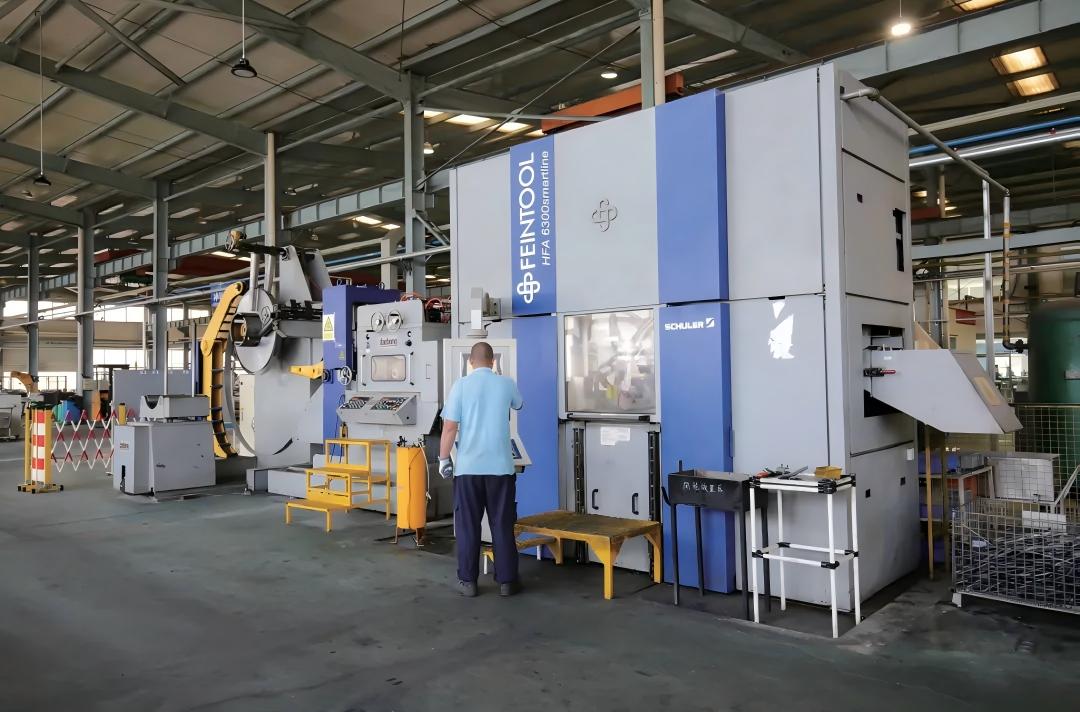
Refurbished Feintool GKP 320 fine blanking press with new hydraulic pump, Siemens PLC, and reconditioned guideways
Case Study 5

Feintool GKP 320 Refurbishment

MachineFeintool GKP 320 (refurbished, not replaced)
Age14 years, hydraulic pump failure, PLC obsolete
IndustryPrecision Parts Manufacturer

Challenge: A precision parts manufacturer had a 14-year-old Feintool GKP 320 press with a failed hydraulic pump and an obsolete PLC that could no longer be serviced or sourced spare parts for. A new Feintool replacement press was quoted at $750,000 with a 10-month lead time — their production line could not wait that long without catastrophic revenue impact and customer contract penalties.

Solution: HS-FINEB performed a complete refurbishment in 5 weeks. The hydraulic system was rebuilt with a new Bosch Rexroth pump, replacement valves, and all new NOK seals. The control system was upgraded to a Siemens S7-1200 PLC with modern HMI touchscreen. The guideway columns were reconditioned to restore parallelism, and the lubrication system was fully replaced. After assembly, the press was calibrated to original Feintool specifications for tonnage, parallelism, and stroke control.

Results:

Capability85% of new-machine performance
Cost32% of replacement press cost
Downtime5 weeks vs 10 months for new machine
Warranty12-month coverage on all replaced components

Your Part Could Be the Next Case Study

Send us your drawing, material grade, thickness, and annual volume. Within one business day, our engineers will return a platform recommendation, force calculation, and die-envelope match — or a refurbishment assessment if you are restoring an existing press.

💬