💬 WhatsApp Chat

Fine Blanking Press Price Guide: Understanding Cost Factors

A detailed breakdown of what determines fine blanking press pricing in 2026, from tonnage and drive system to automation, control architecture, and total cost of ownership comparison between new Chinese presses and used Feintool equipment.

Price Guide 2026

What Determines Fine Blanking Press Price

Fine blanking press pricing varies by a factor of 3-5 across the 200T to 1200T range, with additional cost layers from automation, control system sophistication, and auxiliary equipment integration. This guide breaks down the cost structure so buyers can make informed capital allocation decisions — understanding which features drive price, which deliver measurable process value, and where cost savings are available without compromising part quality.

The core fine blanking process — V-ring impingement, counter-pressure, and blanking force acting as a synchronized triple-force system — determines part quality regardless of press manufacturer. A 500-ton HS-FINEB press produces the same 100% smooth-cut edge, die-roll below 15% of material thickness, and IT7-IT9 dimensional tolerance as a 500-ton Feintool press, because these outcomes are functions of force control physics, not brand identity. Price differences between manufacturers reflect automation level, control sophistication, build quality, brand premium, and service infrastructure — not fundamental process capability.

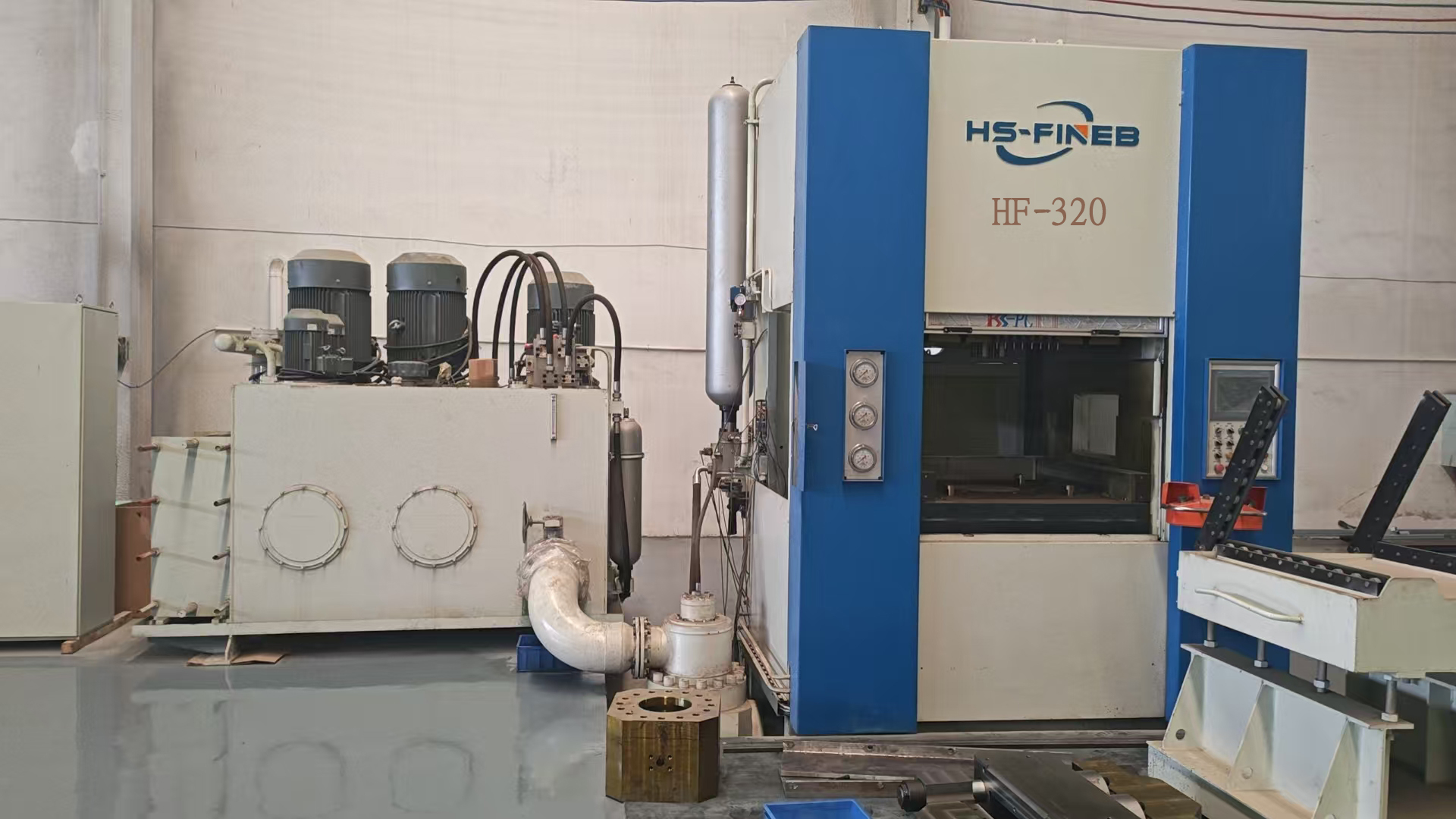
HF-320 320-ton fine blanking press price comparison entry model
Cost Factor 1

Tonnage: The Primary Price Driver

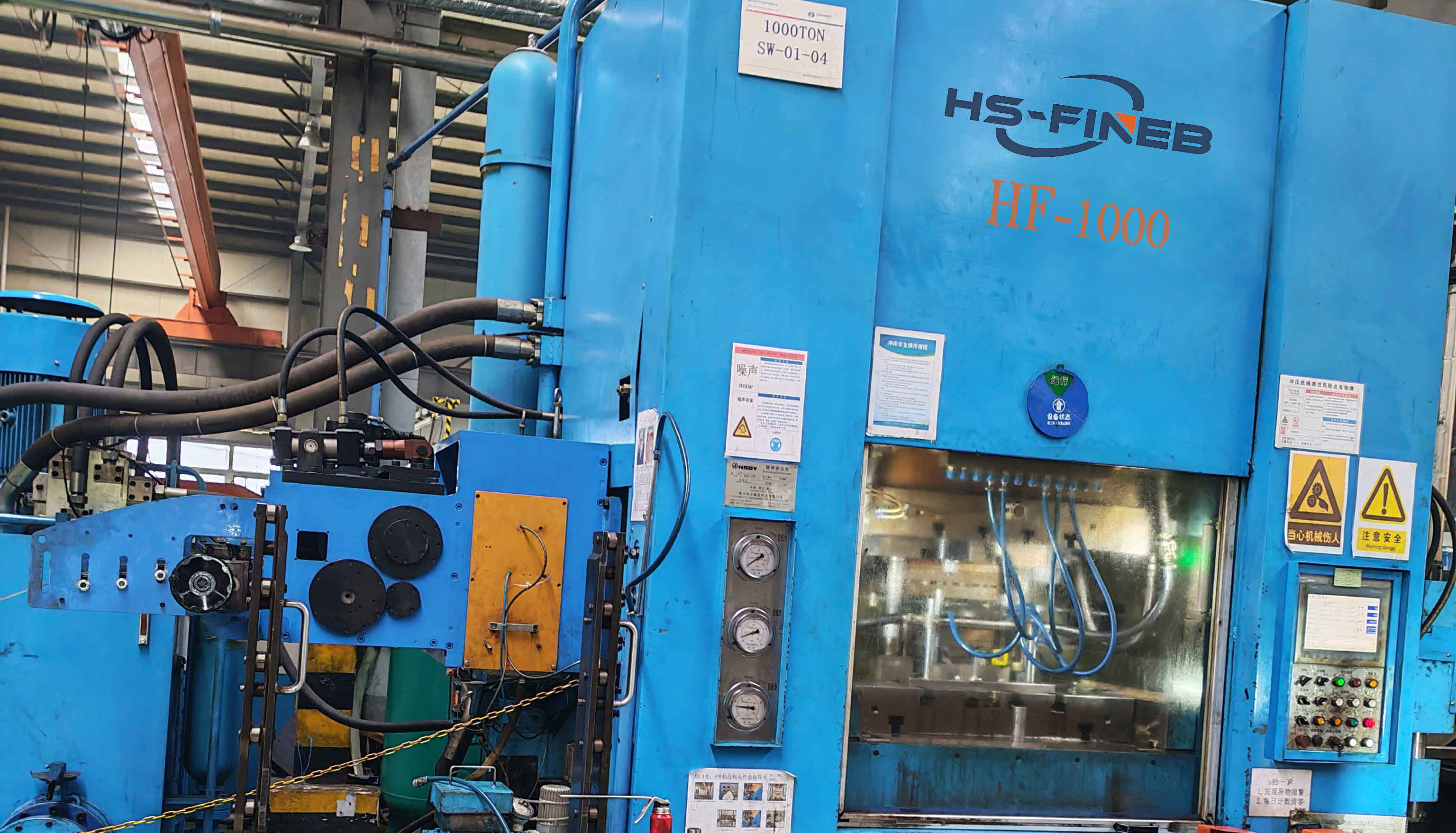
HF-1000 1000-ton fine blanking press high-tonnage price bracket

Tonnage capacity is the single largest cost determinant. A larger press requires a proportionally larger frame structure, higher-capacity hydraulic pumps and valves, larger platens, stronger guiding columns, and a more powerful main motor. The cost scaling is not linear — it follows roughly a 0.7-0.8 power law, meaning doubling the tonnage increases price by approximately 60-75%, not 100%.

Approximate FOB price ranges by tonnage class (HS-FINEB, 2026):

200T class (HF-200): Entry-level fine blanking for thin-gauge parts (1-4 mm), small connectors, and precision washers. Suited for electronics and medical device component manufacturing.

320T-500T class (HF-320, HF-400, HF-500): The workhorse range for automotive tier-2 and tier-3 suppliers. Covers seat mechanism components, brake pad backing plates, clutch components, and small gear blanks in 2-8 mm thickness. This is the most commonly specified tonnage range and offers the best price-to-capability ratio.

650T-800T class (HF-650, HF-800): Heavy automotive and industrial applications — transmission gear blanks, structural brackets, thick-plate components (6-15 mm). The step up from 500T to 650T brings a disproportionate frame and hydraulic system upgrade.

1000T-1200T class (HF-1000, HF-1200): Large-format fine blanking for thick-plate applications (10-25 mm), truck and commercial vehicle components, and aerospace structural parts. These presses require breakbulk shipping and reinforced foundations.

Cost Factors 2-4

Drive System, Automation & Control

Drive System: Hydraulic vs Servo

HS-FINEB presses use hydraulic drive with accumulator-assisted rapid approach and proportional pressure regulation — the proven architecture for fine blanking where force stability and controlled blanking speed (typically 5-30 mm/s during the cutting stroke) are critical. Full servo-electric drive systems, offered by some manufacturers, add 25-40% to press cost and deliver faster cycle speeds and energy efficiency, but do not improve part quality. For most fine blanking applications, the hydraulic architecture delivers the required force stability at lower cost and with simpler maintenance.

Automation & Coil Feeding Integration

Automation level drives significant cost variation. A bare press (manual die loading, manual coil feeding) is the lowest-cost configuration. Adding a servo coil feeding system with decoiler, leveler, and feed mechanism (Lenze or equivalent servo drive) adds 15-25% to the total cell cost but is essential for production-rate operation. Automated die clamping (hydraulic clamping bolts) adds 5-8%. Tooling protection sensors (load cells on the ram, die clearance monitors) add 3-5% but can prevent catastrophic die damage worth many times their cost.

💻

Control System: PLC vs CNC

All HS-FINEB presses use CNC control (Siemens or Schneider PLC platform with HMI) as standard — the ability to program force profiles, stroke sequences, and timing parameters is essential for fine blanking, not an optional upgrade. The cost difference between a basic PLC HMI and a full CNC with process monitoring, SPC data output, and remote access capability is approximately 8-12% of press price. For production-critical applications, the full CNC package delivers measurable value through process traceability and remote diagnostics capability.

Brand Premium

Feintool vs Chinese Manufacturer Pricing

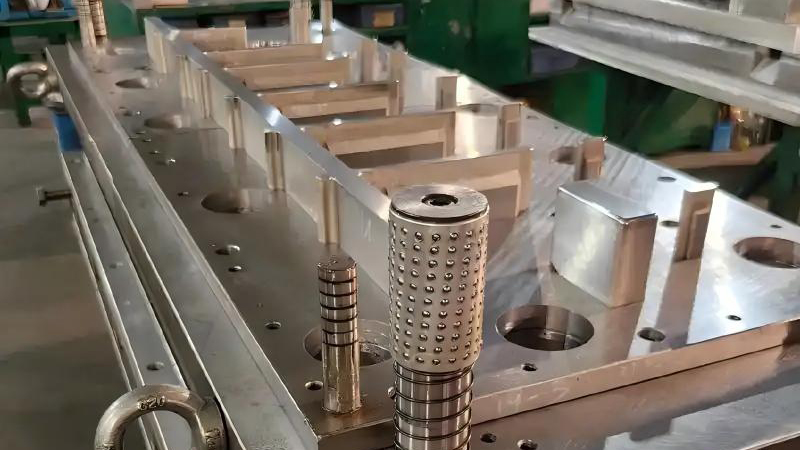
Fine blanking die and tooling cost component in total press investment

The brand premium is the most significant cost differential in fine blanking press pricing. A new Feintool fine blanking press in the 500-ton class commands a price 2-3 times that of an HS-FINEB HF-500, before accounting for the additional premiums Feintool applies for non-European delivery and the cost of the proprietary tooling ecosystem (Feintool tooling holders, standard die sets). Schuler presses carry a similar premium.

This premium reflects genuine value in certain areas: Feintool's decades of process engineering experience, their proprietary tooling standards that reduce die design time for buyers committed to the Feintool ecosystem, and their extensive service infrastructure in Europe and North America. However, for buyers who evaluate fine blanking as a process rather than a brand relationship — and who are willing to manage their own die design or work with an independent tooling shop — the premium is difficult to justify on technical grounds alone.

The core process outcome — 100% smooth-cut edge, controlled die-roll, IT7-IT9 dimensional tolerance — is determined by the triple-force physics, not by the nameplate. HS-FINEB presses deliver these outcomes because the hydraulic architecture is functionally equivalent: three independently controlled force circuits (ring gear, counter-pressure, main ram), accumulator-assisted rapid approach, proportional pressure regulation, and CNC-programmable force profiles. The difference is in branding, ecosystem lock-in, and the depth of application engineering support — not in the fundamental capability to produce qualified fine-blanked parts.

Total Cost of Ownership

New HS-FINEB vs Used Feintool: ROI Analysis

📊

New HS-FINEB Press TCO

Capital cost: Lower. Warranty: Full manufacturer warranty (typically 12 months from commissioning). Control system: Current-generation CNC with remote access, SPC output, and programmable force profiles. Spare parts availability: Direct from manufacturer with 5-7 day air freight. Expected service life: 20+ years with proper maintenance. Training: Included in commissioning. The total cost of ownership over a 10-year horizon includes capital, installation, spare parts, energy, maintenance labor, and downtime — and a new press scores well on all non-capital dimensions because current-technology control systems and traceable component provenance reduce maintenance burden and unplanned downtime.

Used Feintool Press TCO

Acquisition cost: Potentially lower than new HS-FINEB if a suitable machine is available. Risk factors: Unknown remaining service life, potential frame fatigue, obsolete or end-of-life control systems requiring retrofit (adding 15-25% of acquisition cost), spare parts availability dependent on Feintool's continued support for the model, and potential need for hydraulic system rebuild (seals, valves, hoses). A used press that requires control retrofit, hydraulic rebuild, and a year of debugging may have a higher effective cost than a new HS-FINEB unit delivered ready to produce. The ROI calculation must include the opportunity cost of months spent refurbishing versus months of production.

ROI Framework

Calculating Payback for Your Fine Blanking Investment

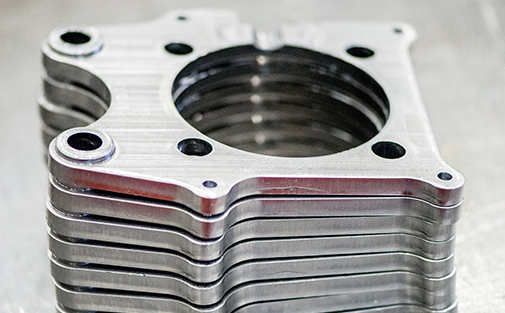
Fine-blanked parts demonstrating ROI of fine blanking press investment

The payback period for a fine blanking press investment depends on the parts being produced and the alternative sourcing method being replaced. For a buyer currently purchasing fine-blanked parts from outside suppliers, the calculation is straightforward: (press + tooling + installation cost) divided by (annual part volume times per-part cost saving from in-house production). Typical payback periods range from 18 months to 4 years for automotive tier-2 applications.

For a buyer replacing secondary machining with fine blanking (producing the same geometry with fewer operations), the ROI includes eliminated machining costs, reduced material waste (fine blanking produces near-net parts with minimal scrap), and increased throughput. The cost per fine-blanked part — press depreciation + tooling + material + labor + energy + maintenance — for a typical automotive component in 3 mm mild steel at 50,000 parts/month on a 500-ton press is significantly lower than the cost of the same part produced by laser cutting + deburring + machining.

We provide detailed ROI calculations as part of the quotation process, using the buyer's specific part geometry, material, volume, and current sourcing method. This is not a generic template — our engineers analyze the actual part and process to determine tonnage requirements, cycle time, die life, and material utilization before presenting the investment case.

Ready to Discuss Your Fine Blanking Project?

Contact Helen today for a detailed quotation, technical consultation, or factory tour arrangement. Our engineering team responds within 24 hours.

💬