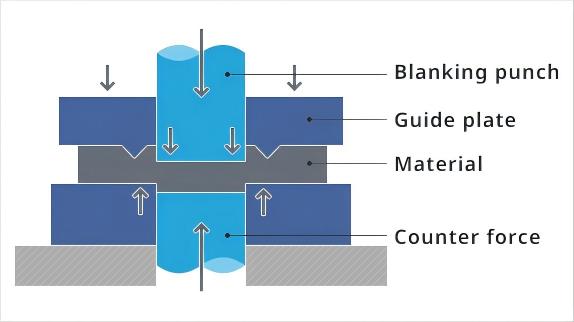
One stroke replaces three operations — fine blanking eliminates drilling, milling and grinding across six industries, producing net-shape parts with 100% shear edge in a single press cycle.

Fine blanking replaces multi-operation machining on safety-critical automotive powertrain and body components. A transmission gear in 16MnCr5 case-hardening steel, 4 mm thick, that previously required blanking, drilling and gear shaving now comes off the press with 100% shear edge on the tooth profile, IT7 dimensional accuracy and die-roll below 15% of material thickness — eliminating gear shaving in most cases. Brake backing plates in HSLA, seat recliner mechanisms with ratchet teeth, and seatbelt anchor plates all benefit from the same single-stroke precision.

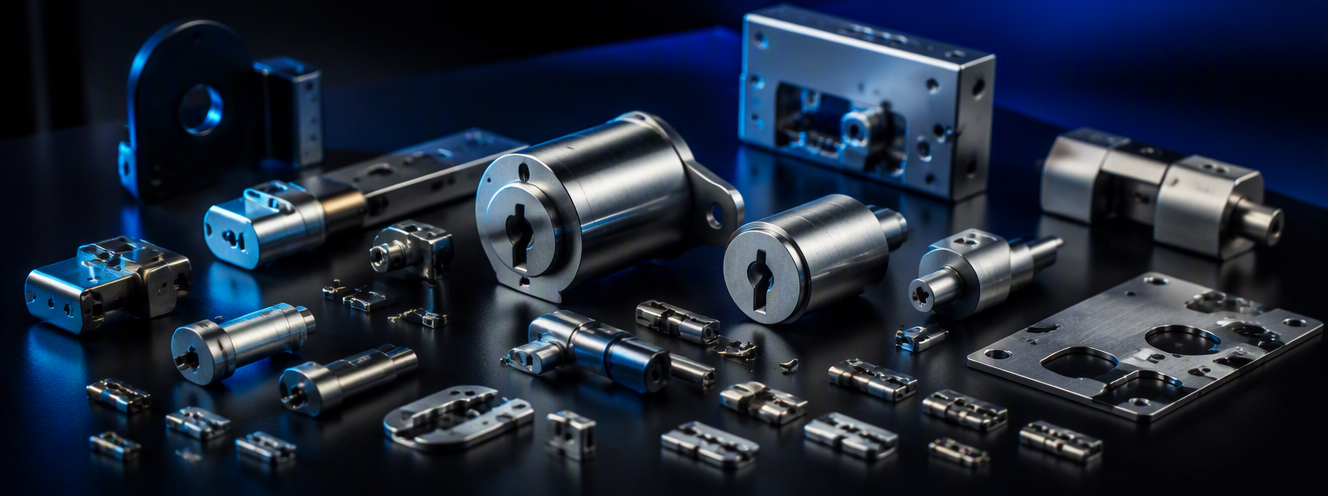
Lock cylinder production illustrates where fine blanking's cost advantage is most dramatic. A C45 steel lock cylinder plug conventionally requires bar stock, turning, drilling, milling and deburring — five operations with significant material waste. Fine blanking from coil stock produces the same geometry in a single stroke: clean sheared edges on all pin holes, consistent interlocking geometry across high-volume runs, and dimensional accuracy that eliminates reaming. The same applies to hinges, security hardware brackets and functional door hardware where tight hole-to-profile tolerances are non-negotiable.

Rotor and stator laminations in electrical steel demand burr-free edges that maximize lamination stack density and minimize inter-lamination eddy current losses. Fine blanking produces these edges in a single stroke — no secondary deburring that could damage the insulation coating. Compressor valve plates benefit equally: 1.5 mm thick spring steel with 100% shear edge on the valve port profile, where any burr would prevent proper sealing and reduce compressor efficiency.

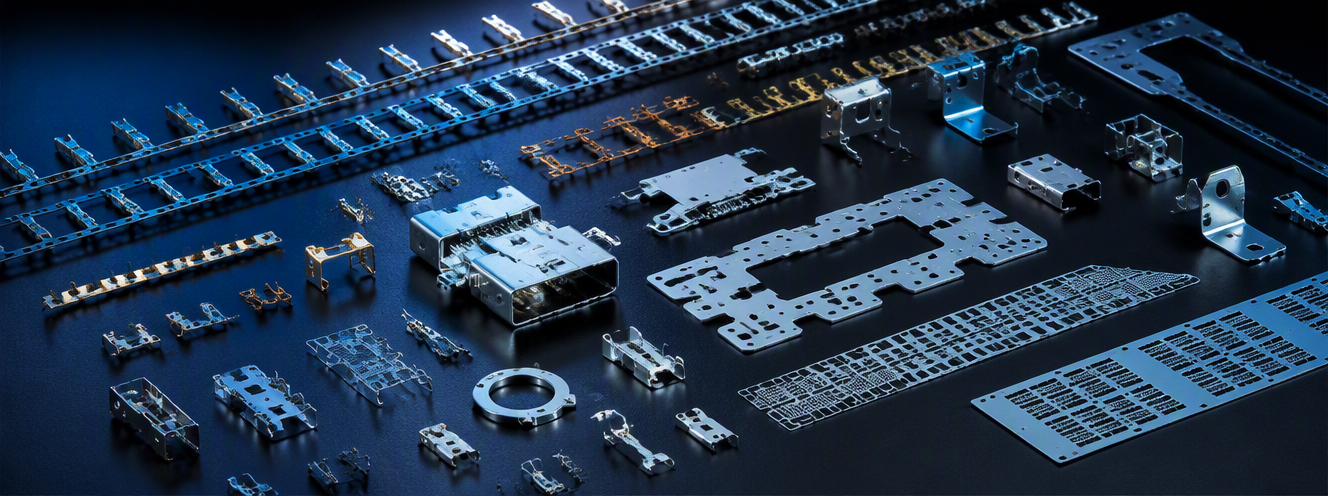
Connector terminals in phosphor bronze and lead frames in copper alloy — fine blanking of thin conductive materials where the feed line, not the press, is the throughput bottleneck. A phosphor bronze connector terminal, 0.5 mm thick, requires burr-free edges that prevent insertion damage and ensure reliable contact. Fine blanking delivers this at production rates where progressive-die stamping leaves burr. Lead frames in copper alloy benefit from the same edge quality for wire bonding reliability.

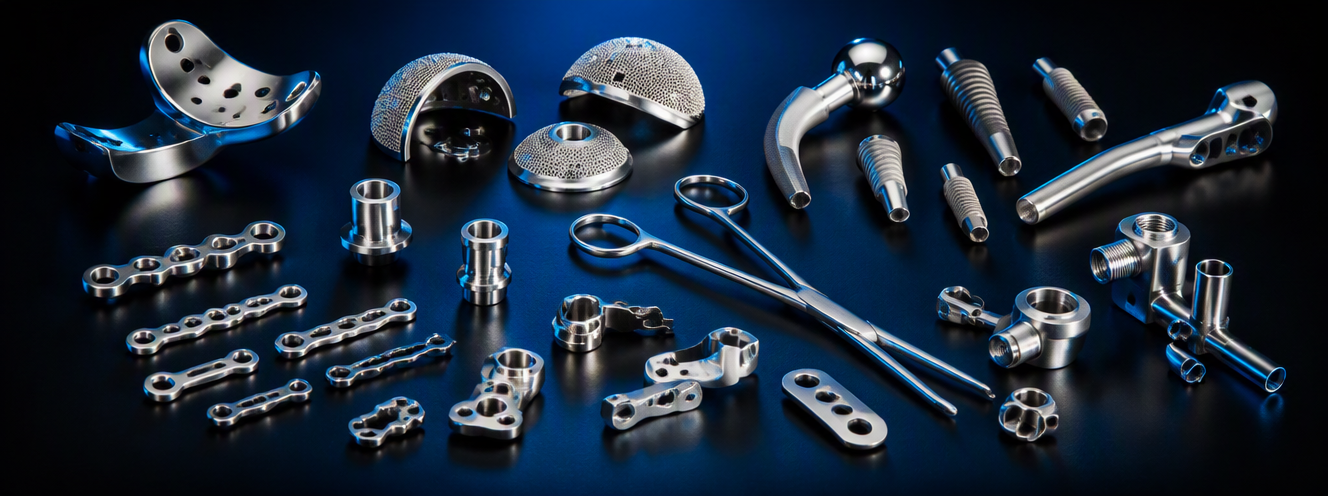
Surgical instrument components in 316L stainless steel where burr tolerance can be a literal zero-tolerance callout — no micro-burr is acceptable on a part that contacts tissue. Fine blanking produces these parts with 100% shear edge, eliminating the vibratory deburring that can round critical cutting edges. Implant components and diagnostic equipment parts benefit from the same zero-burr capability, with project-specific process validation documenting every force parameter for traceability.

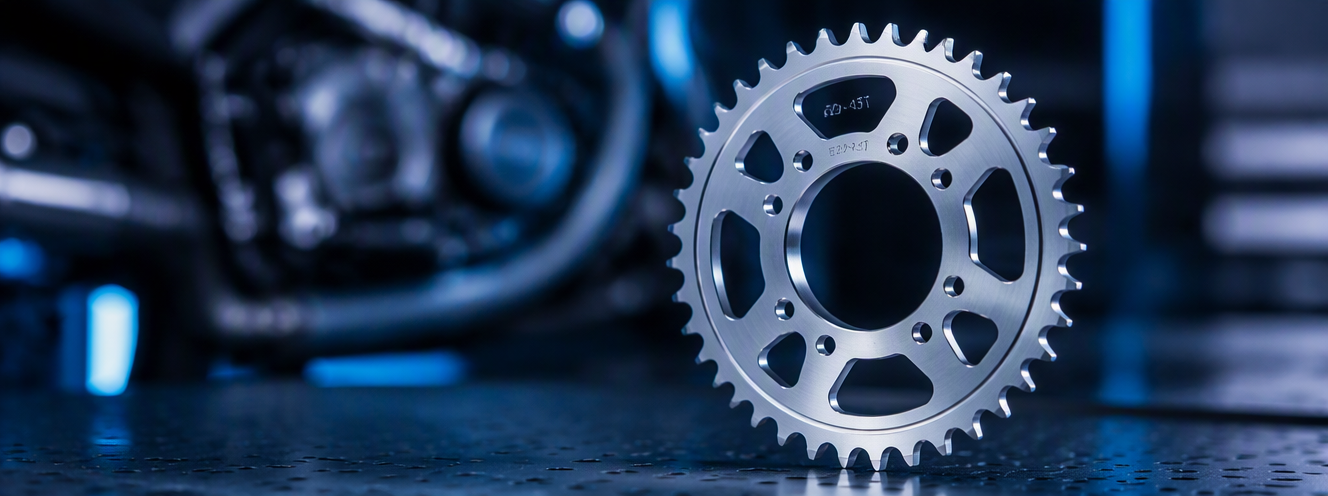
Industrial clutch plates, agricultural machinery sprockets, e-bike transmission components and wiper system linkages — where the case for fine blanking is made on durability and total cost of ownership, not edge cosmetics. A hardened sprocket produced by fine blanking from 42CrMo4 steel achieves a tooth profile with 100% shear edge that resists wear without secondary machining. The same logic applies to excavator tooth plates, harvester blade carriers and mining equipment wear plates.

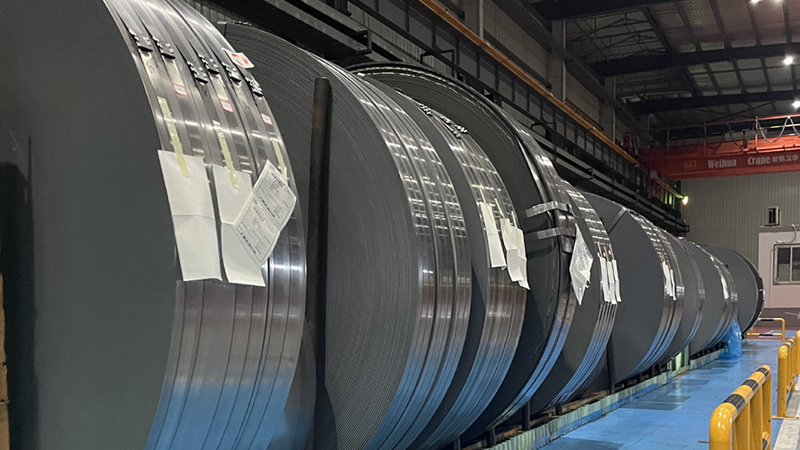
HS-FINEB presses process a full spectrum of engineering materials — low-carbon steel (C15-C60), high-strength low-alloy (HSLA) steel, case-hardening steel (16MnCr5, 20MnCr5), quenched and tempered steel (42CrMo4), stainless (304, 316L, 420), spring steel (65Mn, C67S), electrical steel, phosphor bronze, copper, brass and aluminum — at thicknesses from 1 mm to 25 mm depending on press model.
Material selection directly determines die design: V-ring geometry, blade clearance, counter-pressure and blanking speed all change with the material's shear strength, hardness and work-hardening behavior. Our engineering team reviews each customer's material grade and hardness specification during the quoting process to configure the press, die and feed line as a matched system — not three separate purchases.
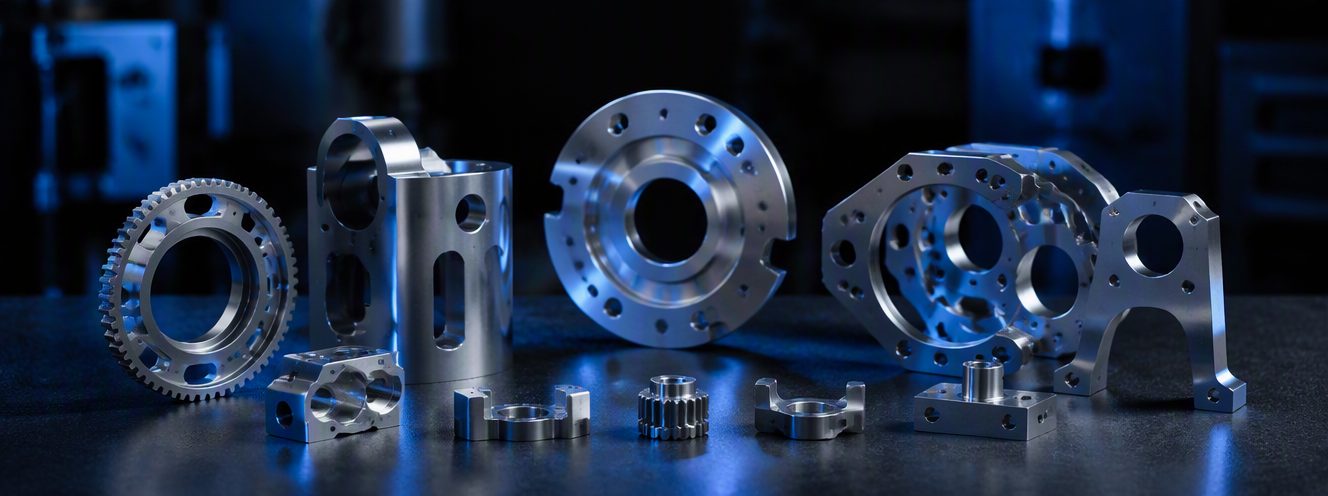
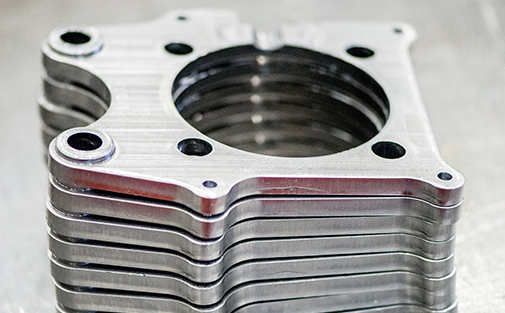
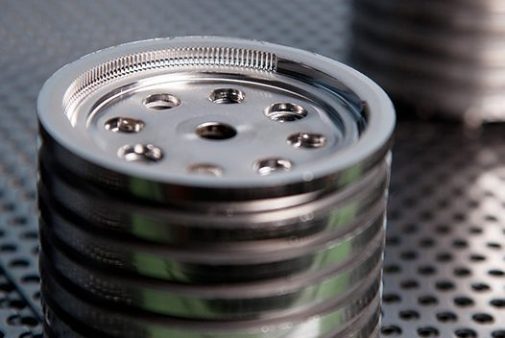
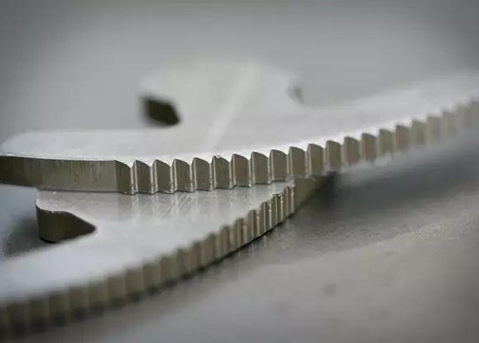
Close-up views of components produced on HF-series presses — note the 100% smooth sheared edge surface, the absence of tear-through zones, and the dimensional consistency across different part types.
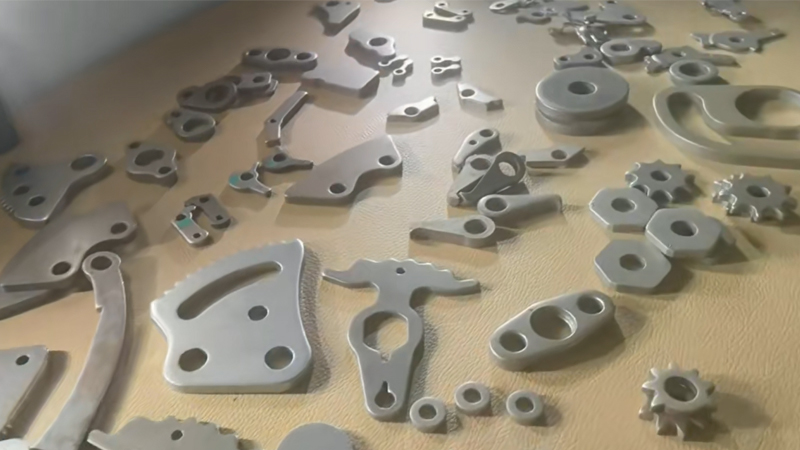
Examples of part types that can be evaluated for an HF-series fine blanking line — each with specific material grades and tolerance targets.
Wheel brackets and mounting plates in HSLA steel — clean-edge, repeatable profiles with 100% shear surface for structural integrity.
Toothed plates, ratchet profiles and precision engagement components in 16MnCr5 — gear-tooth geometries produced with die-roll below 15% of material thickness.
Heat-resistant brackets and exhaust plates in stainless 420 and 65Mn spring steel — fine-blanked edges that resist thermal distortion without secondary finishing.
Precision washers and spacers in C45 steel — burr-free flat components for assembly-critical applications where edge quality directly affects fit.
Body brackets and reinforcement plates in HSLA — structural stampings where fine blanking replaces flame cutting plus machining on chassis components.
Wiper system levers and window regulator linkage in C45 — functional components with clean edges that ensure smooth pivot operation without deburring.
Send your part drawing, material grade and target volume. Our engineers will assess feasibility, calculate force requirements, and recommend the right HF-series platform for your component.