💬 WhatsApp Chat

Mori Press Repair & Refurbishment

Mori Iron and Mori Seiki presses combine robust cast frames with precision guiding — the frame lasts decades, but hydraulic and control systems need restoration. We rebuild them at 30-40% of new press cost.

Model Coverage

Mori Press Models We Service

Mori presses are built around heavy cast iron frames designed for 30-40 years of structural service life. The frame, crown, and bed are over-engineered relative to the hydraulic and control systems — which is precisely why refurbishment makes economic sense. You are not paying to replace a sound frame; you are restoring the systems that actually wear.

Mori Iron MFB-200/300

200-300 ton compact fine blanking presses. Common in automotive seat component and lock hardware production. Primary failure mode: hydraulic cylinder scoring from insufficient lubrication maintenance, proportional valve drift causing counter-pressure instability.

Mori Iron MFB-400/600

400-600 ton mid-range presses for transmission gears and brake components. Eight-column guiding system susceptible to bushing galling after 15+ years of high-tonnage cyclic loading. Ram position sensor failure is a recurring issue on MFB-400 models.

Mori Iron MFB-800 & Mori Seiki

800 ton heavy-duty press and Mori Seiki precision series. The MFB-800's large-bore hydraulic cylinders require specialized honing equipment. Mori Seiki presses feature proprietary CNC controls with limited spare availability — primary driver for control retrofit.

FB-FDEBH Hydraulic Series

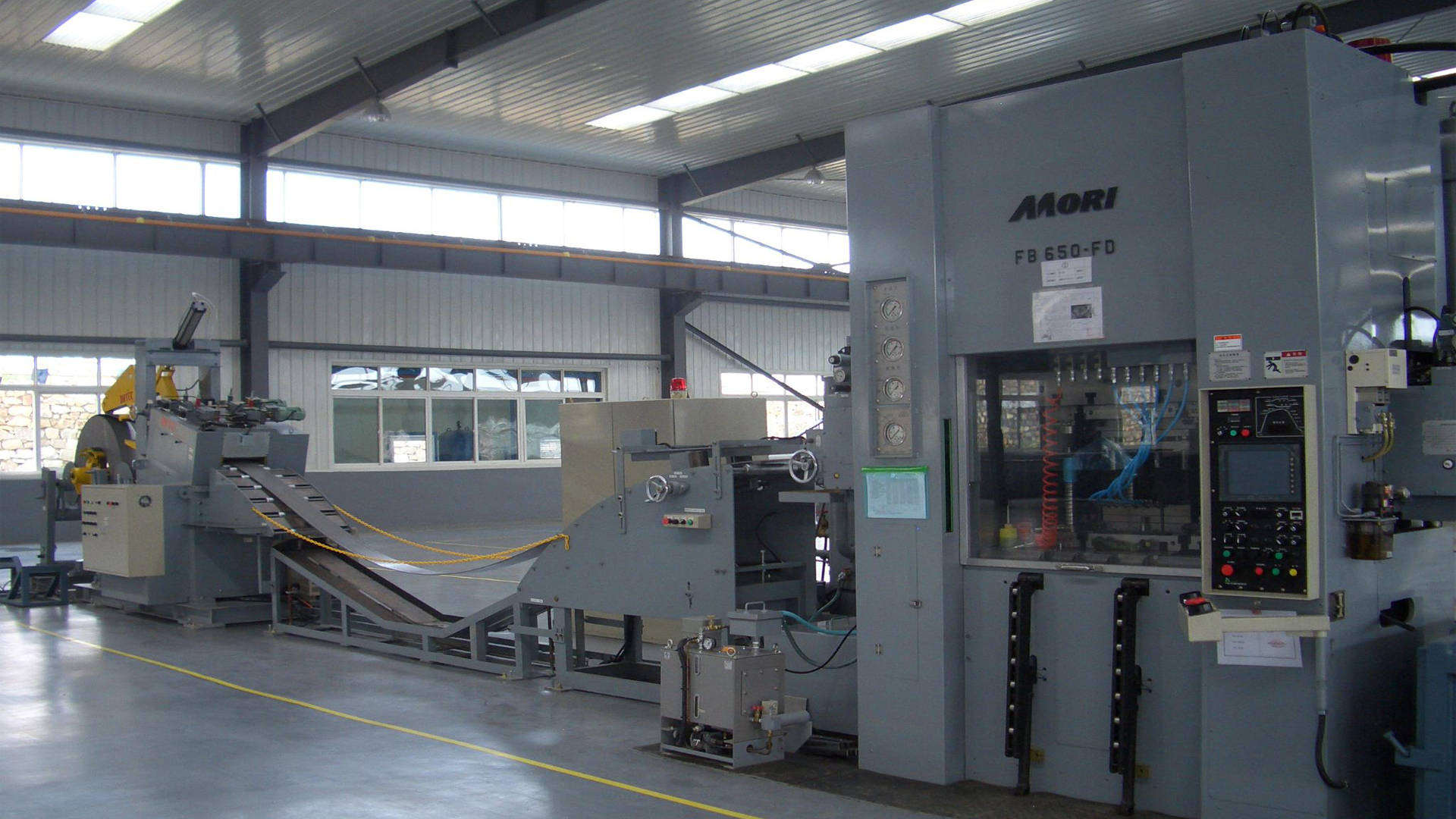
Hydraulic fine blanking presses (e.g., FB650-FDE-B at 6500 kN/650T, and 1600 kN variants). The FDE designation indicates multi-axis control capability. Common service: hydraulic pump reconditioning, proportional valve block refurbishment, and CNC control migration from legacy Mori PLCs to modern Beckhoff or Siemens platforms.

Mori T-Series (High-Rigidity)

High-rigidity fine blanking presses designed for automotive seat recliner gears and precision components. The T-series features reinforced frame geometry and enhanced guiding systems. Service focus: guiding bushing restoration, tonnage recalibration, and die area refurbishment for tight-tolerance applications.

MSF/MMF & MCOF Series

Multi-axis servo-hydraulic forming machines (MSF/MMF-M) and swing-forging presses (MCOF, e.g., MCOF650). Often paired with fine blanking lines for secondary forming operations. We service shared hydraulic components, servo drives, and control systems across these complementary platforms.

Failure Analysis

Mori-Specific Common Issues

Mori presses exhibit failure patterns distinct from Feintool and Schuler platforms — driven by Mori's unique hydraulic cylinder design, proportional valve architecture, and sensor selection. Our diagnostic process is calibrated to these specific patterns.

Mori press hydraulic cylinder scoring inspection and repair

Hydraulic Cylinder Scoring

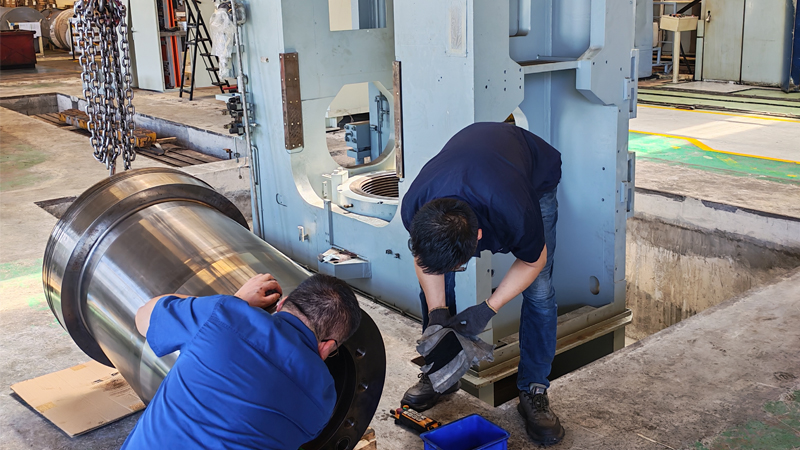
Mori's cylinder design uses a chrome-plated piston rod running in a cast iron bore with bronze guide bands. After 12-18 years of operation — particularly in environments where lubrication maintenance has been inconsistent — the chrome plating develops longitudinal scoring from particulate contamination in the hydraulic fluid. The scoring accelerates seal wear, creating a feedback loop: scored rod damages seal, damaged seal allows fluid contamination, contaminated fluid accelerates scoring. The visible symptom is a 10-15% force drop at rated pressure, accompanied by visible hydraulic fluid weeping from the cylinder gland.

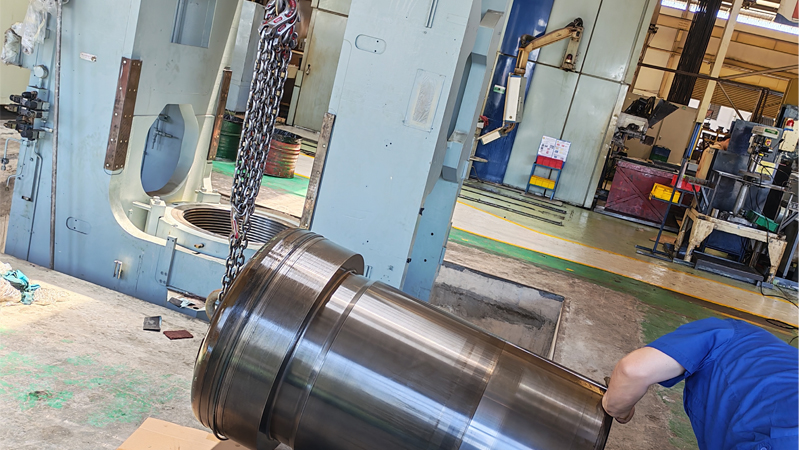
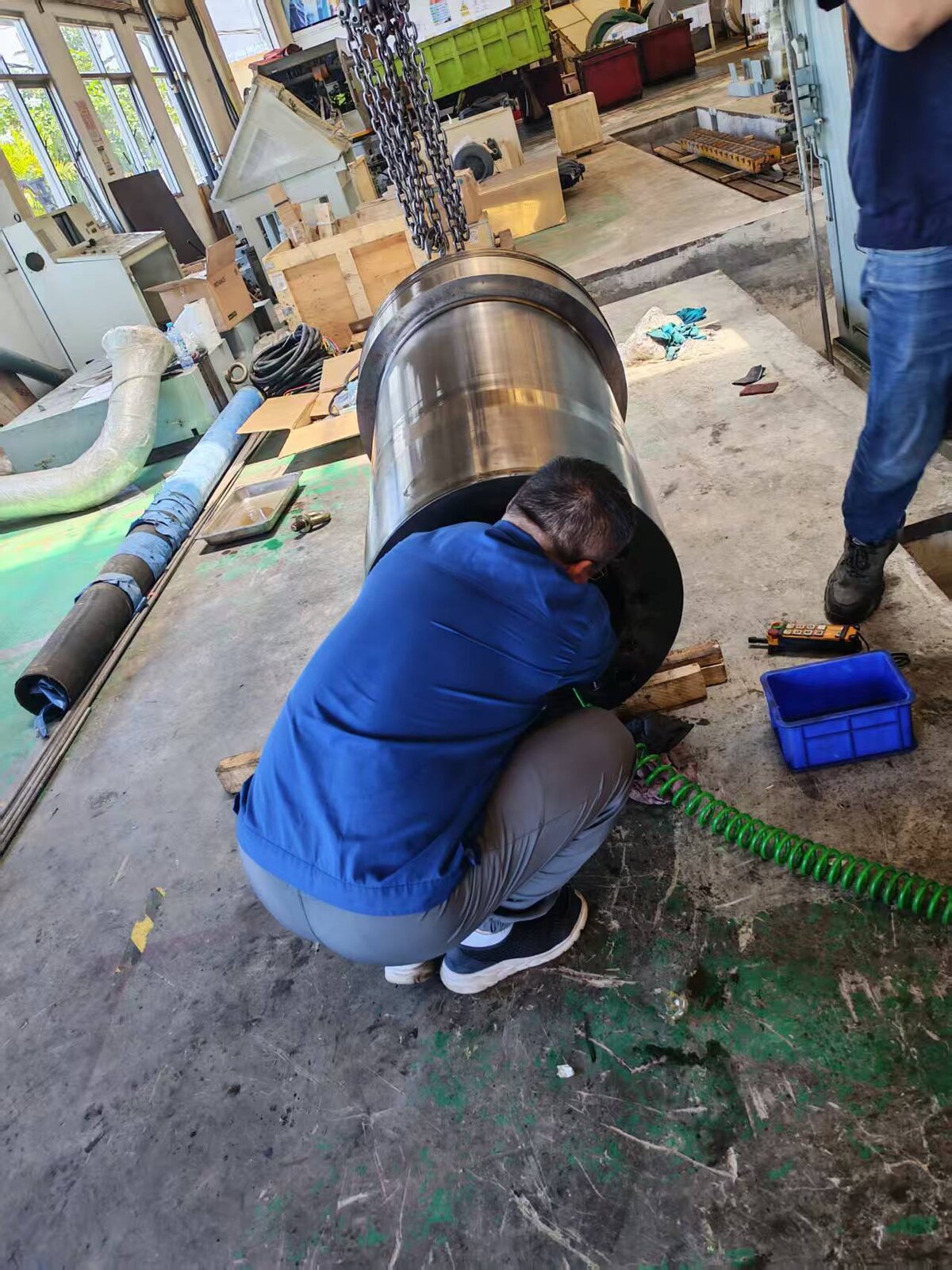
Our cylinder rebuild addresses both the symptom and the root cause. The rod is removed, stripped of remaining chrome, inspected for base metal damage, re-plated with hard chrome to the original Mori specification (typically 0.05-0.08 mm plating thickness), and finish-ground to the original surface roughness (Ra 0.2-0.4 µm). The cylinder bore is honed to restore surface finish and remove any wear ridges. All seals — piston seal, rod seal, wiper, and guide bands — are replaced with Mori-compatible kits using NOK or Trelleborg seal specifications.

Proportional Valve Drift

Mori presses use Bosch Rexroth proportional valves for V-ring and counter-pressure control. After 10-15 years, the valve spools develop wear that produces a 2-5% drift from the commanded position — meaning the press commands 800 kN counter-pressure but delivers 760-840 kN. This drift is invisible to the operator until it shows up in part quality: die-roll height variation across a production batch, or intermittent tearing at the sheared edge when counter-pressure drops below the threshold for clean fracture.

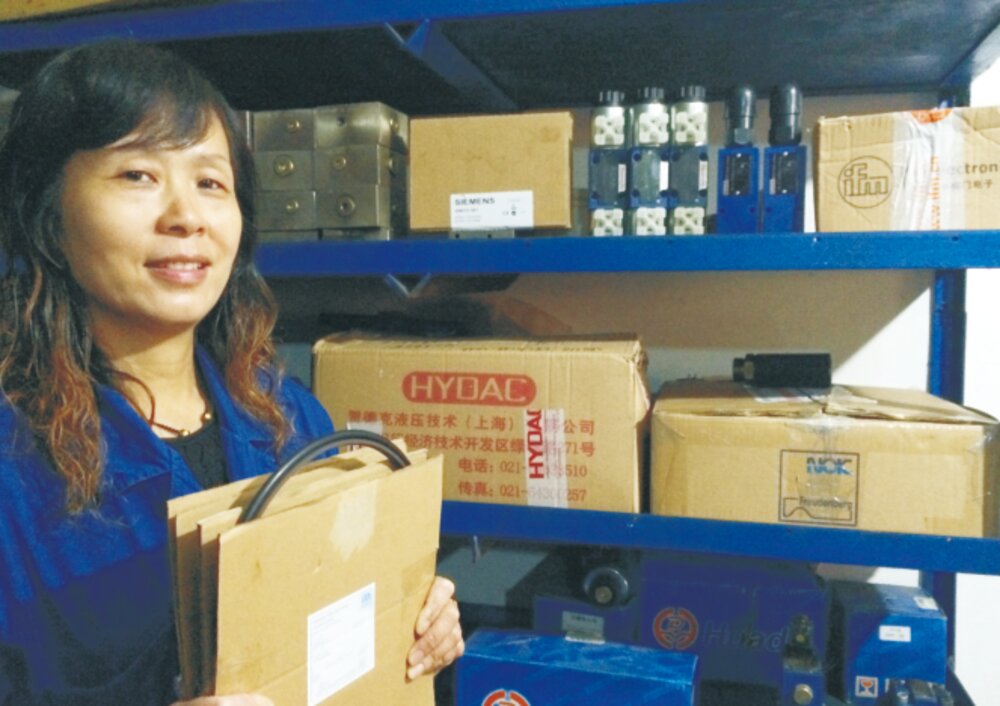
Our valve test bench measures spool response time, hysteresis, and zero-shift drift at multiple commanded positions. Valves exceeding 2% drift are replaced with genuine Rexroth equivalents. After replacement, the full force control loop is tuned — P-gain, I-gain, and feed-forward parameters — to restore the ±1% force accuracy that Mori specified at factory commissioning.

Ram Position Sensor Failure

MFB-400 and MFB-600 models use a magnetostrictive position sensor for ram stroke measurement. These sensors have a typical service life of 8-12 years before the waveguide tube fatigues from vibration. The failure mode is intermittent: the sensor works during slow stroking but drops signal during high-speed cycles, causing the press to fault on position deviation. We replace these with SICK or Balluff equivalents, recalibrate the position reference, and verify stroke repeatability to ±0.05 mm across the full stroke range.

Mori press proportional valve testing and ram position sensor replacement
Rebuild Process

Cylinder Rebuild & Guiding System Restoration

Cylinder Rebuild Procedure

The Mori cylinder rebuild follows a seven-step procedure designed to restore both immediate performance and long-term reliability:

  • 1. Cylinder removal, external cleaning, and bench mounting with hydraulic ports capped
  • 2. Rod extraction, gland disassembly, and piston removal with photographic documentation
  • 3. Bore inspection with bore gauge at three positions (top, middle, bottom) to map wear profile
  • 4. Rod chrome stripping, base metal inspection, re-plating, and finish grinding to Ra 0.2-0.4 µm
  • 5. Bore honing to restore cross-hatch pattern and surface finish, removing wear ridges
  • 6. Reassembly with new seal kit (NOK/Trelleborg), guide bands, and wiper seal
  • 7. Pressure test at 1.25x rated pressure with leak check, followed by stroke cycle test

The complete rebuild for a single Mori MFB-400 main cylinder takes 5-7 working days. For presses with multiple cylinders (V-ring, counter-pressure, ejector), we rebuild sequentially to maintain project timeline.

Mori press hydraulic cylinder rebuild with chrome plating and seal replacement
Guiding & Geometry

8-Column Guiding System Restoration

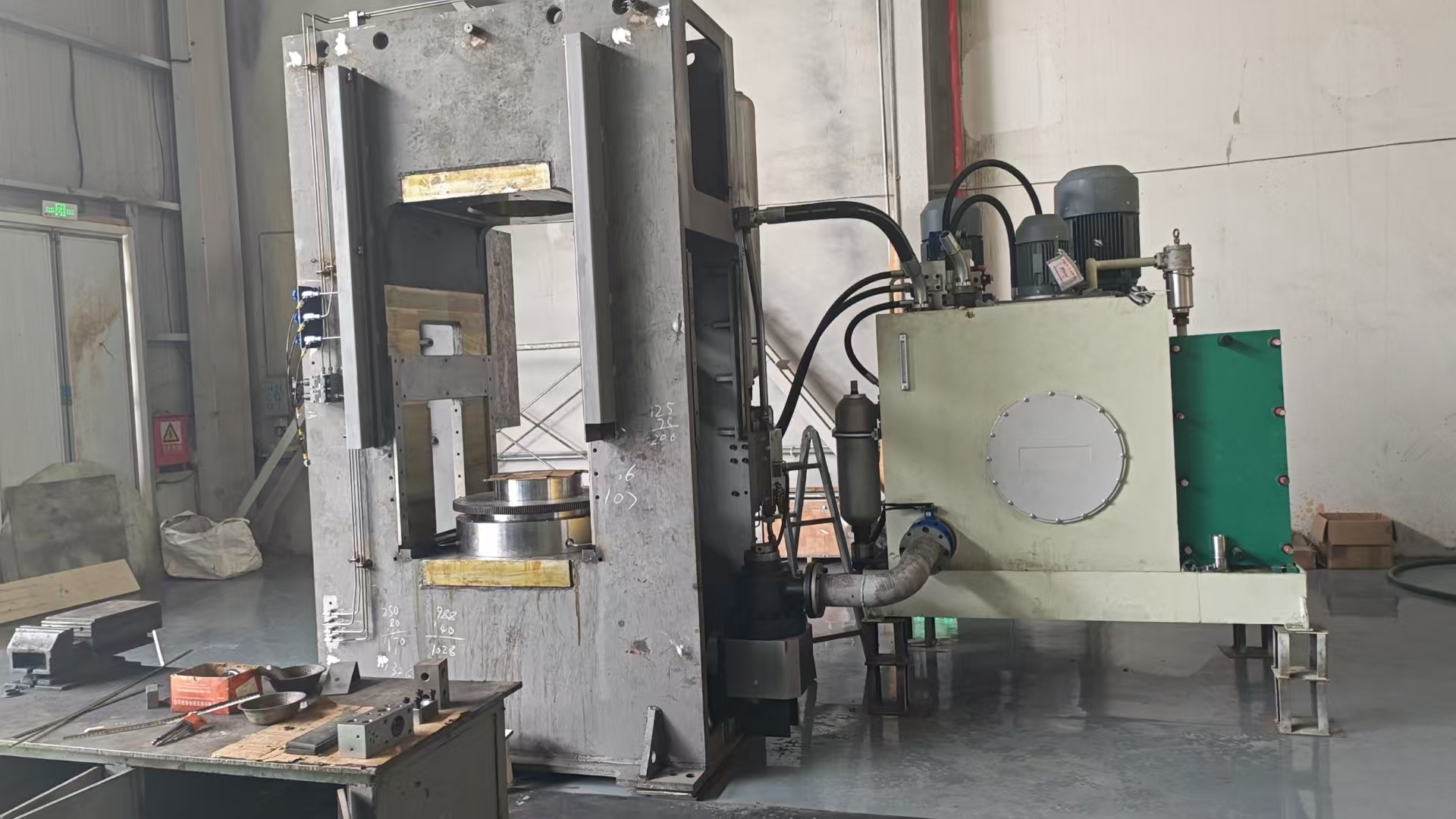
HS-FINEB HF-650 fine blanking press rear detail showing hydraulic connections and maintenance access

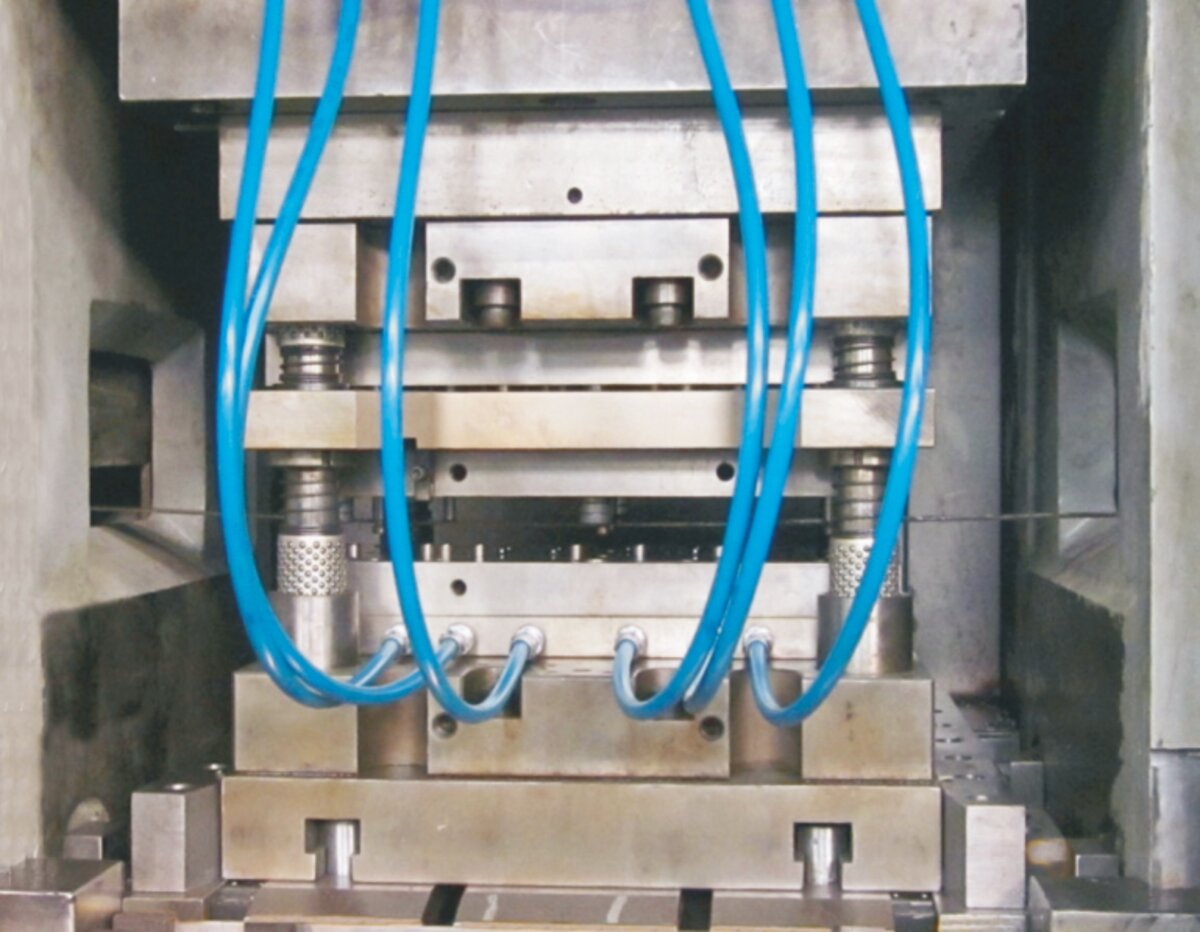
Mori presses use an 8-column guiding system — four corner columns plus four intermediate columns — that provides exceptional ram stability under off-center loading. This architecture is one of Mori's engineering strengths, but it also means eight bushings and eight columns must all be within tolerance simultaneously. A single worn bushing creates ram tilt that degrades part quality across the entire die area.

Our guiding restoration begins with measuring all eight columns for diameter, roundness, and straightness using a precision micrometer and dial bore gauge. Columns with light wear (under 0.05 mm) are reground in-place. Columns with deeper scoring are removed, reground, chrome-plated, and finish-ground at our Huangshi facility. All eight bushings are measured for clearance; any bushing exceeding 0.03 mm clearance is replaced with a bearing-grade bronze bushing machined to match the reground column diameter.

After guiding restoration, ram parallelism is measured and adjusted to 0.015 mm/100 mm — tighter than the original Mori factory specification of 0.02 mm/100 mm, because our refurbishment allows us to match each bushing to its specific column rather than using batch-produced tolerance pairs.

Control Modernization

CNC Control Retrofit for Mori Presses

Mori presses from the 1990s and early 2000s typically run proprietary Mori PLC systems with HMI panels that have reached end of support. Spare boards, display modules, and communication cards are no longer available from the original supplier. When a single PLC board fails and no replacement exists, the press is down indefinitely — a situation we have resolved for multiple Mori Iron installations.

Our control retrofit replaces the original Mori PLC and HMI with a modern Siemens S7-1500 or Beckhoff CX-series controller and a 15-inch industrial touchscreen HMI. The retrofit is designed to preserve every hydraulic safety interlock, stroke sequence, and force monitoring function from the original Mori control logic — we reverse-engineer the control program from the existing documentation, PLC backup (where available), and functional testing of each sequence.

The new control system adds capabilities the original Mori PLC could not provide: recipe storage for multiple part programs, real-time force curve display with historical logging, alarm diagnostics with timestamp and severity classification, and remote connectivity for our diagnostic support service. The fine blanking process profiles — V-ring pressure ramp, counter-pressure ratio, blanking speed, and ejection timing — are pre-configured based on the press's original specifications and can be tuned per part geometry.

Mori press CNC control retrofit with Siemens PLC and touchscreen HMI
Verification

Tonnage Verification & Calibration

Mori press tonnage verification and strain gauge calibration

After any hydraulic or control system work, we verify tonnage accuracy using strain gauge calibration. Strain gauges are bonded to the press frame at calibrated positions — typically on the crown and bed tie-rods — and connected to a data acquisition system that records frame strain at each stroke phase. The strain measurements are converted to force using the frame's calibration factor, providing an independent verification of the hydraulic system's force transducer readings.

The calibration target is ±1% accuracy across the full tonnage range — from 20% to 100% of rated force. This means a 400-ton press verified at 80 tons, 200 tons, 320 tons, and 400 tons, with each measurement within ±4 tons of the commanded value. The calibration report documents the measured force at each test point, the hydraulic system pressure, and the frame strain, providing a baseline for future condition monitoring.

Tonnage verification is not optional in our refurbishment scope — it is the final sign-off that the rebuilt press delivers the force it claims to deliver. A press that produces 360 tons when the operator sets 400 tons will produce parts with inadequate V-ring impingement, resulting in die-roll and tear fracture — problems that are expensive to diagnose when the control system reports "400 tons achieved" but the frame strain tells a different story.

Decision Framework

On-Site vs. In-Shop Refurbishment

On-Site (3-6 Weeks)

Recommended when: frame and guiding columns are structurally sound (verified by ultrasonic inspection), scope is limited to hydraulic rebuild, control retrofit, and bushing replacement, and production schedule allows 3-6 weeks of downtime. Our team works at your facility with portable honing, grinding, and welding equipment. All disassembled components are rebuilt on-site; only frame-level welding requires transport to our facility.

In-Shop (8-12 Weeks)

Required when: frame stress cracks need welding with PWHT, guiding columns need removal for regrinding and chrome plating, or the press needs complete disassembly for comprehensive frame inspection. The press is transported to our Huangshi facility, fully rebuilt, load-tested at 100% rated tonnage, and reinstalled with re-leveling and production trial using your die and material.

Decision criteria: The on-site vs. in-shop determination is made after the initial site survey. If ultrasonic inspection reveals frame cracks, if column measurement shows wear exceeding 0.1 mm, or if the guiding system requires complete column removal, in-shop refurbishment is mandatory. Otherwise, on-site work is recommended for its shorter downtime and lower logistics cost.
Parts Supply

Spare Parts for Discontinued Mori Components

Mori's OEM spare parts supply for MFB-series presses has been progressively reduced as production focus shifted to newer platforms. Components that were standard catalog items 10 years ago — Mori-specific hydraulic manifold blocks, cylinder glands, guide bushings, PLC I/O modules — now require special order with lead times of 12-20 weeks, if available at all.

We manufacture replacement parts for discontinued Mori components in our Huangshi facility. Our reverse-engineering process begins with 3D scanning or precision measurement of the original part, followed by material analysis (spectrometer for chemical composition, hardness testing), CAD model creation, and manufacturing to the original specification. Every replacement part ships with a material certificate (EN 10204 3.1) and dimensional inspection report.

Common Mori replacement parts we manufacture: Hydraulic cylinder glands and pistons, guide bushings (bearing-grade bronze), seal plates, manifold blocks, ram components, ejector assemblies, and die cushion components. Stocked parts ship within 3-5 business days; custom manufacturing from measurement requires 2-4 weeks.

Manufactured spare parts for discontinued Mori fine blanking press components
Related Services

Other Brand-Specific Press Service

Feintool Press Refurbishment

Independent refurbishment for Feintool XTF, MJP, and GKP series presses. Hydraulic circuit rebuild, CNC control retrofit (Siemens 840D or Beckhoff), guiding column regrinding, and ram parallelism restoration to 0.01 mm/100 mm. Reverse-engineered parts for discontinued Feintool OEM components.

Feintool press service →

Schuler Press Service

Schuler fine blanking press service covering MST, FBA, and servo press series. Specialized expertise in Schuler's mechanical-hydraulic hybrid toggle mechanism, servo-hydraulic synchronization calibration, and Beckhoff TwinCAT CNC retrofit for legacy Schuler HMI systems.

Schuler press service →

Send Your Mori Press Details — Get a Fixed-Scope Proposal

Email your Mori press model (MFB-200/300/400/600/800 or Mori Seiki series), serial number, year, current symptoms, and production requirements. Our service team will respond within one business day with an assessment plan and estimated repair or refurbishment scope.

💬