💬 WhatsApp Chat

Fine Blanked Lock Components

High-security hardware components manufactured by fine blanking with plus or minus 0.03 mm hole alignment, burr-free edges under 0.02 mm, and Ra 1.6 um sliding surface finish. Materials: SS430 stainless and brass for door locks, cabinet locks, industrial enclosures, and high-security cylinder systems.

Product Overview

What Are Fine Blanked Lock Components?

Lock components include lock plates, strike plates, latch plates, and cam components that form the functional core of mechanical locking systems. These parts demand extremely tight tolerances because lock mechanism reliability depends on precise hole alignment, smooth sliding surfaces, and burr-free edges. A burr of 0.1 mm on a lock plate can cause jamming, while hole misalignment of 0.05 mm prevents proper pin insertion and cylinder rotation.

Fine blanking produces lock components with hole alignment of ±0.03 mm, burr-free edges under 0.02 mm, and surface finish Ra 1.6 um for smooth sliding contact. The V-ring clamping and counter-pressure ejection produce these tolerances in a single press stroke, eliminating the milling, drilling, and deburring operations required after conventional stamping. For high-security lock manufacturers, fine blanking provides the dimensional consistency needed for interchangeability across millions of units.

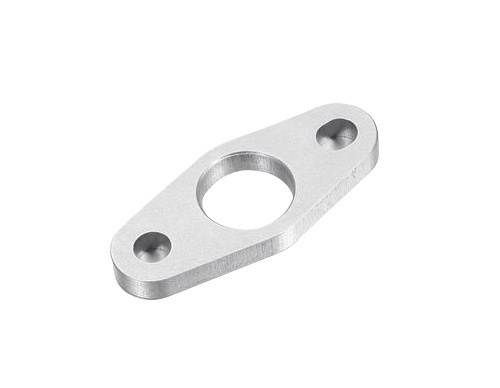
Fine blanked diamond-shaped lock plate with precise hole alignment and burr-free edges
Manufacturing Excellence

Why Fine Blanking Is Essential for Lock Hardware

🔒

Hole Alignment for Lock Mechanism Function

Lock plates contain pin holes, driver holes, and keyway slots that must align within ±0.03 mm for smooth cylinder rotation. Conventional stamping produces holes with ±0.10 mm positional error, requiring secondary jig boring. Fine blanking with compound dies pierces all holes simultaneously, holding alignment to ±0.03 mm. For a 5-pin tumbler lock plate with holes on 5 mm centers, this ensures all pins engage simultaneously with the key, providing smooth operation and consistent keying.

🔒

Burr-Free Edges to Prevent Jamming

Lock components slide against each other during operation, and any burr or edge defect causes friction, wear, and eventual jamming. Fine blanking produces edges with burr height under 0.02 mm, compared to 0.2-0.5 mm on stamped parts. The clean sheared edge at Ra 1.6 um provides smooth sliding contact without secondary deburring. This is critical for deadbolt strike plates and latch plates where jamming during emergency egress can create life-safety hazards.

🔒

Surface Requirements for Smooth Operation

Lock plate surfaces must provide low-friction sliding contact for pin tumblers and cam followers. Fine blanked surfaces at Ra 1.6 um with 90%+ shear zone provide uniform hardness and smoothness without machining. After blanking, parts may be polished, plated, or treated with dry-film lubricant (MoS2) for friction coefficients below 0.08, ensuring smooth key operation over 100,000+ cycles per ANSI/BHMA A156.13.

🔒

Dimensional Consistency for Interchangeability

Lock hardware manufacturers require interchangeability across production lots so that replacement parts fit precisely. Fine blanking produces parts with ±0.03 mm dimensional consistency across millions of units, verified by SPC (statistical process control) with Cpk above 1.67. This consistency allows lock manufacturers like ASSA ABLOY, Kwikset, and Schlage to offer lifetime warranties on replacement parts.

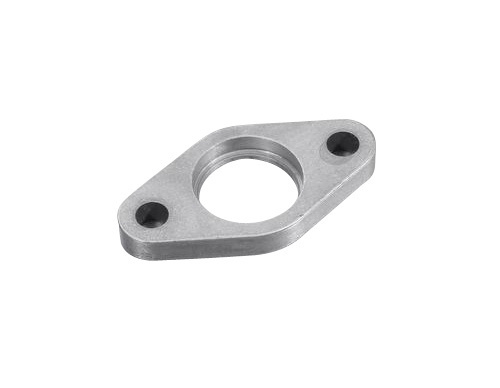
Hexagonal lock component mount showing precise geometry and clean edges from fine blanking
Materials Engineering

Material Selection for Fine Blanked Lock Components

SS430 (AISI 430 / SUS430): A ferritic stainless steel with 16-18% chromium, SS430 is the standard for lock plates and strike plates requiring corrosion resistance and moderate hardness. Its ferritic structure provides good fine blanking formability without the work-hardening tendency of austenitic grades. After blanking, SS430 achieves 180-250 HB hardness, suitable for lock plate sliding surfaces. The fine blanked surface accepts polishing and electroplating for decorative finishes. Fine blanking SS430 at 2-4 mm requires 180-280 tons, suited to the HF-320.

Brass (C26000 / Cartridge Brass): Used for high-end lock cylinders, keyway components, and decorative lock hardware. Brass provides natural corrosion resistance, excellent machinability, and aesthetic appeal. Fine blanking brass at 2-3 mm produces clean edges and burnished surfaces that accept polished, satin, and antique finishes. The material's low friction coefficient (0.15 against steel) makes it ideal for sliding lock components. See our copper and brass fine blanking guide.

SPCC cold-rolled steel: For economy lock hardware, zinc-plated after blanking. See materials guide.

Precision Specifications

Tolerances and Quality Standards for Lock Components

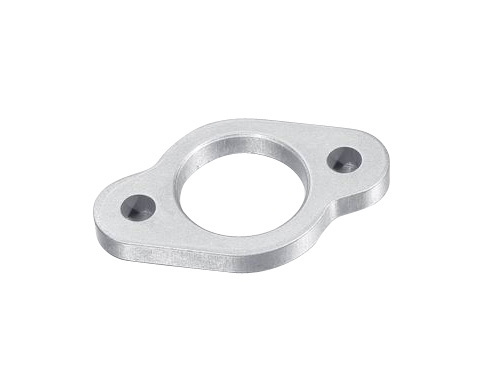
Rounded lock flange plate with precise hole pattern and smooth surface from fine blanking

Hole Alignment and Position

Pin holes and keyway slots are held to ±0.03 mm positional tolerance using fine blanking dies with carbide punches. For 5-pin tumbler plates, the five pin holes (typically 3.5 mm diameter on 5 mm centers) align within ±0.015 mm, ensuring simultaneous pin engagement. This exceeds ANSI/BHMA A156.13 Grade 1 requirements for commercial locksets.

Edge Quality and Burr Control

Burr height is controlled to under 0.02 mm through punch-die clearance of 0.5% of material thickness and V-ring clamping. The shear zone exceeds 90%, with fracture under 10%. This eliminates the tumbling and vibratory deburring required after stamping, reducing processing cost $0.05-0.10 per part while preventing edge damage that could affect lock function.

Surface Finish for Sliding Contact

Lock plate sliding surfaces are held to Ra 1.6 um with 90%+ shear zone, providing smooth contact for pin tumblers and cam followers. After optional dry-film lubricant coating, the friction coefficient is 0.06-0.08, ensuring lock operation force under 5N per ANSI/BHMA standards. Cycle testing achieves 500,000+ operations without degradation.

Industry Applications

Applications of Fine Blanked Lock Components

🛡

Door Locks and Deadbolts

Residential and commercial door lock plates, strike plates, and latch plates are the largest application. Fine blanked SS430 components serve ASSA ABLOY, Kwikset (Spectrum Brands), and Schlage (Allegion) locksets. The ±0.03 mm hole alignment ensures smooth deadbolt operation over 500,000 cycles per ANSI/BHMA A156.36 Grade 1. Strike plates with burr-free edges prevent latch binding during emergency egress.

🔒

Cabinet and Furniture Locks

Cam locks and plunger locks for office furniture, lockers, and electrical cabinets use fine blanked cam components and keeper plates from SPCC at 2-3 mm. The precise cam geometry and clean edges ensure smooth 90-degree rotation and secure locking. Hafele, Southco, and CompX specify fine blanked components for modular furniture locking systems.

🛠

Industrial Enclosure Locks

Locks for server racks, telecom enclosures, and industrial control panels use fine blanked stainless steel components for corrosion resistance in outdoor and industrial environments. Rittal and Schneider Electric specify fine blanked lock hardware for modular enclosure systems where locks must interchange without adjustment.

🔒

High-Security and Safe Locks

High-security lock plates for safes, vaults, and access-controlled doors use fine blanked brass and SS430 components. The dimensional consistency of fine blanking supports the interchangeability and copy-protection features of Medeco, Mul-T-Lock, and Abloy high-security cylinders. The burr-free edges prevent manipulation tools from gripping lock component edges.

Press Recommendations

HS-FINEB Press Models for Lock Component Production

HF-320 (320 Tons)

Ideal for lock plates, strike plates, and cam components from 2-4 mm SS430, brass, and SPCC. At 40-50 strokes per minute with 15-up to 25-up layouts, the HF-320 produces 30,000-50,000 components per shift, meeting high-volume door lock demand. Price: approximately $280,000 FOB Shanghai.

HF-500 (500 Tons)

For thicker lock components and large strike plates from 4-6 mm stainless. The 500-ton force handles SS430 at full thickness with 90%+ shear zone. The 900x650 mm bolster accommodates 20-up layouts for high-volume lock hardware. See all models and our tonnage guide.

Need Fine Blanked Lock Components for Your Hardware?

HS-FINEB engineers will review your lock component specifications - hole pattern, material, surface finish, and annual volume - and recommend the optimal press model and die design. Contact us for sample components with dimensional report.

💬