Energy consumption represents one of the largest operating costs in fine blanking manufacturing, accounting for 15 to 25 percent of total production expenses. Understanding where energy is lost, how to calculate power requirements, and which technologies minimize consumption enables manufacturers to make informed equipment decisions and optimize their operational economics. This guide provides the engineering methodology for quantifying press energy consumption and evaluating efficiency improvements.
The total energy consumption of a fine blanking press is determined by multiple interrelated factors that vary between hydraulic and servo drive architectures.
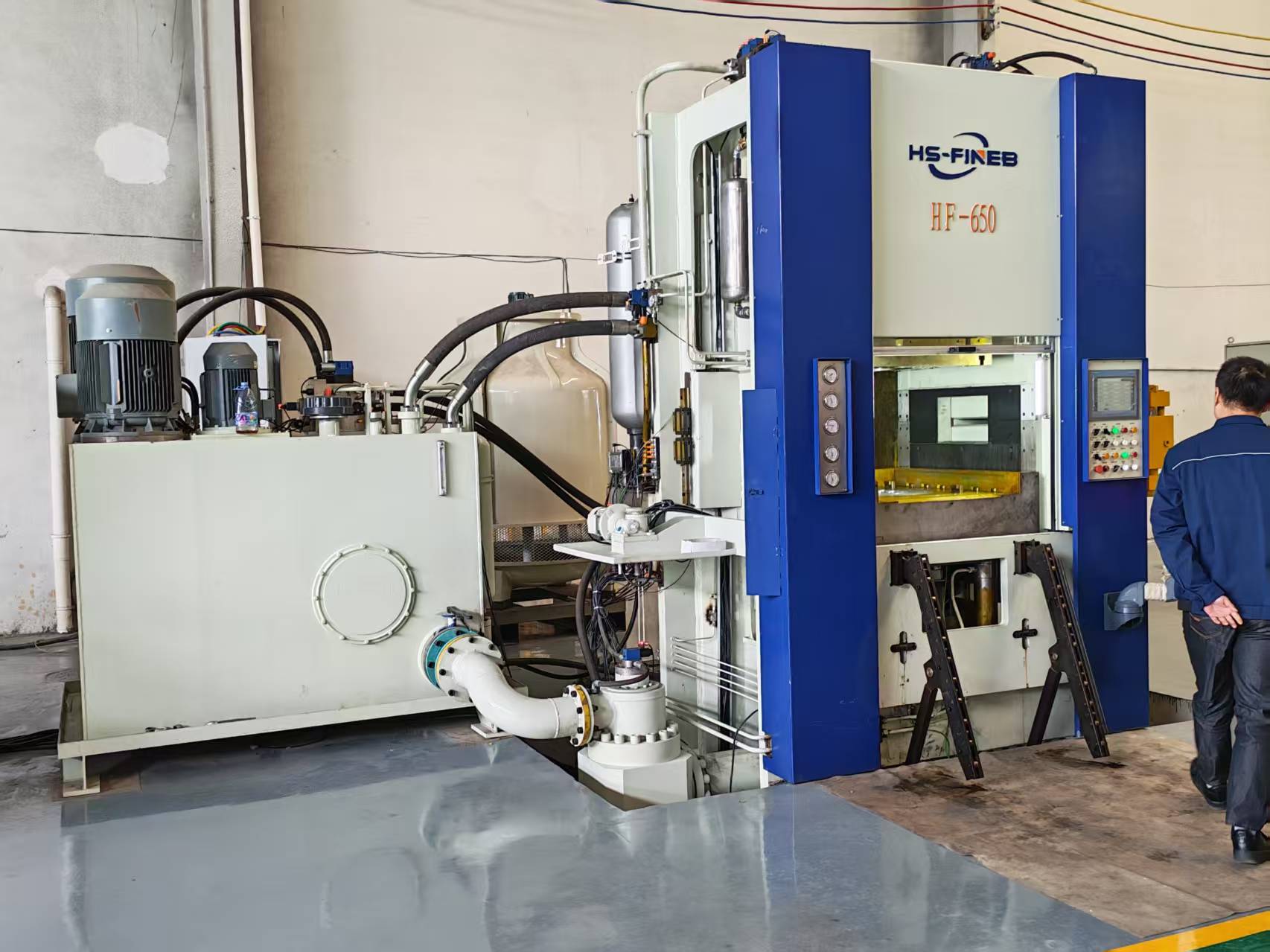
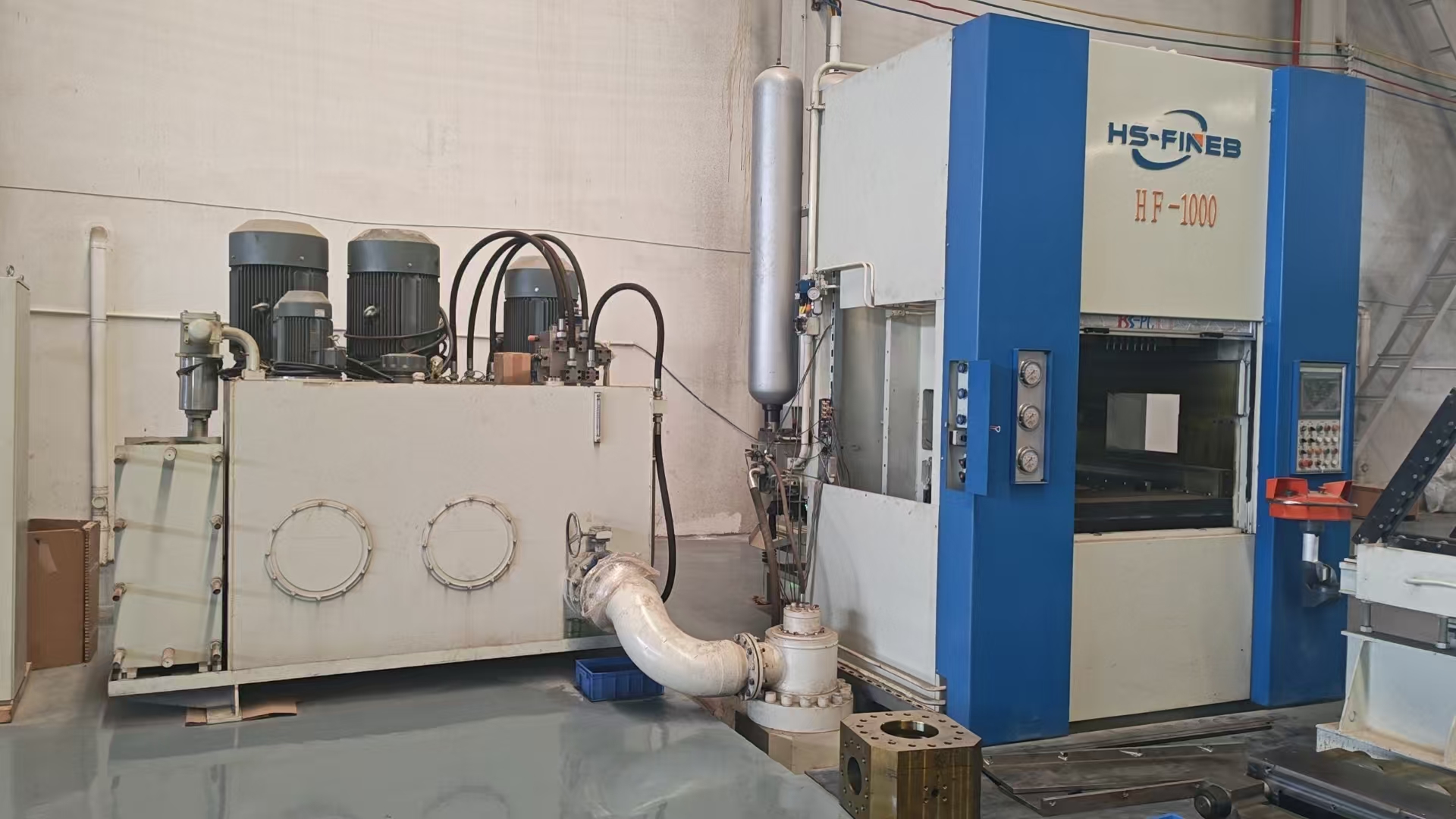
For a typical 400-ton hydraulic fine blanking press operating at 20 strokes per minute on 3-millimeter mild steel, the main hydraulic pump motor draws 55 to 75 kilowatts continuously during production. The V-ring and counter-pressure circuits add 15 to 25 kilowatts. Auxiliary systems including lubrication pumps, cooling fans and controls consume 5 to 8 kilowatts. Total connected power equals ~75 to 108 kilowatts, though actual average consumption depends heavily on utilization, material thickness and stroke rate.


Hydraulic fine blanking presses exhibit energy losses at multiple points in the power transmission chain. The volumetric efficiency of a variable-displacement piston pump ranges from 92 to 96 percent, with mechanical efficiency at 85 to 92 percent. Combined pump efficiency therefore ranges from 78 to 88 percent. Valve throttling represents the largest single loss: proportional directional valves create controlled pressure drops, converting 30 to 50 percent of hydraulic energy to heat during high-force, low-speed operation. Heat dissipation through the oil cooler removes this wasted energy, requiring a 15 to 25 kW cooler running continuously.
Servo-driven fine blanking presses achieve substantial energy savings through different power transmission architecture. The servo motor generates torque only when the ram is moving, drawing minimal current during idle periods between strokes. The mechanical linkage, whether toggle, crank or ball screw, transmits power with 90 to 95 percent mechanical efficiency.
The energy savings are most pronounced in applications with intermittent production, frequent die changes or variable stroke rates. In a servo press, reducing the stroke rate from 25 to 15 strokes per minute reduces energy consumption proportionally because the motor only runs when producing motion. In a hydraulic press, the pump continues running at constant power regardless of stroke rate reduction, meaning slower production increases energy consumption per part.
For a 400-ton press running two shifts, five days per week, producing 800 tons of parts annually, the energy savings from servo versus hydraulic technology are substantial. At an electricity rate of 0.12 US dollars per kilowatt-hour and hydraulic consumption of 55,000 kilowatt-hours annually, the energy cost is 6,600 dollars. A servo press consuming 35,000 kilowatt-hours costs 4,200 dollars annually, saving 2,400 dollars per year in direct electricity costs.
Calculating the mechanical power required for fine blanking enables accurate sizing of press drives and estimation of energy consumption.
For a 400-ton press generating 4,000 kilonewtons of force, shearing 3-millimeter steel at a velocity of 25 millimeters per second during the working stroke, the mechanical power at the tool is 100,000 watts or 100 kilowatts. Dividing by a typical hydraulic system overall efficiency of 0.40 gives an input power requirement of 250 kilowatts. Dividing by a servo system efficiency of 0.85 gives an input power requirement of only 118 kilowatts. This calculation explains why servo presses can use smaller main motors despite delivering identical blanking force.
The force in fine blanking is calculated from the shear perimeter, material thickness and shear strength. For a part with 500 millimeters of shear perimeter in 3-millimeter steel with a shear strength of 400 megapascals, the theoretical blanking force is 600 kilonewtons. Fine blanking requires an additional V-ring impingement force of 20 to 40 percent of the blanking force and counter-pressure of 10 to 20 percent, bringing total press force to ~900 to 1,000 kilonewtons for this application. A 400-ton press provides substantial margin for this part.
For a 400-ton press producing transmission shift forks from 4 mm carbon steel with 350 mm shear perimeter, 450 MPa shear strength, and 42 percent hydraulic efficiency: blanking force equals 630 kN. With V-ring at 30 percent and counter-pressure at 15 percent, total force is 914 kN. Mechanical power is 18.3 kW, requiring 43.5 kW input power. Including auxiliary loads, the installed motor would be 55 to 75 kW.

Estimating annual energy costs for a fine blanking press requires combining the power calculation with operational parameters. The following example demonstrates the methodology for a 400-ton press in typical automotive component production.
Operational assumptions: two shifts at 10 hours each, 250 production days, 60 percent utilization, hydraulic average power 65 kW, servo average power 40 kW, electricity at 0.12 USD/kWh.
The hydraulic press: 3,000 production hours annually, consuming 195,000 kWh, costing 23,400 dollars. The servo press under identical conditions: 120,000 kWh, costing 14,400 dollars. Annual savings from servo technology: 9,000 dollars per press.
Energy recovery in hydraulic fine blanking presses captures the kinetic energy of the decelerating ram during the return stroke and stores it for use in the next working stroke. The most common implementation uses hydraulic accumulators connected to the main cylinder return line.
Energy recovery through accumulator regeneration reduces total hydraulic energy consumption by 8 to 15 percent. For the 400-ton press consuming 195,000 kilowatt-hours annually, a 12 percent regeneration saving equals 23,400 kilowatt-hours or 2,808 dollars annually at 0.12 dollars per kilowatt-hour. The payback period for a regeneration system with 8,000 to 15,000 dollars installation cost is 3 to 5 years.
Properly sizing electrical infrastructure for fine blanking presses requires distinguishing between peak power demand and average power consumption. The peak demand determines transformer capacity, cable sizing and circuit breaker ratings. The average consumption determines energy costs and cooling requirements.
Hydraulic presses exhibit relatively constant power demand during production because the main pump runs continuously. Peak demand equals ~1.2 times the average power to account for motor starting inrush and load fluctuations. A 400-ton hydraulic press with 75 kilowatts average power has a peak demand of ~90 kilowatts, requiring a 125 kilovolt-ampere transformer circuit and 200-ampere main breaker at 480 volts three-phase.
Servo presses exhibit highly variable power demand because the motor only draws significant power during the active working stroke. Peak demand during the shear phase can reach 2 to 3 times the average power because the servo motor must deliver high torque instantaneously. However, the average power remains lower than hydraulic. A 400-ton servo press might show peak demand of 120 kilowatts during shear but average only 40 kilowatts over the cycle. The electrical infrastructure must be sized for the 120-kilowatt peak, but the energy utility bills based on the 40-kilowatt average.
A European automotive components supplier operating three 400-ton hydraulic fine blanking presses converted one press to servo drive technology in 2024, providing a direct comparison under identical production conditions. The facility tracked energy consumption, production output and maintenance costs for 12 months before and after conversion.
The hydraulic baseline press consumed 212,000 kWh annually producing 780 tons of components, yielding 272 kWh per ton. Maintenance costs including hydraulic oil, filters, and valve repairs totaled 18,500 dollars, plus 2,200 dollars for oil cooler electricity. Total annual operating cost: 30,140 dollars.
After servo conversion, the same press consumed 128,000 kWh producing 795 tons, yielding 161 kWh per ton. The 2 percent production increase resulted from faster cycle times. Maintenance dropped to 6,800 dollars, with no hydraulic oil, filters, or valve repairs. Total annual operating cost: 19,760 dollars.
HS-FINEB engineers will analyze your current energy costs and recommend the most efficient press configuration for your production requirements. Contact us for a detailed energy consumption estimate and return-on-investment analysis for servo, hydraulic or hybrid drive options.