💬 WhatsApp Chat

Fine Blanking Press Refurbishment Economics: Cost-Benefit Analysis

A fine blanking press is a major capital investment, and the decision to refurbish an aging machine or purchase a new one carries significant financial and operational consequences. With refurbishment typically costing 30–50% of a new press while restoring accuracy to near-new levels, the economics often favor refurbishment — but only when the right conditions are met. This analysis provides the framework for making that decision.

Decision Framework

When to Consider Refurbishment

Refurbishment becomes a viable option when a press reaches 15–25 years of service — an age at which the mechanical frame is typically still structurally sound, but the hydraulic, control, and guidance systems have degraded. The key question is whether the frame, columns, and guideway bases remain serviceable. If they do, refurbishment can restore the press to near-new performance at a fraction of replacement cost.

Several symptoms signal that refurbishment evaluation is warranted. Accuracy degradation — ram parallelism drifting beyond specification, force repeatability declining, or part dimensional variation increasing — indicates wear in the guidance and hydraulic systems. Frequent hydraulic failures — recurring seal leaks, valve drift, or pressure instability — signal that cylinders, valves, and seals have reached end of life. Obsolete controls — relay logic systems, lack of data logging, no force monitoring — limit the press’s capability for modern quality requirements and traceability.

However, the frame and guideways are the deciding factors. A press with a sound cast iron or welded steel frame, columns that have not shifted or cracked, and guideway bases within reconditioning limits is an excellent refurbishment candidate. These structural elements represent the majority of a press’s value and cannot be economically replicated; if they are serviceable, refurbishment is almost always more cost-effective than replacement.

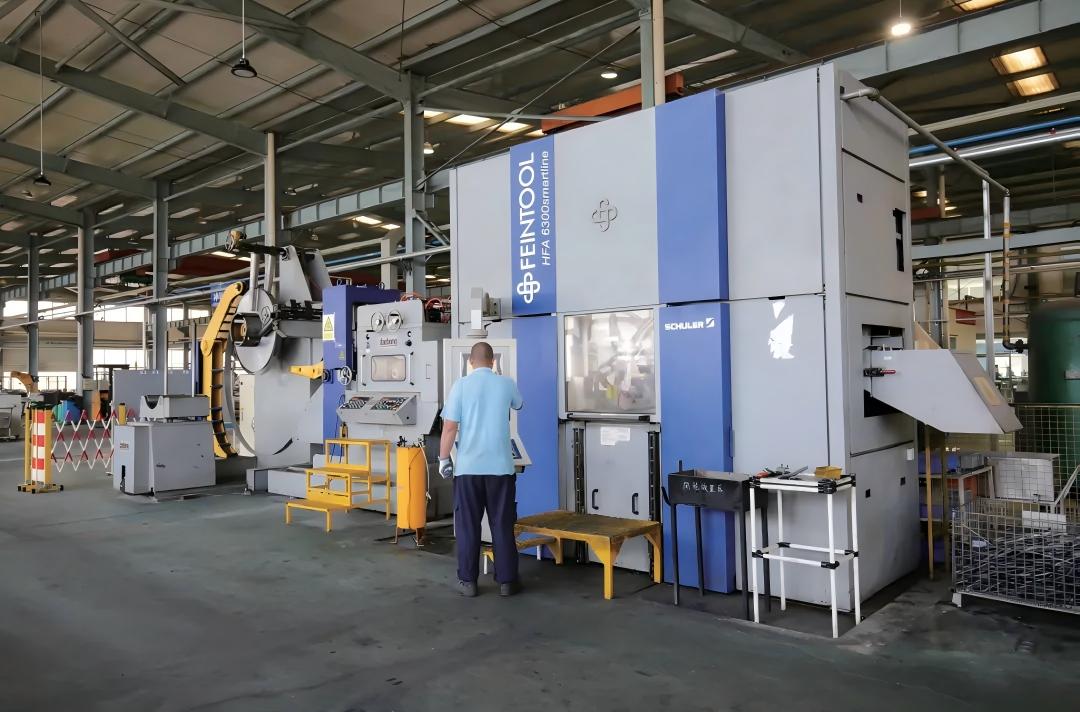
Feintool fine blanking press during refurbishment showing disassembled hydraulic cylinders and guideway system
Refurbishment Scope

What a Complete Refurbishment Includes

Hydraulic System Rebuild

Complete hydraulic rebuild includes new or re-honed cylinders with new piston and rod seals, new or remanufactured proportional valves, new piping and hoses, new pumps and motors where efficiency has degraded, and a full oil change with system flushing to target cleanliness. The three-force hydraulic circuits are rebuilt to restore independent, accurate control of blanking, V-ring, and counter-pressure forces.

Control System Upgrade

The control system is upgraded to a modern PLC with color HMI, real-time force monitoring, stroke counting, die data storage, and production logging. This brings the press to current standards for quality traceability, with data export capability for SPC (Statistical Process Control) and Industry 4.0 integration. Safety circuits are upgraded to meet current standards (dual-channel, Cat. 3 or 4).

Guideway Reconditioning

Gibways are reconditioned by hand scraping or precision grinding to restore flatness and perpendicularity to specification. New gib liners are fitted and adjusted for proper clearance. Ram parallelism is restored to ±0.02mm through systematic gib adjustment. This work addresses the root cause of accuracy degradation and is the foundation for restored die life.

Die Clamping & Auxiliary Upgrades

Hydraulic die clamping replaces manual T-bolt clamping, reducing setup time from hours to minutes. Quick-change die systems enable die swaps in under 30 minutes. Auxiliary upgrades may include new coil feeding systems, lubrication systems, scrap conveyors, and part ejection systems, bringing the entire production cell to current capability standards.

Cost Analysis

Refurbishment vs New Press: Cost Comparison

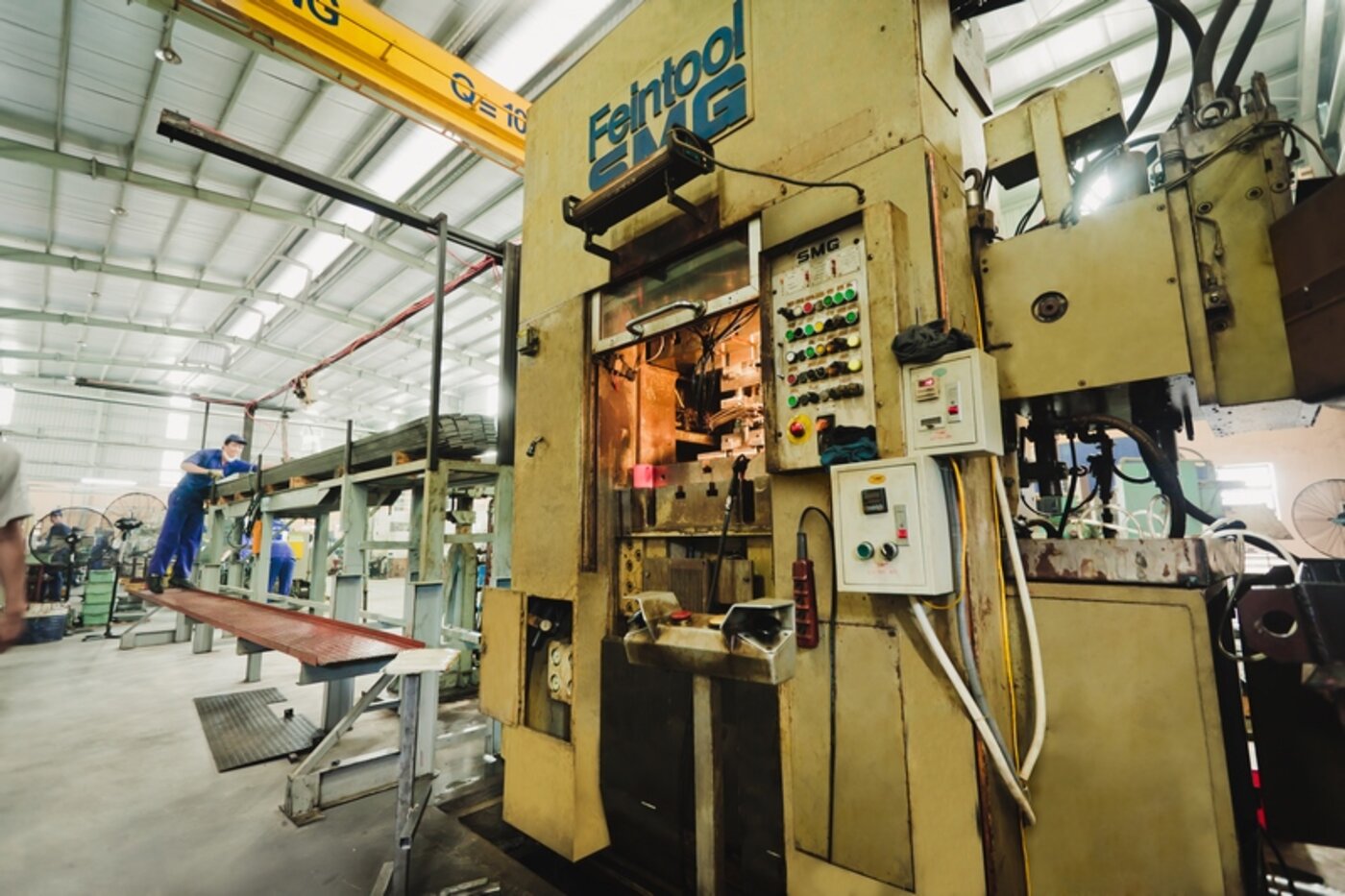
Refurbished Feintool fine blanking press showing restored hydraulic system and upgraded control panel

The Numbers Favor Refurbishment

The cost comparison is straightforward. For a 400-ton fine blanking press, refurbishment typically costs $150,000–300,000, representing 30–50% of a new equivalent press priced at $350,000–600,000. The exact refurbishment cost depends on the scope: a hydraulic-only rebuild is at the lower end, while a full refurbishment with control upgrade and guideway reconditioning approaches the upper end.

Lead time also favors refurbishment. A complete refurbishment takes 3–4 months, including disassembly, component reconditioning, reassembly, and commissioning. A new press of equivalent capacity has a lead time of 8–12 months from order to delivery, plus installation and commissioning. For a plant facing production pressure, the 4–8 month time advantage of refurbishment can be decisive.

Downtime management is another factor. Refurbishment can be staged — hydraulic components can be pre-built and controls pre-programmed, with the actual press-down time minimized to 4–6 weeks for disassembly, reconditioning, and reassembly. A new press replacement requires full decommissioning of the old machine, foundation preparation, new installation, and commissioning — a process that can take 8–12 weeks of complete line downtime.

The decision rule is simple: if the frame, columns, and guideway bases are serviceable, refurbishment delivers equivalent performance at roughly half the cost in half the time. Only when the structural elements are compromised does new press purchase become the better option.

Technical Boundaries

What Can and Cannot Be Restored

A refurbishment restores everything except the frame itself. Force accuracy is restored to ±2% through new proportional valves, pressure transducers, and closed-loop PLC control. Ram parallelism is restored to ±0.02mm through guideway reconditioning and new gib liners. Speed and cycle rate are restored through new pumps, motors, and optimized hydraulic circuits. Controls and monitoring are brought to current standards through full PLC and HMI upgrade with force monitoring, data logging, and recipe management.

What cannot be restored is frame fatigue. After 20+ years of cyclic loading, cast iron frames may develop micro-cracks, and welded steel frames may experience weldment degradation. These conditions are detectable through non-destructive testing (magnetic particle inspection for surface cracks, ultrasonic testing for subsurface flaws) during the refurbishment assessment. If frame cracks are found and repairable, they can be ground out and re-welded; if the frame has shifted or distorted beyond tolerance, refurbishment is not viable and a new press is required.

Guideway base wear beyond the reconditioning limit is another non-restorable condition. Guideway surfaces can typically be ground or scraped to remove 0.1–0.3mm of wear, but if the wear exceeds the reconditioning limit — or if the guideway base has been damaged by galling or surface hardening loss — the frame cannot be restored to the required precision. Column distortion from foundation settlement or impact damage is similarly non-restorable without frame-level engineering work that exceeds refurbishment economics.

The decision rule is clear: if non-destructive testing confirms the frame and guideway bases are sound, refurbishment is the superior economic choice. HS-FINEB conducts a comprehensive assessment before every refurbishment project, including dimensional measurement, NDT, hydraulic system evaluation, and control system audit, to provide a definitive recommendation.

ROI & HS-FINEB Experience

Return on Investment and Track Record

The financial case for refurbishment is compelling. With a typical payback period of 18–30 months versus 4–6 years for a new press, refurbishment returns capital faster and frees budget for other investments. The extended service life of 10–15 years post-refurbishment provides a long productive period over which to amortize the investment, making the per-part equipment cost lower than either the aging un-refurbished press (with its rising maintenance and scrap costs) or a new press (with its higher capital base).

HS-FINEB has refurbished over 50 Feintool and Mori fine blanking presses across the 200T–800T range over the past decade. Our refurbishment projects span single-circuit hydraulic rebuilds to complete press modernizations with full control system replacement, guideway reconditioning, and auxiliary equipment upgrades. Each project follows our standard process: assessment (onsite inspection, NDT, cost estimate) → scope definition (detailed work plan and quote) → execution (disassembly, component reconditioning, reassembly, commissioning) → verification (parallelism measurement, force accuracy testing, production trial).

Typical results from our refurbishment projects: force accuracy restored to ±2%, ram parallelism to ±0.02mm, production rate to 95% of new press equivalent, and a 12-month warranty on all refurbished components. The 95% production rate figure (versus 100% for a new press) reflects the slight residual difference in guidance system precision after reconditioning versus factory-new — a difference that has no practical impact on part quality for the vast majority of applications.

For plant managers evaluating aging fine blanking equipment, we offer a free press assessment that includes onsite inspection, measurement of current parallelism and force accuracy, non-destructive frame testing, and a written recommendation with cost estimate for refurbishment versus replacement. Contact Helen at sales@fineblankingmachine.com or +86-13062870081 to schedule an assessment.

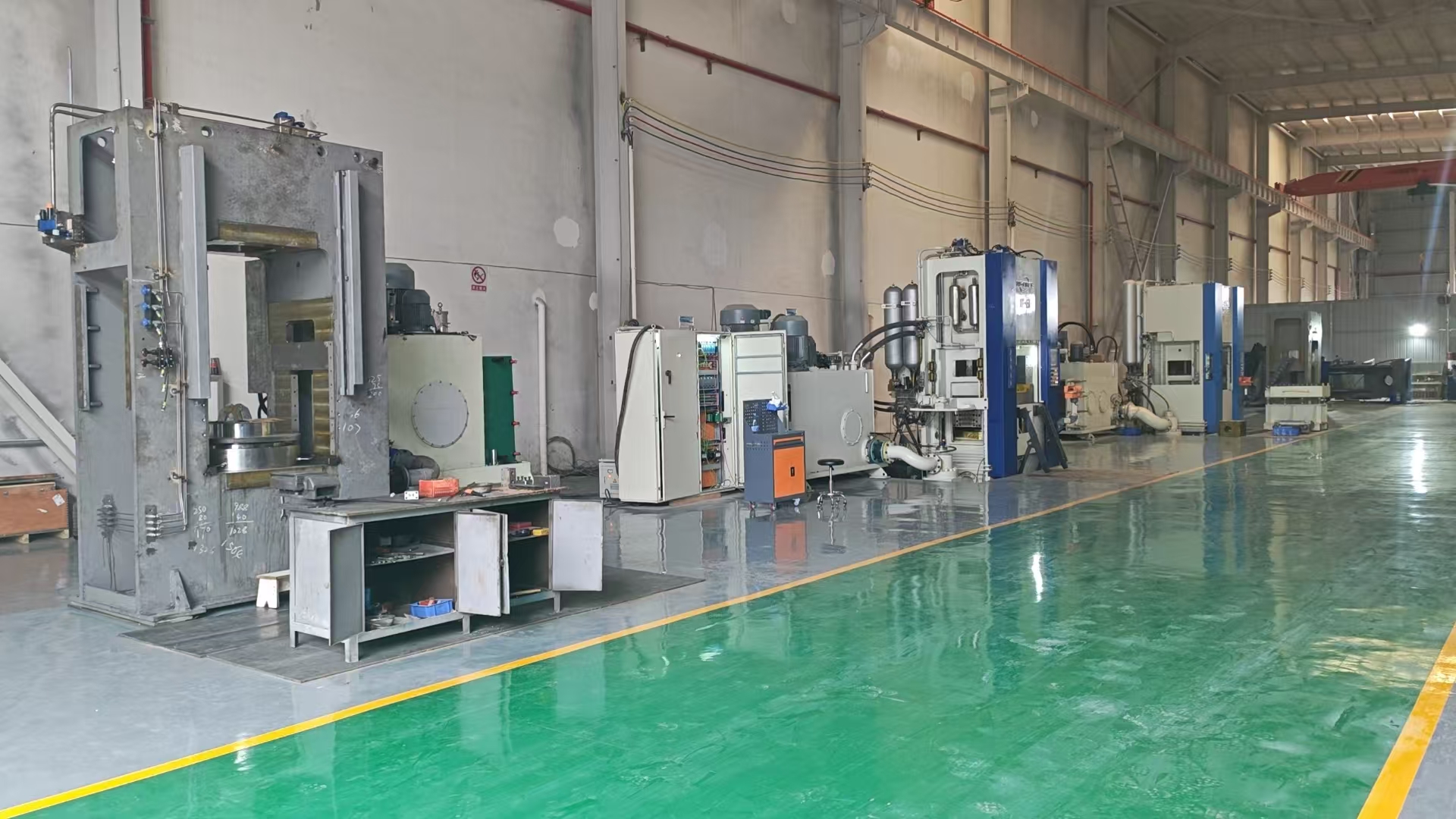
HS-FINEB refurbishment workshop showing fine blanking presses undergoing hydraulic rebuild and guideway reconditioning
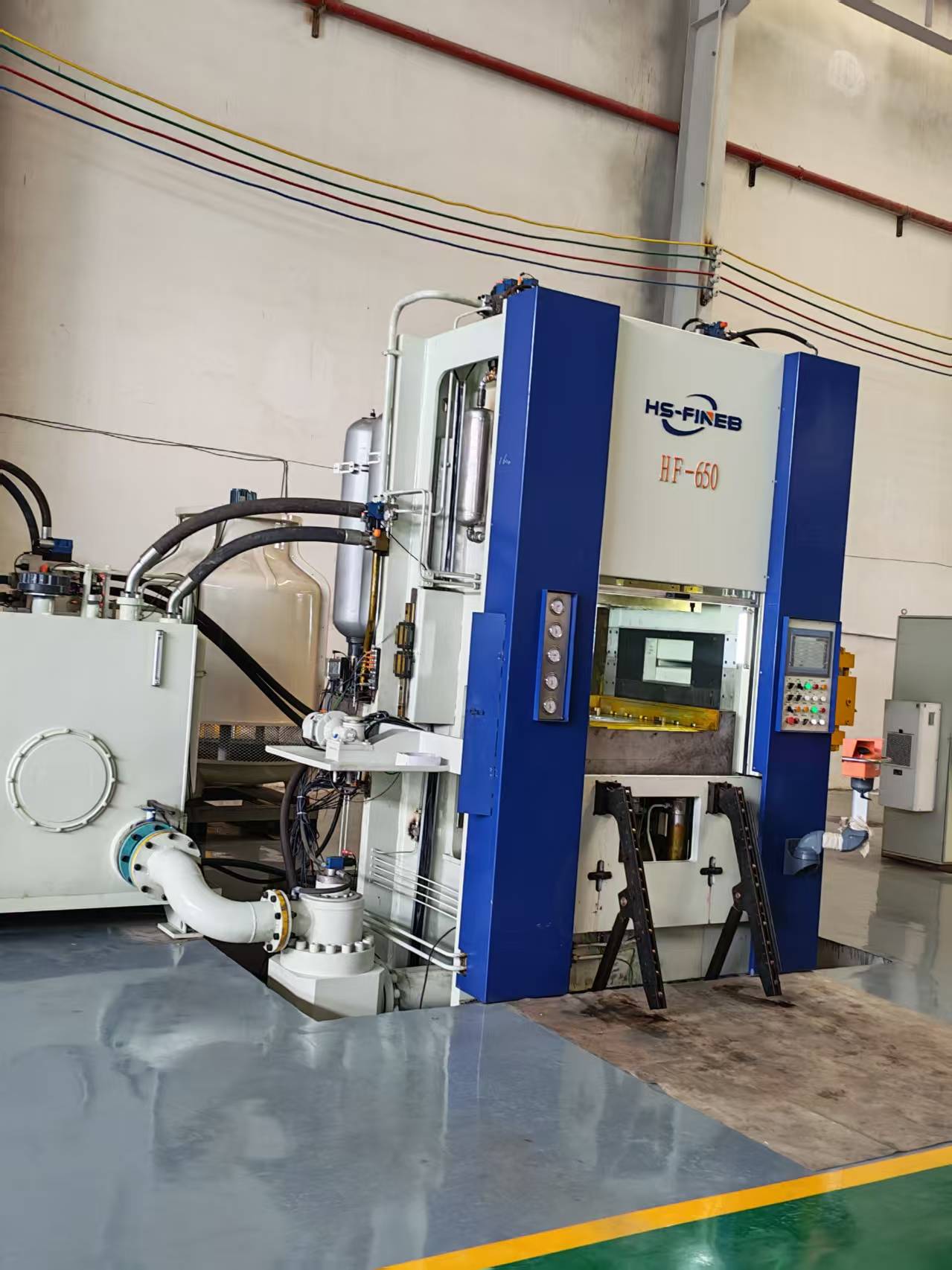
Row of refurbished Feintool and Mori fine blanking presses ready for delivery after refurbishment by HS-FINEB

Need Expert Guidance on Your Fine Blanking Press?

Our engineers at HS-FINEB bring over 40 years of fine blanking expertise to every project. Whether you need a new press, refurbishment of an existing machine, or technical consultation, we are ready to help.

💬