💬 WhatsApp Chat

Hydraulic Fluid Cleanliness in Fine Blanking Presses: ISO 4406 Standards

A fine blanking press depends on proportional hydraulic valves with clearances as small as 5–10 microns. Particle contamination in the hydraulic fluid is the leading cause of valve sticking, erratic force control, and premature seal failure — issues that directly degrade edge quality and part consistency. Understanding ISO 4406 cleanliness codes, filtration system design, and oil analysis is essential for maintaining press performance and protecting the three-force control system.

Critical Impact

Why Fluid Cleanliness Matters in Fine Blanking

The proportional valves that control blanking force, V-ring impingement, and counter-pressure in a fine blanking press have internal clearances of only 5–10 microns between the spool and sleeve. These tolerances are necessary for the precise metering and response characteristics that achieve ±2% force accuracy. When hard particles — silica, metal fines, or degraded seal material — enter these clearances, the spool can stick, bind, or move erratically, producing force fluctuations that ruin edge quality.

Soft contaminants, including varnish and oxidation products, coat valve surfaces and orifices, altering flow characteristics and response time. Water contamination, even at levels above 0.1%, hydrolyzes the anti-wear additives in the oil, producing acidic byproducts that attack zinc and copper alloys in valve components. The cumulative effect is a progressive degradation of force control accuracy that may not be detected until part quality drops below specification.

The economic impact is severe. A single contaminated proportional valve replacement costs $3,000–8,000 in parts and labor, and the associated downtime during production runs adds further loss. In a three-force system with multiple proportional valves, contamination can affect all circuits simultaneously, making root-cause diagnosis difficult without systematic oil analysis. The cheapest maintenance on a fine blanking press is keeping the oil clean.

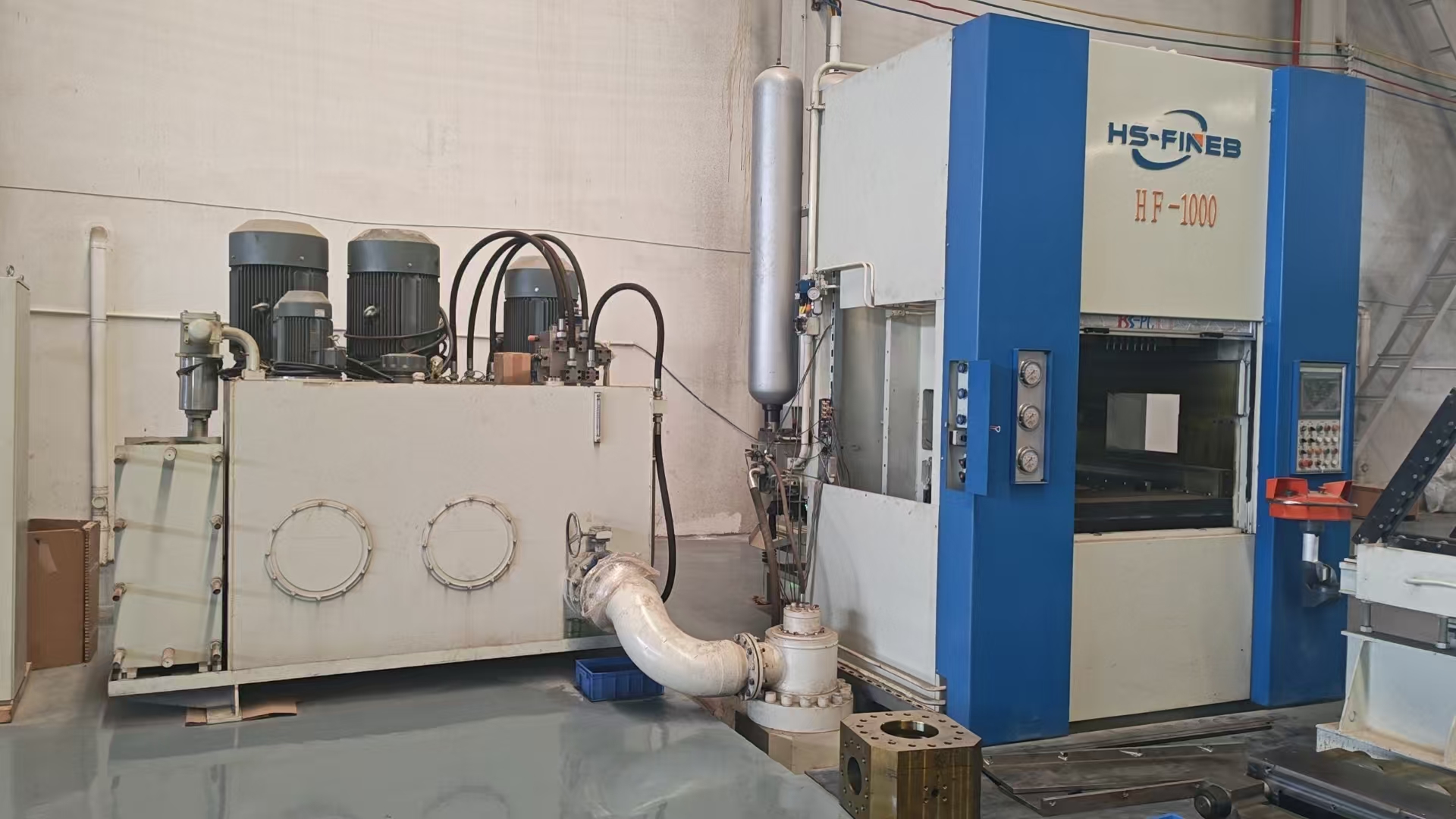
Fine blanking press hydraulic control panel with proportional valve manifolds and pressure monitoring system requiring clean oil
ISO 4406 Standard

Understanding Cleanliness Codes

Code Structure

ISO 4406 expresses cleanliness as three numbers separated by slashes (e.g., 18/16/13), representing the number of particles larger than 4, 6, and 14 microns per milliliter of fluid. Each number is an ISO range code: for example, code 18 means 1,300–2,500 particles/ml at 4 micron, code 16 means 320–640 particles/ml at 6 micron, and code 13 means 40–80 particles/ml at 14 micron. Lower numbers indicate cleaner oil.

Target for Fine Blanking

Fine blanking presses with proportional valves require ISO 4406 code 18/16/13 or better. This is significantly cleaner than the 22/20/17 typical of general-purpose hydraulic equipment. Servo-proportional valves with even tighter clearances may require 16/14/11. Maintaining these targets requires multi-stage filtration, regular monitoring, and disciplined oil handling procedures.

New Oil Is Not Clean

A common misconception is that new hydraulic oil from the supplier is clean enough to use directly. In reality, new oil typically tests at 21/19/16 or worse, because it is transported in bulk containers and drums that introduce contamination during filling and shipping. New oil must always be filtered through a 10-micron portable filtration unit before or during filling into the reservoir. Filling unfiltered new oil can immediately contaminate a clean system.

Testing Method

Particle counting is performed per ISO 11500 using an automatic particle counter (APC) on a sampled volume. The sample must be taken from the running system — not from the reservoir drain or idle oil — to reflect actual operating conditions. For fine blanking presses, sampling every 2,000 operating hours or quarterly is recommended. In-house portable particle counters allow frequent monitoring; laboratory analysis provides additional data on water content, viscosity, and acid number.

Filtration Architecture

Filtration System Design

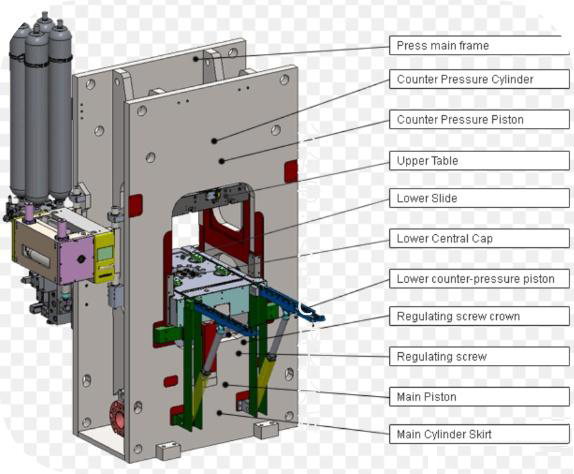
Fine blanking press hydraulic filtration system showing pressure filter, return filter, and offline kidney loop configuration

Multi-Stage Filtration Strategy

A fine blanking press filtration system uses four complementary stages. The pressure filter is installed in the supply line between the pump and the proportional valves, rated at 10-micron absolute (β10 ≥ 75). This is the critical barrier protecting the valves; a clogged pressure filter element must be replaced immediately.

The return filter sits in the tank return line at 20-micron rating, catching wear particles and debris before oil re-enters the reservoir. The return filter sees the full system flow and handles the bulk of contamination load, extending pressure filter life.

The offline kidney loop is an independent filtration circuit that draws oil from the reservoir, passes it through a 5-micron filter at low flow rate, and returns it. The kidney loop operates continuously, independent of press operation, and is the most effective tool for achieving and maintaining target cleanliness. A press running 16 hours/day with a kidney loop can maintain 18/16/13 where the same press without a kidney loop drifts to 22/20/17 within months.

The bypass valve in each filter housing prevents element collapse when the filter is clogged. When pressure differential across the element exceeds the bypass setting (typically 2–3 bar), the bypass opens and allows unfiltered oil to flow. This protects the element from rupture but means contaminated oil reaches the valves — hence the bypass opening must trigger an alarm and maintenance action.

Oil Analysis Program

Oil Sampling and Analysis

A systematic oil analysis program is the most cost-effective maintenance investment for a fine blanking press. Sampling should be conducted every 2,000 operating hours or quarterly, whichever comes first. The sample must be drawn from a running system — ideally from a dedicated sampling valve on the return line — not from the reservoir drain plug, where settled particles give a falsely high particle count.

Each analysis should test for four critical parameters. Particle count determines the current ISO 4406 code and tracks the cleanliness trend over time; a sudden code increase indicates a filter breach, seal failure, or ingression source. Water content must remain below 0.1% (1,000 ppm); higher levels indicate condensation, cooling jacket leakage, or seal ingress, and require immediate investigation. Viscosity must remain within the ISO VG46 or VG68 grade range (typically 41–51 cSt at 40°C for VG46); deviation indicates thermal degradation, wrong oil addition, or fuel dilution. Acid number (TAN) measures oxidation level; a TAN above 2.0 mg KOH/g indicates the oil has oxidized beyond useful life and must be changed to prevent additive depletion and component corrosion.

Oil analysis services are available from specialized laboratories including Parker Hannifin, Schroeder Industries, and Bureau Veritas, or through in-house portable particle counters for frequent monitoring. The trend over multiple samples is more informative than any single data point — a rising particle count or TAN trend signals the need for investigation even if absolute values remain within specification.

Contamination Control

Contamination Sources and Prevention

Contamination enters the hydraulic system through four primary pathways, each requiring specific countermeasures. New oil contamination is addressed by filtering all new oil through a 10-micron portable unit before filling; never pour oil directly from a drum into the reservoir without filtration.

Built-in contamination refers to manufacturing residues, hose debris, and machining particles left in new components. New or rebuilt systems must be flushed with a high-flow flushing rig before connecting to the press valves. The flush oil is sampled and must meet target cleanliness before the system is commissioned.

Ingressed contamination enters through the reservoir breather, cylinder rod seals, and access covers. Standard air breathers allow airborne dust entry; replacing them with desiccant breathers that both filter and dehumidify incoming air is the single most effective upgrade. Cylinder rod seals should use double-lip wiper seals to scrape contaminants from the rod before it enters the cylinder, and rod boots (bellows) provide additional protection in dirty environments.

Generated contamination comes from normal wear of cylinder bores, valve spools, and pump components. Magnetic drain plugs in the reservoir capture ferrous wear particles; regular inspection of these plugs provides early warning of abnormal wear. The return filter catches non-ferrous particles. Combining all prevention measures — desiccant breathers, double-rod seals, magnetic plugs, and a continuous kidney loop — maintains the cleanliness that proportional valves require for reliable ±2% force control.

HS-FINEB presses are delivered with multi-stage filtration, desiccant breathers, and a kidney loop as standard equipment. Our commissioning process includes system flushing to target cleanliness, baseline oil sampling, and operator training on contamination control procedures. This ensures that from the first stroke, the hydraulic system operates at the cleanliness level that fine blanking demands.

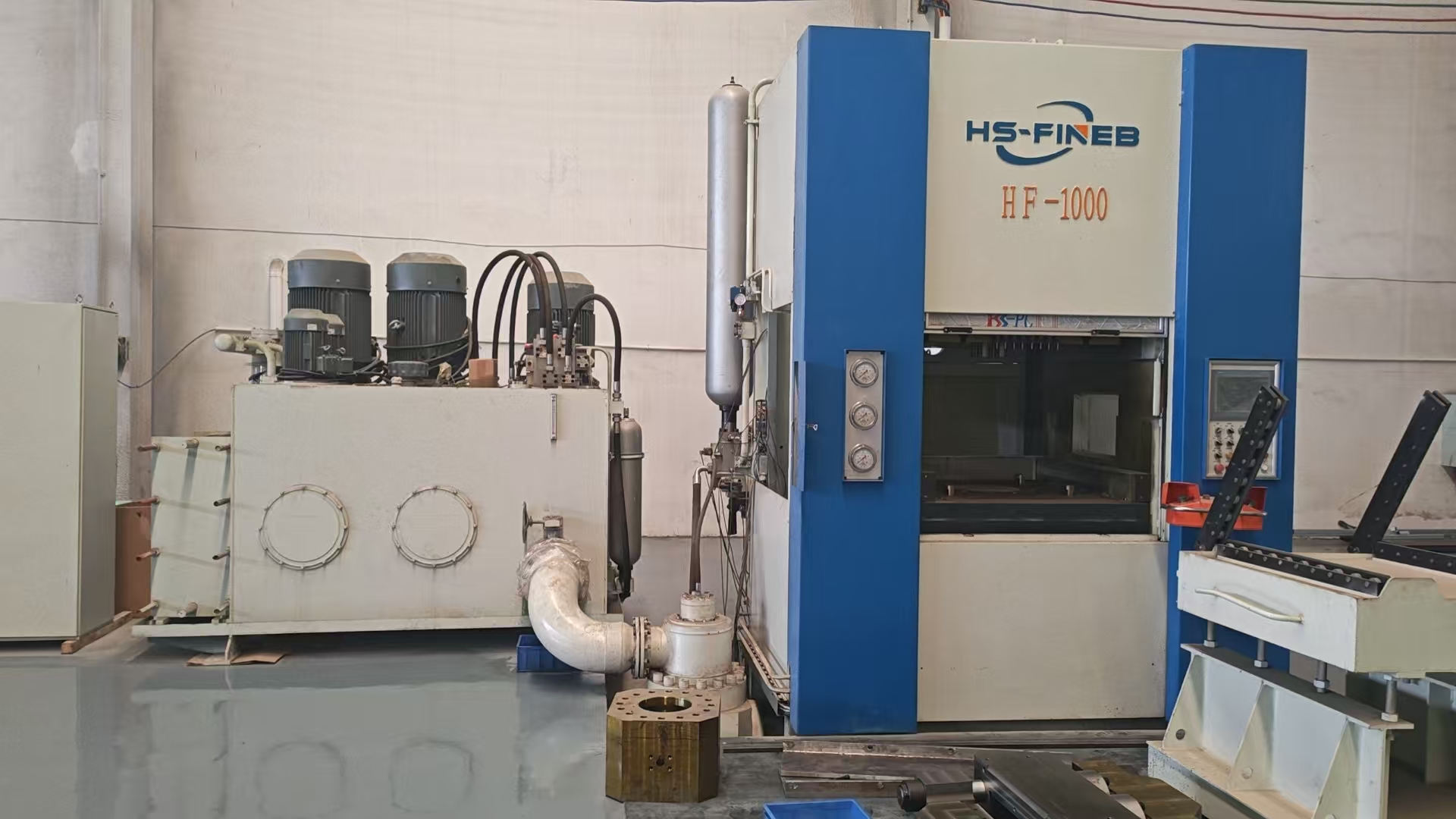
HS-FINEB fine blanking press line with integrated hydraulic filtration system and offline kidney loop for maintaining ISO 4406 cleanliness

Need Expert Guidance on Your Fine Blanking Press?

Our engineers at HS-FINEB bring over 40 years of fine blanking expertise to every project. Whether you need a new press, refurbishment of an existing machine, or technical consultation, we are ready to help.

💬