A technical guide to fine blanking 316L austenitic stainless steel covering material properties, process challenges, optimal blanking parameters, die material selection, and applications in marine, medical, and chemical processing equipment.
316L (UNS S31603) is a low-carbon austenitic stainless steel containing 16 to 18 percent chromium, 10 to 14 percent nickel, and 2 to 3 percent molybdenum. The low carbon content (maximum 0.03 percent) minimizes carbide precipitation during welding, maintaining corrosion resistance. The molybdenum addition provides enhanced resistance to pitting and crevice corrosion in chloride environments.
In the annealed condition, 316L exhibits yield strength of approximately 205 MPa, tensile strength of 515 MPa, and elongation of 40 percent. The austenitic face-centered cubic structure provides excellent toughness and ductility. However, 316L exhibits a high work hardening rate with n-value exceeding 0.50 initially, causing the material to strengthen dramatically during blanking, increasing force requirements and accelerating tool wear.

The most significant challenge when fine blanking 316L is galling, where workpiece material transfers to the tool surface, creating built-up edge and degrading part quality. Austenitic stainless steels are particularly prone to galling due to high nickel content and tendency to cold weld to tool steels under high contact pressures. Galling typically initiates after 5,000 to 15,000 strokes with uncoated tools, manifesting as scratches, burrs, and dimensional drift. Mitigation requires tool coating, lubrication, and material surface treatment.
As the punch penetrates 316L, the shear zone work hardens from 205 MPa to over 600 MPa at large strains. The blanking force increases nonlinearly, with peak force near stroke end. This produces a narrow shear zone with fracture zone beginning earlier. For fine blanking, force requirements are typically 30 to 50 percent above those for equivalent-thickness low-carbon steel.
316L exhibits significant elastic recovery after blanking due to high strength-to-yield ratio and low elastic modulus. Residual stresses cause dimensional deviations of 0.05 to 0.15 mm on typical geometries. For precision components, die geometry adjustment or post-blanking sizing may be necessary. Springback is more pronounced on large flat areas and less problematic on compact geometries.
The low thermal conductivity of 316L (approximately 16 W per m-K versus 50 for carbon steel) causes heat concentration at the shear zone. Local temperatures reach 300 to 500 degrees Celsius, promoting diffusion bonding and accelerating galling. Heat buildup also causes thermal expansion of tooling, potentially altering die clearance. Cooling strategies including increased lubricant flow and controlled stroke rates are essential.

Die clearance for 316L should be 8 to 10 percent of material thickness per side, significantly higher than the 4 to 6 percent for low-carbon steels. The increased clearance accommodates greater elastic recovery and reduces secondary shearing risk. For 2.0 mm thick 316L, clearance of 0.16 to 0.20 mm per side is recommended. Cutting speed should be 15 to 25 mm per second, slower than the 30 to 50 mm per second for carbon steels, minimizing heat generation and allowing more time for plastic deformation.
Lubrication is critical for 316L fine blanking. A chlorine-free extreme pressure oil with viscosity of 100 to 150 cSt at 40 degrees Celsius is recommended, containing active sulfur or phosphorus EP additives that form a low-shear-strength tribofilm. Application rate should be 8 to 15 ml per stroke for parts up to 100 square centimeters, delivered through precision nozzles at the die opening and V-ring contact area. For medical and food applications where residual lubricant must be minimized, water-soluble emulsions can be used followed by ultrasonic cleaning, though they provide inferior galling protection.
316L for fine blanking should be fully annealed with hardness of 70 to 85 HRB (140 to 180 HV). Cold-worked material should be re-annealed before blanking. Grain size should be ASTM 5 to 7; coarser grains produce rougher edges, while finer grains improve edge quality but increase flow stress. The material should be free of surface defects, particularly pits and inclusions, which act as nucleation sites for edge cracking.
Tooling for 316L requires careful material selection and surface treatment to withstand high contact stress, elevated temperature, and severe galling.
Powder metallurgy high-speed steels are preferred for 316L fine blanking due to high hardness, fine carbide distribution, and good grindability. ASP2023 at 62 to 64 HRC provides excellent wear and galling resistance. The fine carbides of PM-HSS resist micro-adhesion better than larger carbides of conventional tool steels. For production exceeding 100,000 parts, PM-HSS is essential; for prototypes, DC53 at 60 to 62 HRC can be used with more frequent maintenance.
Titanium aluminum nitride coating, applied by PVD, is the most effective surface treatment for 316L blanking tools. The coating's high hardness (approximately 3300 HV), low coefficient of friction (0.3 to 0.5), and oxidation resistance to 800 degrees Celsius address abrasive wear, adhesive wear, and thermal degradation. Coating thickness of 2 to 4 micrometers is optimal. Post-coating polishing to Ra 0.1 micrometers further improves galling resistance.
Die life for 316L is 30 to 50 percent lower than for equivalent-thickness carbon steel. With TiAlN-coated ASP2023, expect 80,000 to 150,000 parts between resharpening for 2.0 mm thick 316L. V-ring and counter-pressure pads experience similar wear. Inspection every 20,000 strokes is recommended to detect early galling. When detected, remove the tool, clean with non-abrasive solvent, and re-coat if damaged.
Punch edge radius should be 0.05 to 0.10 mm, slightly larger than for carbon steels, to reduce stress concentration. The V-ring should use a 40-degree angle (versus 45 degrees for carbon steel) to generate higher hydrostatic pressure, promoting plastic deformation over fracture. Die land length should be 3 to 5 mm. All tool contact surfaces should be finished to Ra 0.1 micrometers or better.
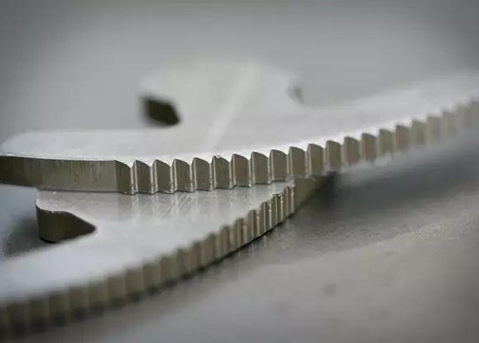
316L fine blanked components serve critical functions where corrosion resistance and cleanliness are paramount. In marine applications, 316L resists saltwater corrosion in hardware, fasteners, and valve components. Fine blanked edge quality eliminates crevices where corrosion initiates, providing superior performance compared to machined or stamped edges.
Medical device manufacturers use fine blanked 316L for surgical instruments, implantable device housings, and diagnostic equipment. The process produces edges free of burrs and cracks that could harbor bacteria. Post-blanking passivation restores the chromium oxide layer for biocompatibility. Dimensional precision reduces or eliminates secondary machining, important for cost control.
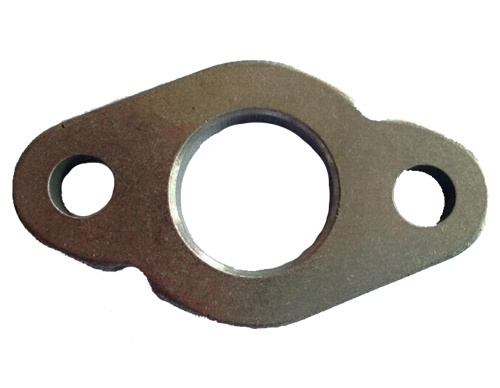
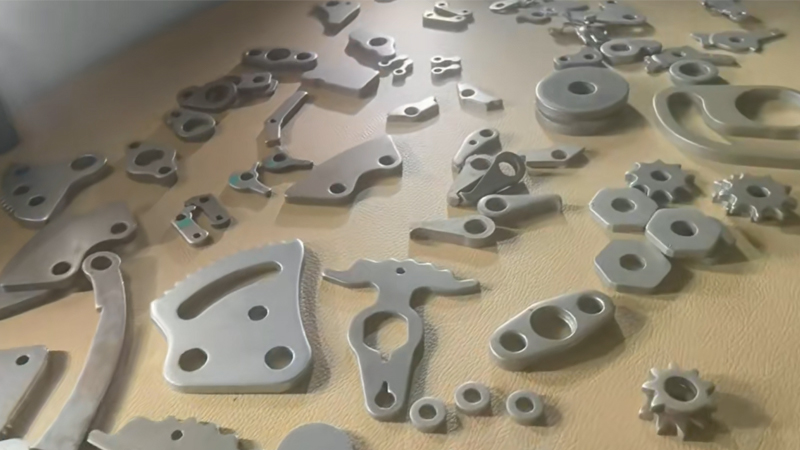
Chemical processing equipment uses 316L for gaskets, seals, and valve plates where resistance to acids and chlorides is required. Food processing relies on 316L for FDA compliance, corrosion resistance to cleaning chemicals, and smooth burr-free edges that prevent bacterial accumulation. Fine blanking complex geometries enables production of intricate flow control components uneconomical to machine.

Post-blanking treatment is essential for restoring corrosion resistance compromised by the blanking process.
Fine blanking disturbs the passive chromium oxide layer. Passivation in nitric or citric acid solutions restores this protective layer by dissolving surface iron and enriching chromium oxide. Typical treatment uses 20 to 40 percent nitric acid at 50 to 60 degrees Celsius for 20 to 30 minutes, followed by rinsing and drying. Citric acid passivation (10 to 20 percent at 60 to 80 degrees Celsius) is increasingly preferred for environmental reasons. Passivation should follow any deburring or surface finishing.
For marine and chemical applications, Ra 0.8 to 1.6 micrometers is sufficient, achievable directly from fine blanking. For medical and food applications, Ra 0.4 micrometers or better may be required, necessitating post-blanking polishing, electropolishing, or vibratory finishing. Electropolishing selectively dissolves surface asperities, producing a smooth passivated surface with improved corrosion resistance. Edges should be inspected for micro-cracks using dye penetrant or eddy current testing for critical applications.
HS-FINEB engineers will help you optimize die materials, coatings, and process parameters for 316L and other austenitic stainless steels. Contact us for tooling recommendations and processing trials.