Specifications: press capacity 200T to 1200T, material thickness 0.5mm to 12mm, tolerance to plus or minus 0.01mm, shear zone exceeding 90 percent.
Fine blanking is a precision metal shearing process demanding strict alignment between press capability, material properties, die design, and part geometry. At HS-FINEB, our HF-series presses span 200 tons through 1200 tons, enabling precision components from electronics connectors to heavy automotive gears. This guide documents validated process limits established through nearly four decades of press manufacturing and production support.
Unlike conventional stamping, fine blanking operates within tightly constrained physical parameters. The triple-force architecture of V-ring, counter-pressure, and blanking force must be matched to material thickness, shear perimeter, and part complexity. These specifications represent validated capability boundaries that HS-FINEB presses achieve consistently under production conditions.
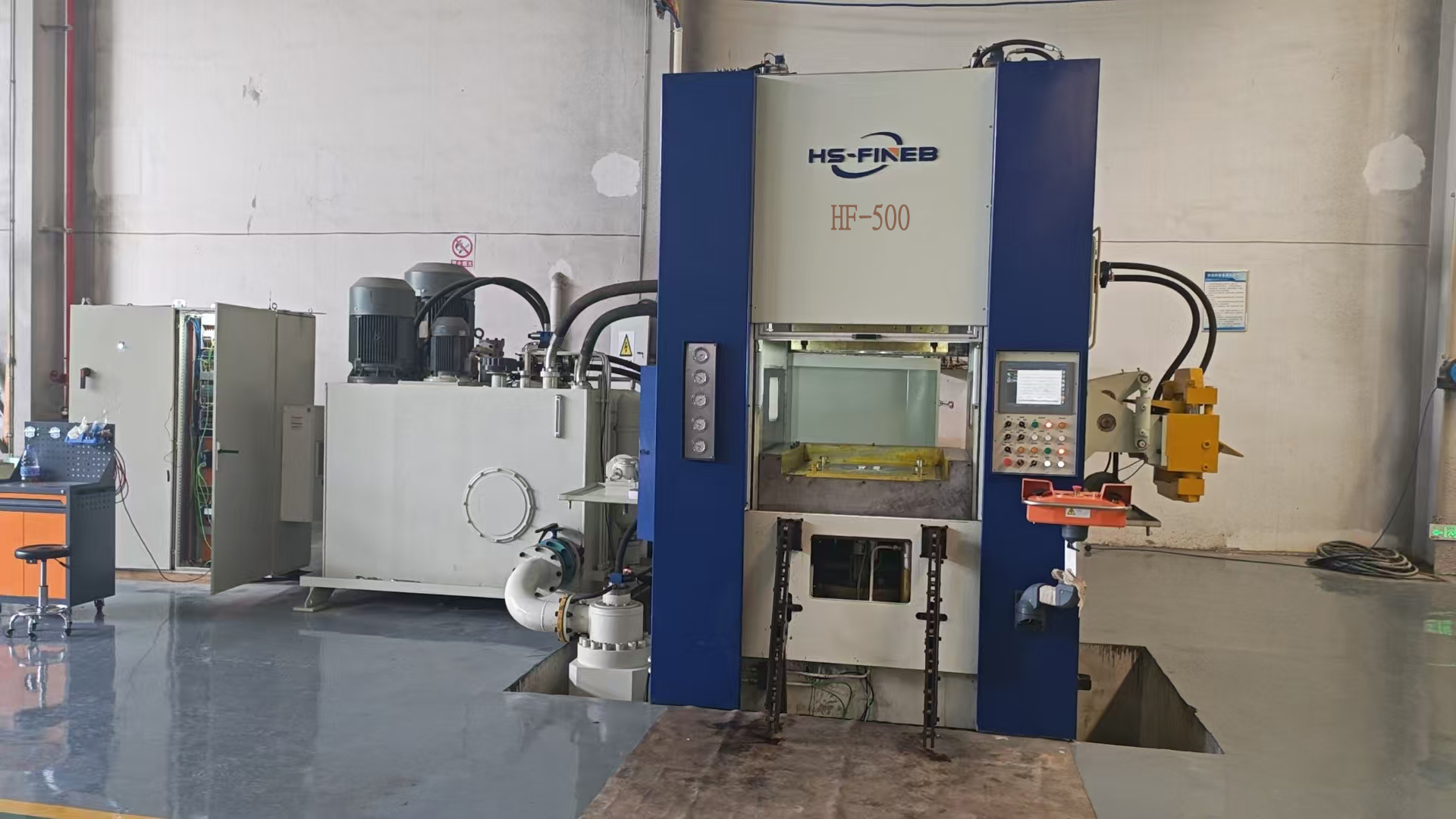
HS-FINEB manufactures nine HF-series press platforms from 200T to 1200T. Press selection is determined by material shear perimeter multiplied by thickness and shear strength, plus V-ring and counter-pressure reserves. The table below presents verified capacity parameters for normalized carbon steel at room temperature with 0.5 percent die clearance.
| Model | Blanking Force | Max Sheet Size | Max Stroke | Bed Area | Best Use Case |
|---|---|---|---|---|---|
| HF-200 | 2000 kN / 200T | 300 x 300 mm | 120 mm | 700 x 700 mm | Small connectors, lock cylinders, thin brackets |
| HF-320 | 3200 kN / 320T | 400 x 400 mm | 150 mm | 850 x 850 mm | Automotive gears, clutch plates, seat hardware |
| HF-400 | 4000 kN / 400T | 500 x 500 mm | 180 mm | 950 x 950 mm | Medium transmission parts, structural brackets |
| HF-500 | 5000 kN / 500T | 600 x 600 mm | 200 mm | 1050 x 1050 mm | Large gears, multi-hole plates, thick material |
| HF-650 | 6500 kN / 650T | 700 x 700 mm | 220 mm | 1200 x 1200 mm | Heavy automotive, structural components |
| HF-700 | 7000 kN / 700T | 750 x 750 mm | 240 mm | 1250 x 1250 mm | Oversized plates, high-strength alloys |
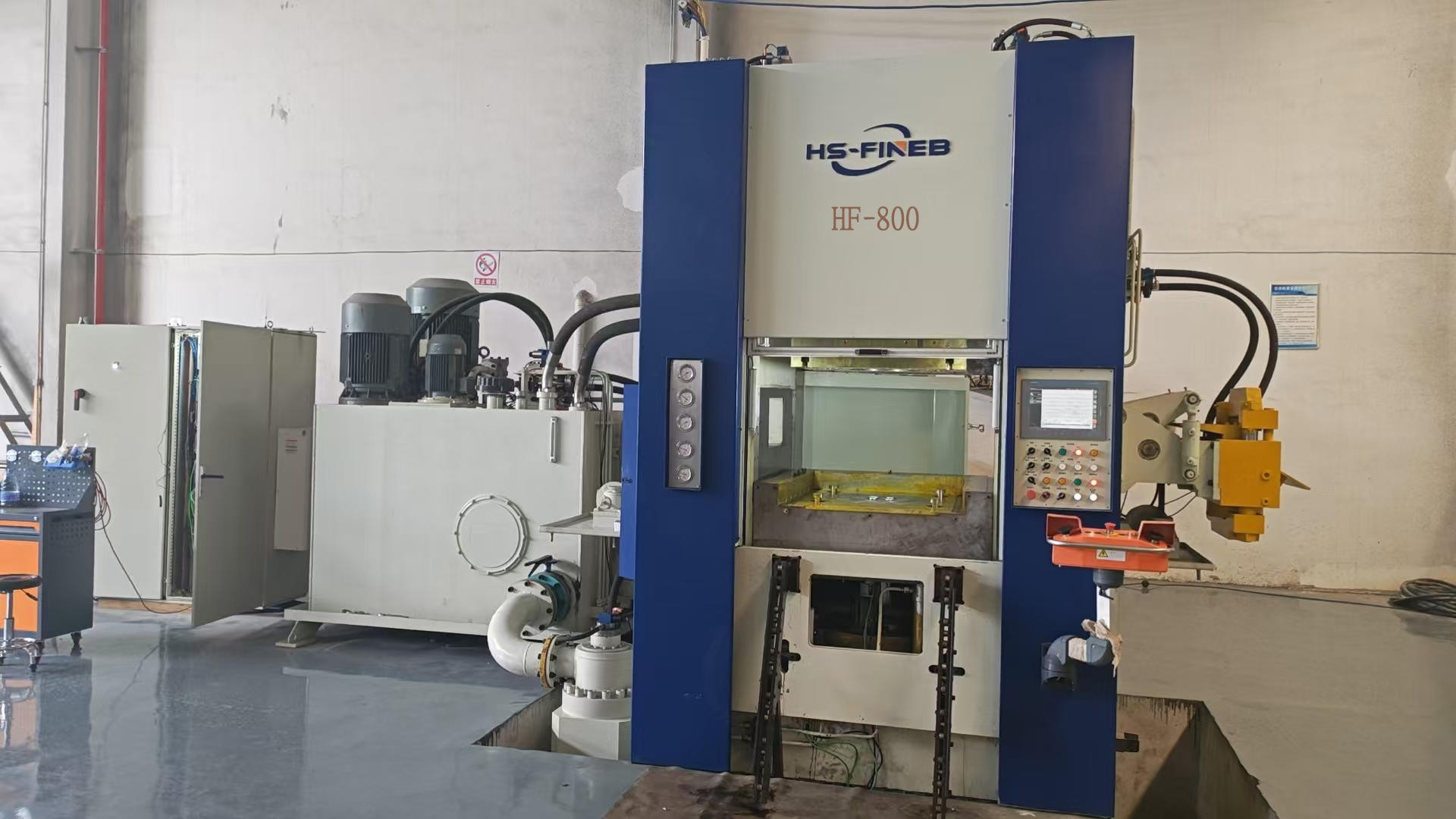
| HF-800 | 8000 kN / 800T | 800 x 800 mm | 260 mm | 1350 x 1350 mm | Large transmission housings, thick gears |
| HF-1000 | 10000 kN / 1000T | 900 x 900 mm | 280 mm | 1500 x 1500 mm | Heavy-duty commercial vehicle parts |
| HF-1200 | 12000 kN / 1200T | 1000 x 1000 mm | 300 mm | 1650 x 1650 mm | Maximum envelope, thick high-strength steel |
Maximum sheet size is the largest coil strip or blank that can be positioned within the die area. Complex progressive dies may produce multiple parts per stroke. Maximum stroke is full vertical ram travel; effective cutting stroke is typically 60 to 80 percent. HS-FINEB presses feature proportional hydraulic control with programmable V-ring and counter-pressure forces set independently, typically 20 to 40 percent for V-ring and 10 to 20 percent for counter-pressure relative to blanking force.
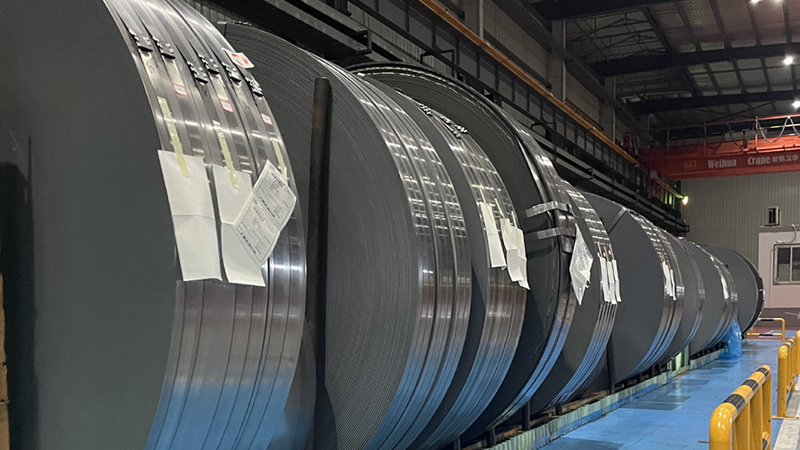
HS-FINEB presses are validated for material thicknesses from 0.5 millimeters to 12 millimeters. The lower bound of 0.5mm represents the practical minimum where V-ring penetration depth remains sufficient to constrain material during shearing. The upper bound of 12mm is determined by maximum press stroke and the force required to maintain clean shearing through full thickness without fracture transition. The following material categories are fully supported across the HF-series line with validated process parameters for each grade.
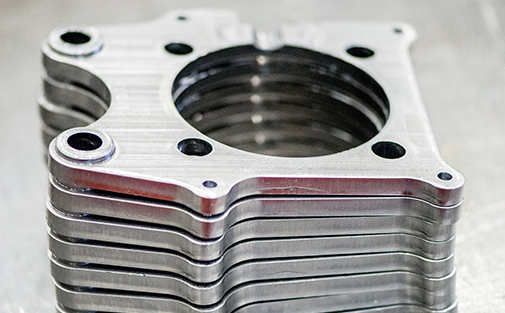
Fine blanking achieves dimensional tolerances approaching precision machining standards while maintaining stamping production economics. HS-FINEB presses with precision dies achieve repeatability of plus or minus 0.01 millimeter on critical features for materials up to 3mm thick. For thicker materials in the 6mm to 12mm range, tolerance scales to plus or minus 0.03mm, still within IT7 to IT9 grade. Repeatability is maintained across runs exceeding one million strokes, with statistical process control showing Cpk values above 1.67.
Feature-to-feature consistency is a key advantage of fine blanking. Because material is fully constrained by V-ring and counter-pressure throughout shearing, there is no lateral material flow or springback variation. Hole-to-hole spacing, hole-to-edge distance, and profile-to-profile relationships maintain consistency within 0.02mm over long runs. This makes fine blanking ideal for parts with multiple functional features such as gears with central bores or mounting plates with precisely located fastener holes.
Flatness is controlled to 0.05mm per 10mm of part dimension. Counter-pressure prevents the bulging and warping that occurs in conventional stamping. For parts requiring exceptional flatness, such as clutch separator plates, secondary coining may be integrated into the same die. Hole positional tolerance relative to datum features achieves plus or minus 0.02mm for holes 3mm and larger.
The shear zone, or burnished zone, is the smooth polished edge produced by clean material shearing without fracture. In conventional stamping, shear zone comprises only 30 to 40 percent of material thickness, with the remainder torn and rough. Fine blanking extends shear zone through full thickness, achieving 90 to 100 percent burnished edge. HS-FINEB presses are validated to maintain minimum 90 percent shear zone.
Shear zone percentage is measured on polished cross-sections using optical microscopy. HS-FINEB validation requires minimum 90 percent shear zone. Under ideal conditions with optimized die clearance and force profiles, shear zone reaches 100 percent with no visible fracture. For critical applications such as automotive transmission gears and brake components, 100 percent shear zone is the target specification, verified by cross-sectional analysis on sample parts.
Burr height in fine blanking is controlled to a maximum of 5 percent of material thickness, typically achieving 2 to 3 percent. For a 5mm part, burr height of 0.10 to 0.15mm is often acceptable without secondary deburring. Surface roughness achieves Ra 0.8 to 3.2 micrometers depending on material and thickness. Thinner materials and softer grades such as copper approach Ra 0.8 micrometers. Thicker high-strength steels may show Ra up to 3.2 micrometers, significantly smoother than conventional stamped edges and often eliminating secondary machining.
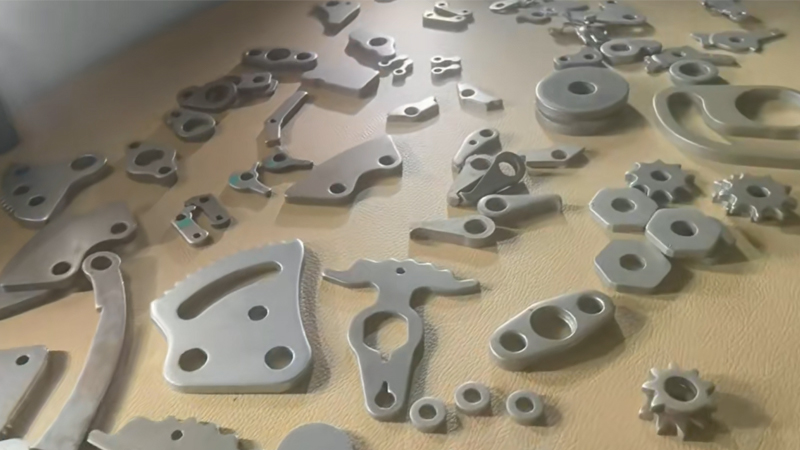
Fine blanking enables geometries impossible or uneconomical with conventional stamping, including complex profiles, small holes adjacent to edges, and tight corner radii. These capabilities operate within defined limits governed by material behavior under triple-force shearing. HS-FINEB engineers evaluate every part drawing against these boundaries during feasibility assessment.
HS-FINEB hydraulic presses operate at 20 to 80 strokes per minute depending on model. The HF-200 and HF-320 achieve up to 80 SPM under automated coil feeding. Larger platforms such as the HF-1000 and HF-1200 typically operate at 20 to 35 SPM when processing thick high-strength materials.
Cycle time comprises approach stroke, cutting phase at 5 to 15 millimeters per second, and return with ejection. The cutting phase consumes 40 to 60 percent of total cycle time. HS-FINEB proportional hydraulic systems allow cutting speed to be programmed independently, maximizing throughput while maintaining quality.
Annual capacity ranges from approximately 3 million parts per year at 80 SPM on two-shift operation, down to 800,000 parts at 25 SPM on thick parts. Fine blanking is optimized for medium to high volumes where tooling is amortized across tens or hundreds of thousands of parts. For volumes below 10,000 per year, die cost may not justify fine blanking. HS-FINEB engineers provide volume analysis during quotation.
Send your part drawings and material specifications. Our engineers will assess fine blanking feasibility, confirm capability against this specification guide, and recommend the optimal HF-series press platform and die strategy for your application.